
Our results
GPE in action
GPE recognizes that gender combines with other factors to create disadvantages and exclusion from education. We believe in addressing gender equality at the system level. This means addressing gender disparity in:
- Access to education, particularly among the most marginalized children.
- Within education, by addressing the role gender can play in children’s experiences.
- Through education, by supporting young people to have equal choices for the future.
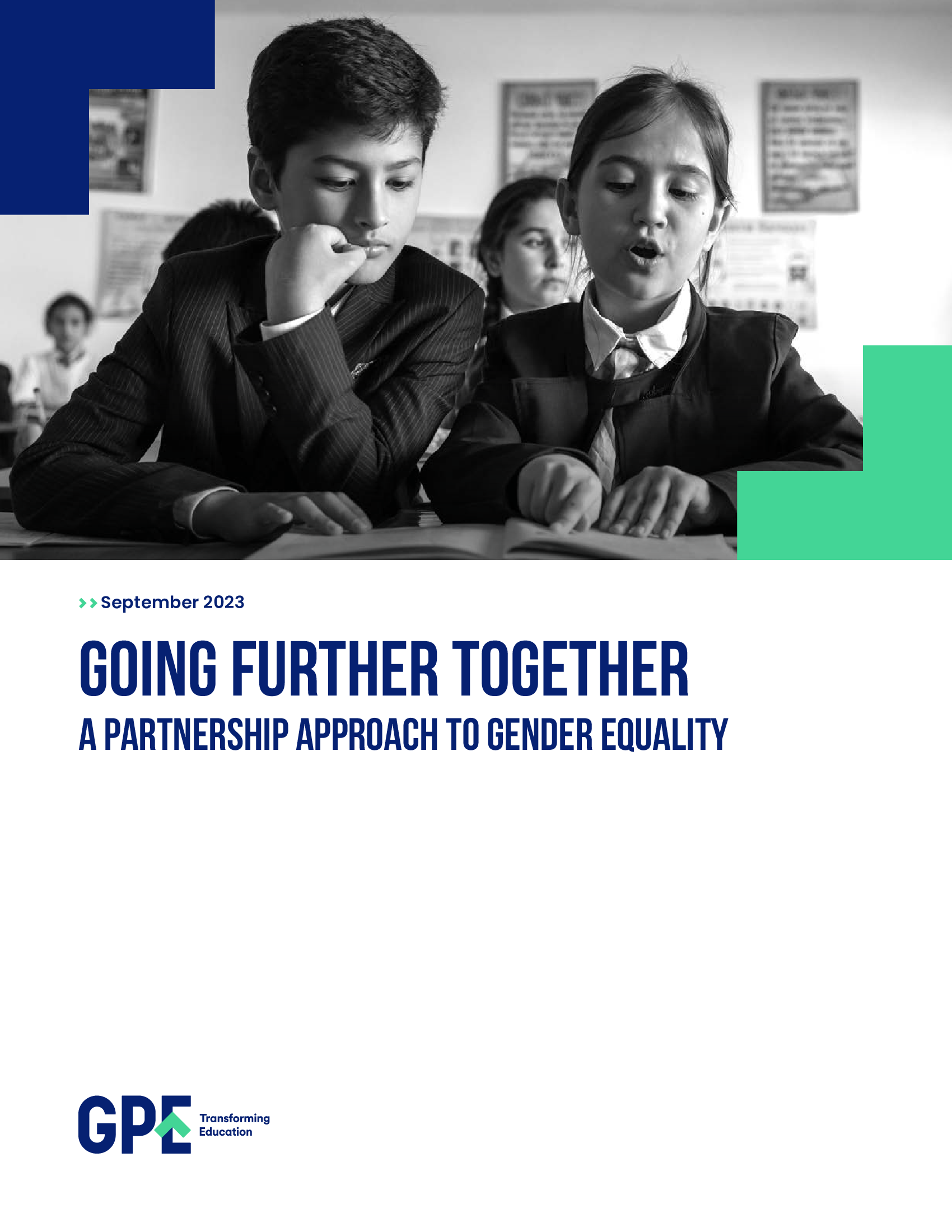
Putting gender equality at the heart of education systems: GPE helps partner countries use data and evidence to identify gender barriers within education systems and ensure that plans, policies and processes are in place to address them. The paper “Going Further Together: A Partnership Approach to Gender Equality” highlights the use of gender analysis and evidence by governments and local education groups to guide priority reforms in education.
Investing in gender equality: GPE mobilizes financing and partnerships to help partner countries improve equity, gender equality and inclusion in education. The Girls’ Education Accelerator provides additional funding to speed up progress and dismantle barriers to girls’ schooling. Investments in gender equality include funding gender-responsive strategies, including awareness-raising campaigns, community gender training, female teacher recruitment and separate toilets, among others.
Sharing knowledge and innovation: Gender equality is one of six thematic areas of the Knowledge and Innovation Exchange (KIX), with a focus on capacity development, knowledge sharing evidence and evaluation, and identification of innovative pilots with potential for scale-up.
Tackling school-related gender-based violence (SRGBV): GPE is a founding member of Safe to Learn, an initiative dedicated to ending violence in schools, so children are free to learn, thrive and pursue their dreams. GPE is piloting a technical assistance initiative on safety from violence – a new approach to building country capacity to plan and implement reforms that make girls and boys safer.
Monitoring and analyzing results: GPE collects gender-disaggregated data and supports governments to establish data systems to monitor key areas relevant to gender inequalities in education.
Advocating for gender equality: At global and regional levels, GPE works with a wide range of partners across sectors to galvanize political support for gender equality. With funding from Education Out Loud, GPE is supporting civil society organizations focusing on girls’ education and gender equality to amplify their voice in national sector dialogue and international policy fora.