Our results
GPE in action
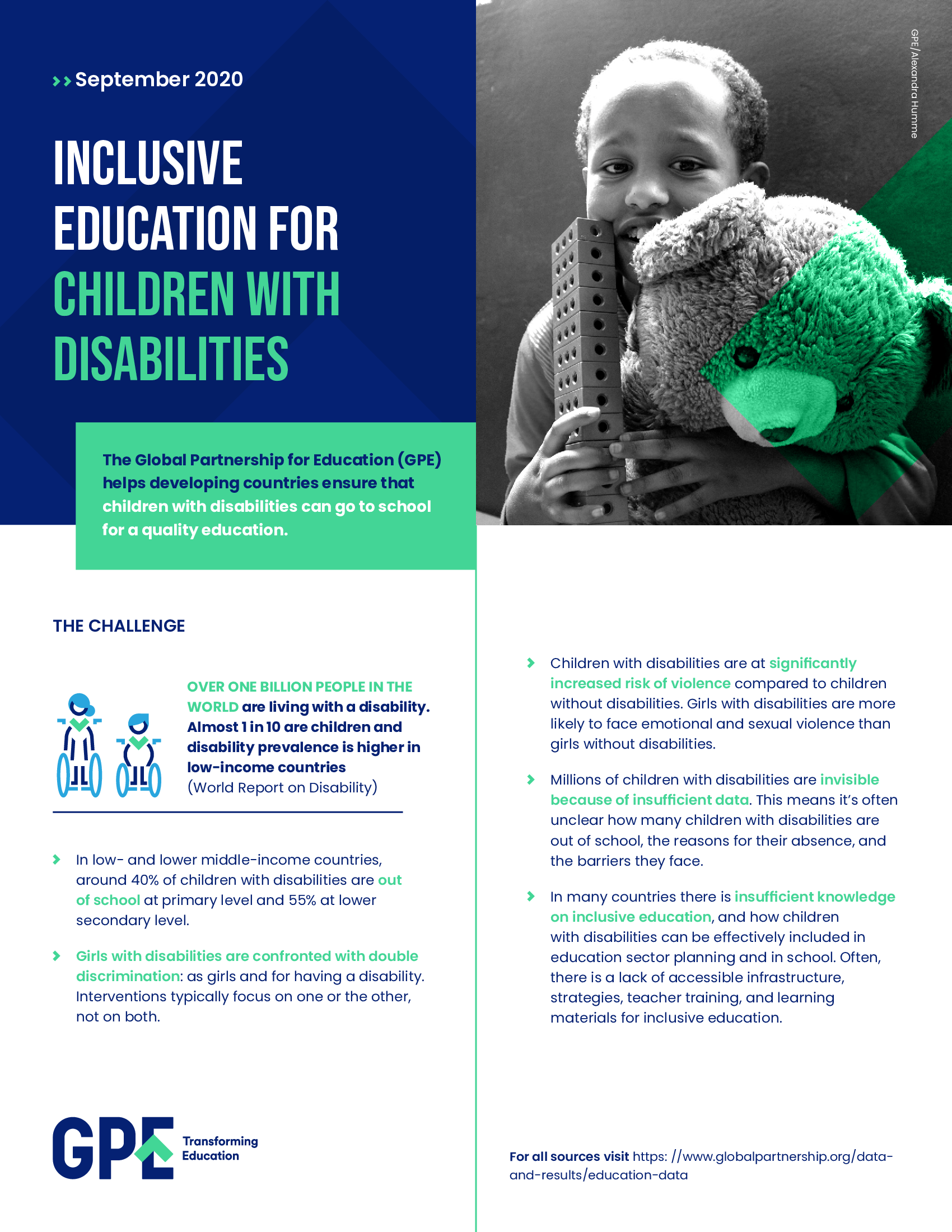
Research and data: GPE has supported research and projects on disability, school health (including screening for disability and provision of eyeglasses), school-related gender-based violence, and refugee children. Additionally, GPE supports national governments to strengthen education data systems, including efforts to disaggregate data by disability.
Planning: GPE supported the methodological guidelines on education sector analysis, which support countries to assess the barriers facing children with disabilities.
Advocacy: GPE advocates for inclusive education at the global, regional and national levels, supports sharing research and data, and facilitates peer learning on inclusive education.
Engagement with civil society: GPE works to enhance the capacity of civil society – especially organizations of persons with disabilities - to engage in education sector planning, policy dialogue and monitoring and to promote transparency and accountability (see Education Out Loud for more).
Teacher training: Partner countries use GPE grants to train teachers in inclusive education and provide access to equipment and learning materials for children with disabilities such as braille machines, eyeglasses and hearing aids.
School improvement: GPE supports partner countries to transform schools so that they cater to all children, including those with disabilities, in a safe and healthy environment free of discrimination. Key activities may include disability screening and early interventions to provide young learners with important support needs, including assistive technologies, or communication campaigns to raise awareness about all children’s right to education.
Equity and inclusion webinars
This series of webinars titled Sharing innovations on making all children count focused on collecting and using data on marginalized groups and education. It covered:
- identification of disability and measurement of inclusive learning environments
- the role of community and citizen-led initiatives
- the use and limitations of new technologies in gathering better data.
A key objective is to convene partners working on these issues and to foster collaboration to hone and apply new ideas.
Access webinars
- Data driven approaches to improving learning in emergency, conflict and crisis settings June 2020
- Using evidence to leave no child behind: What next for the Out-of-School Children Initiative? April 2020
- Gender and disability - Findings from the Girls’ Education Challenge – February 2020
- Using monitoring data to improve girls’ school participation – January 2020
- Inclusion of children with disabilities in education - Learning from new household survey tools – December 2019
- Improving EMIS data on inclusive education to effectively monitor SDG 4 – October 2019