
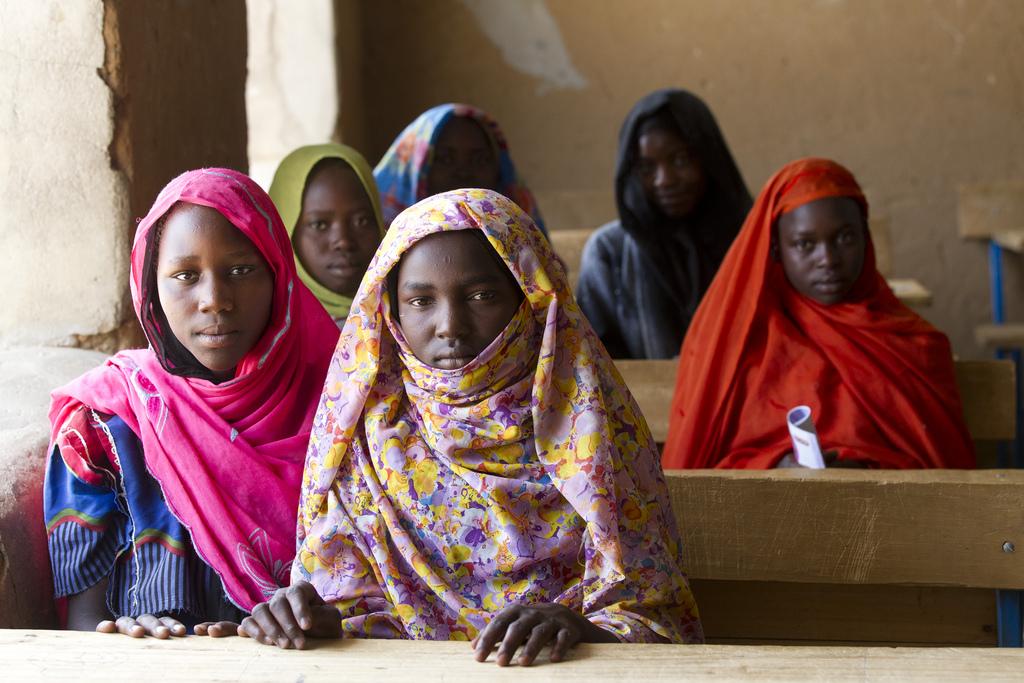
The Global Education and Skills Forum this week in Dubai was a global education meeting with a difference. It had some big names on the agenda – Bill Clinton, Tony Blair and Geoffrey ‘Waiting for Superman’ Canada. Children and young people were everywhere: expressing their views; demonstrating their talents in music, dance and theatre; and reminding us why we were there. But for me the real highlights were the inspiring stories of young people who had suffered in conflict and had turned their tragedies to hope through education. Two really stayed with me.
Shabana completed her education in Afghanistan, went to university in the United States and she is now co-founder and president of the School of Leadership in Afghanistan providing education opportunities for girls and young women in her home country. Her proud parents were in Dubai to share the standing ovation for Shabana’s story.
Dr. Izzeldin Abuelaish, a Palestinian doctor, told the story of the loss of his three daughters and his niece in an Israeli missile attack on their home in Gaza in 2009. Instead of seeking revenge or sinking into despair, Dr.Abuelaish called for an end to bloodshed and conflict in the region and set up the Daughters for Life Foundation with a vision “To Create a Peaceful World Through Education”.
These stories – and many more like them – make the irrefutable case for supporting education in conflict and emergency situations.
What works in education in emergencies, and what doesn’t
In Breaking the Cycle of Crisis, Save the Children has captured some of the lessons we have learned over the past decade working with our partners to deliver education in conflict situations. For me, there are four big lessons coming from what worked – and what didn’t.
- Get the basics right. Make sure children are safe. Involve the community at every stage. For example, we found that community paid volunteer teachers were more motivated in South Sudan than teachers on the national pay role as they felt valued by the community. Make sure basic teaching and learning materials are available – in the local languages. Make the most of the crisis – accelerated learning programs, catch up programs, access to internet based learning programs may all be easier to provide in an emergency. They provide young people with skills and qualifications to build their own escape route out of the crisis.
- Promote schools as zones of peace. Schools, teachers and children are increasingly targets for attack. For example in Myanmar last year a mob of 200 marched on a Muslim school in Meiktila; they torched the school and went looking for the children. When they found them – they beat them and in some cases set them on fire with petrol. Children have become pawns in the deadly game of war. This must stop.
- Good education for girls is good education for all. We have many examples of interventions in the emergency response specifically for girls giving them the chance of an education that they were denied before. More girls like Shabana are going to school now in Afghanistan than before the war. This requires agencies to work with local communities to set up classes in the villages so that girls did not have to walk long distances and so that trusted members of the community could act as teachers with support.
-
Be prepared. According to the World Bank $1 invested in disaster risk reduction and preparedness is worth $10 responding to the crisis after it has happened. Do the simple things that make a difference: better school construction; basic training to children and communities in disaster prone areas; encourage local businesses to support community schemes to respond early to imminent disasters. These simple measures can save lives.
From knowing to doing.
We know that it is possible to provide good quality education in emergencies and conflict situations. We know what to do and we have decades of experience to draw on.
And yet, as I highlighted before, the share of humanitarian aid was less than 2% in 2012 and hundreds of thousands of children affected by the conflict in Syria, Central African Republic and many other countries are denied their right to education.
Some still argue that education is not life saving or a priority in an emergency or a conflict situation.
I would reply, tell that to Shabana or Dr. Abuelaish.
Education cannot wait.