
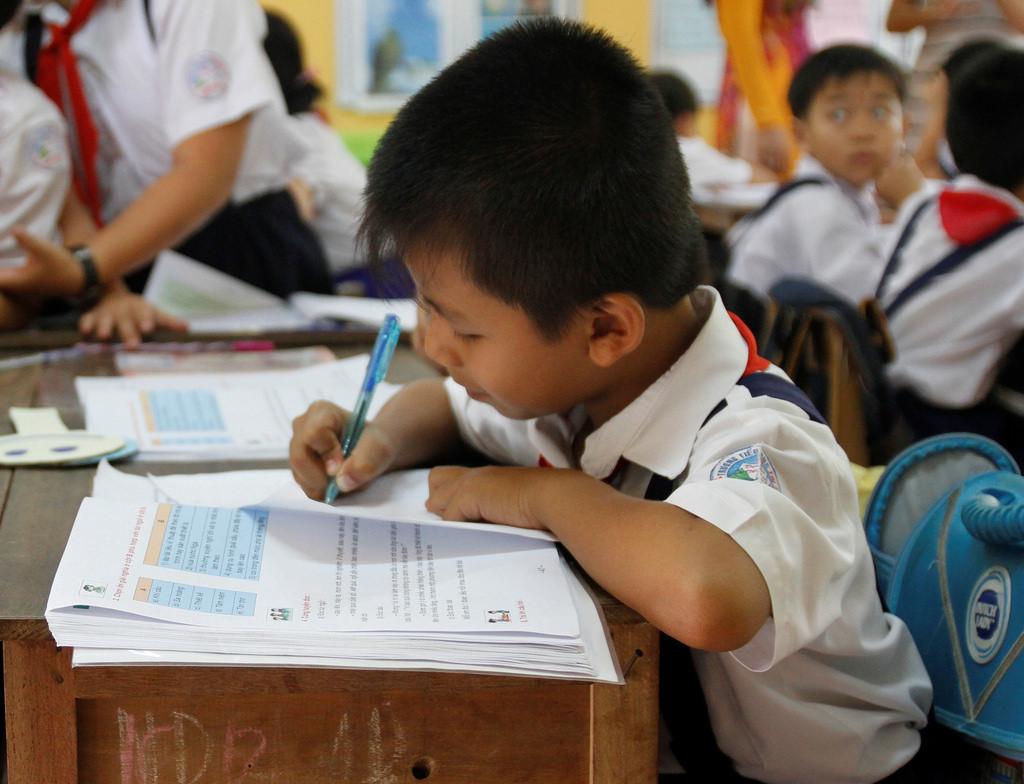
South-south learning exchanges are among the most effective because they are often based on both good practice and real-life experience, such as this wonderful collaborative example of Colombia and Vietnam.
When Vietnam wanted to improve learning outcomes in its primary schools it looked at Colombia’s innovative education model called Escuela Nueva. Here students learn through group discussions with peers while the teachers act as facilitators. Learning materials cater to the specific needs of each child engaging them actively during the lessons. Teachers, parents, and the community work closely together under the program to create a more conducive learning environment. And children actually learn. It is very different from the traditional sit and write approach which used to be common in Vietnam. The Vietnamese government piloted the Escuela Nueva program in 24 primary schools in 6 provinces in 2010 and has now scaled up to all 63 provinces in Vietnam. 440,000 additional students are expected to benefit from the project which is supported by the World Bank and an $84.6 million grant from the Global Partnership for Education.
“The most important aspect of the Escuela Nueva model is the switch from traditional educational methods to a more advanced and effective one,”said Minh Kim Truong, Director of The Education and Training Department in Lao Cai Province. “This process also includes reforms in teaching, facilitating closer relationships between schools and the community, and improvement in school management and materials for both teachers and students.”