
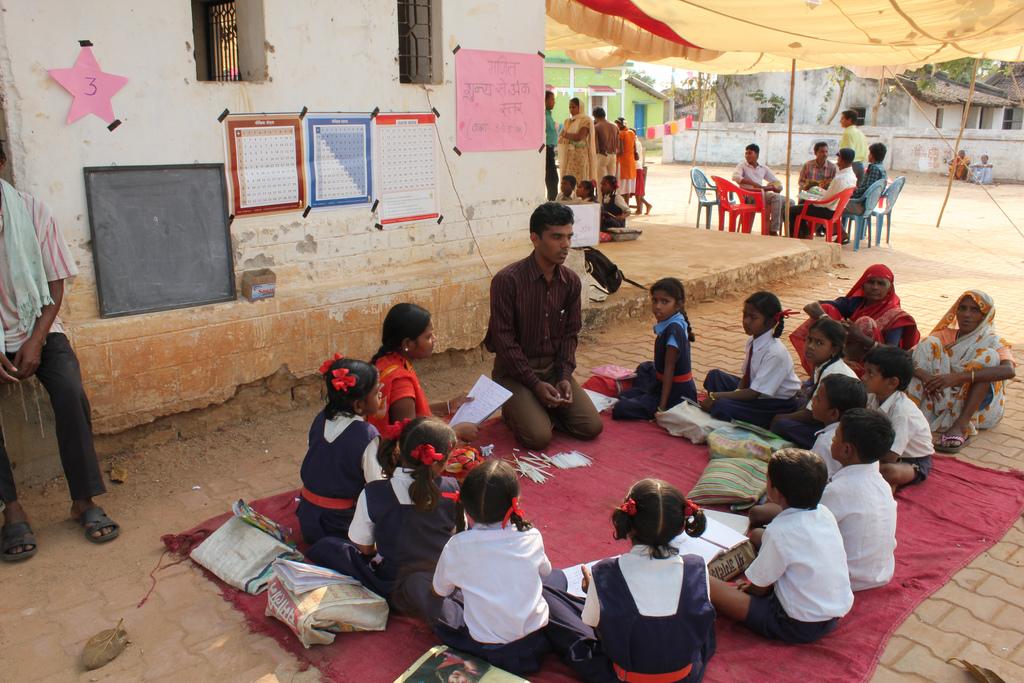
In some of the most destitute parts of the planet, millions of children will never get the chance to go to school. Millions more leave school – either dropping out or slipping through the cracks of broken systems – without mastering basic skills like literacy that are absolutely vital in life.
What would it cost for us to educate all children? In the U.S. alone, aid for education makes up only a fraction of the 1% of government spending that goes to global development assistance, but it is an investment that has the power to reshape the future. A better question might be: What will it cost the world if we fail to educate all children?
Today the far-reaching effects of poverty, disease and strife reverberate around our world. Yet if all students in low-income countries left school with basic reading skills, it is estimated that 171 million people could be lifted out of poverty.
Better education means better life chances. Education has a huge ripple effect in breaking the intergenerational cycle of poverty. We know that education acts as a “social vaccine” that saves lives. We see that educating girls results in fewer mothers dying in childbirth and healthier children. Less poverty also means less instability. A study has found that each year of schooling reduces a male’s chance ofengaging in violent conflict by 20 percent. Without education, many of these life-changing impacts go unrealized. And the cycle of poverty deepens.
The Global Partnership for Education is helping reinvigorate support for education, around a model that works. It takes a country-centered approach – helping design national education sector plans, mobilize domestic resources, and harmonize donor assistance around the needs of the world’s out-of-school children. The advantages of coordinated support are clear in today’s economic climate, in which some bilateral donors are drawing back aid from some of the world’s most at-risk countries. The partnership helps reduce the future price tag by making combined education dollars go further and leveraging additional financing from partners.
If the Global Partnership meets its goal of $2.5 billion at its replenishment meetings in November 2011, this level of funding could have a major impact on the lives of millions over the next three years, to:
- Get 25 million more children into school and learning
- Address the global teacher shortage by training 600,000 new teachers
- Provide 50 million new textbooks in classrooms
- Save the lives of one million children who die annually of preventable causes
Millions of children cannot wait. The costs of illiteracy and poverty are too high. Learn more about how a successful replenishment will help drive us educational progress forward through 2013.