
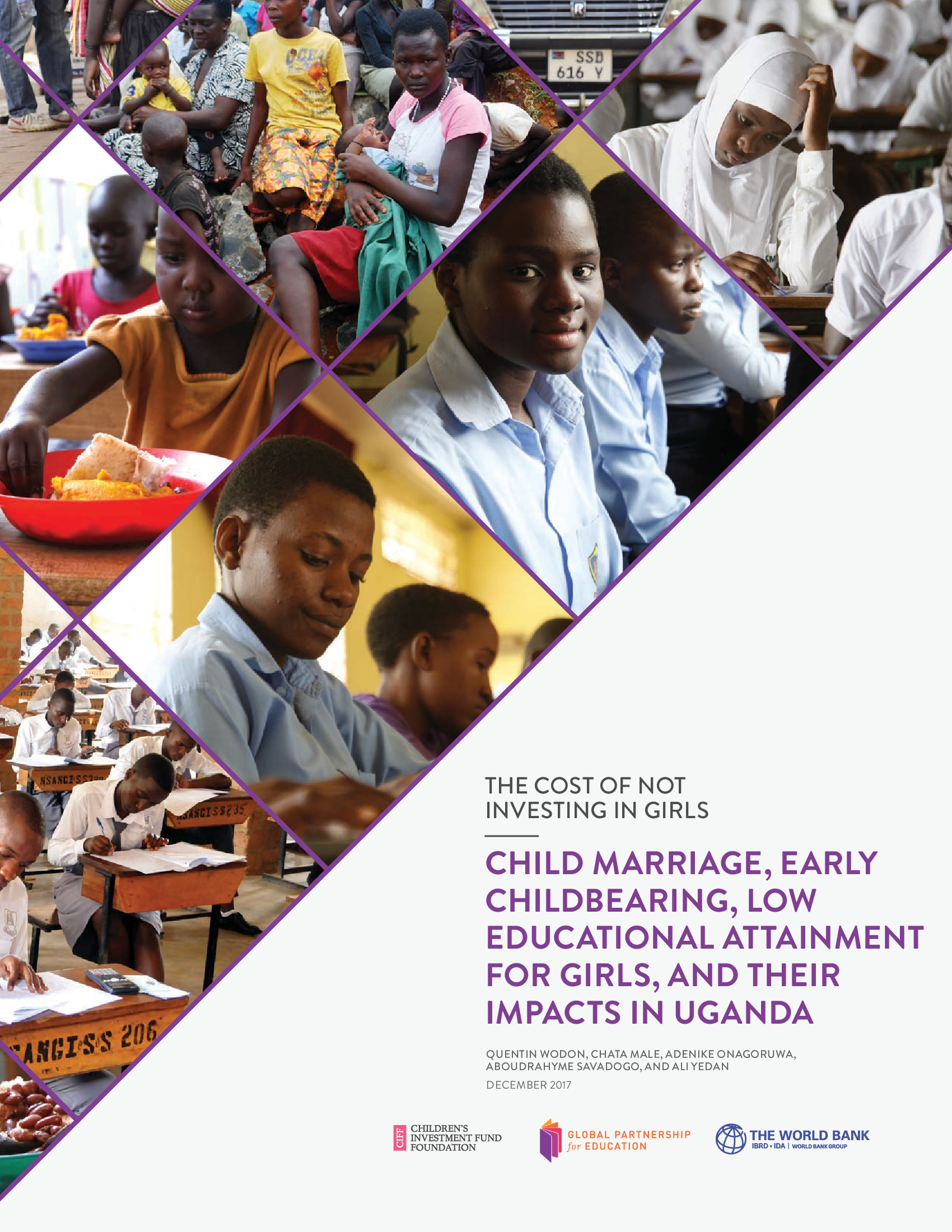
The report in the series "The Cost of Not Investing in Girls" describes the impacts of child marriage, early childbearing and low educational attainment for girls in Uganda.
Despite substantial progress over the last two decades, girls still have on average lower levels of educational attainment than boys at the secondary level in many countries. This is in part because many girls are married or have children before the age of 18, often before they may be physically and emotionally ready to become wives and mothers.
Educating girls, ending child marriage, and preventing early childbearing is essential for girls to have agency, not only as future wives and mothers, but also beyond those roles. It is also essential for countries to reach their full development potential.
Girls’ educational attainment, child marriage, and early childbearing are closely linked. Ending child marriage and early childbearing would improve girls’ educational
attainment. Conversely, improving girls’ educational attainment would help reduce child marriage and early childbearing. In addition, low educational attainment, child marriage, and early childbearing affect girls’ life trajectories in many other ways.
Girls marrying or dropping out of school early are more likely to experience poor health, have more children over their lifetime, and earn less in adulthood. This makes it more likely that their household will live in poverty. Other risks include intimate partner violence and lack of decision-making ability within the household. Fundamentally, girls marrying, having children, or dropping out of school early are disempowered in ways that deprive them of their basic rights. This in turn affects their children. For example, children of young mothers often face higher risks of dying by age five, being malnourished, and doing poorly in school.
Overall, the economic and social costs of child marriage, early childbearing, and low educational attainment for girls are large. This note is part of a series that iscusses trends in girls’ education, child marriage, and early childbearing, their impacts on a wide range of development outcomes, and the policies and programs that could improve opportunities for adolescent girls. The analysis builds on work at the World Bank on the cost of not investing in girls, and on a previous global study on the economic impacts of child marriage conducted by the World Bank in partnership with the International Center for Research on Women.