
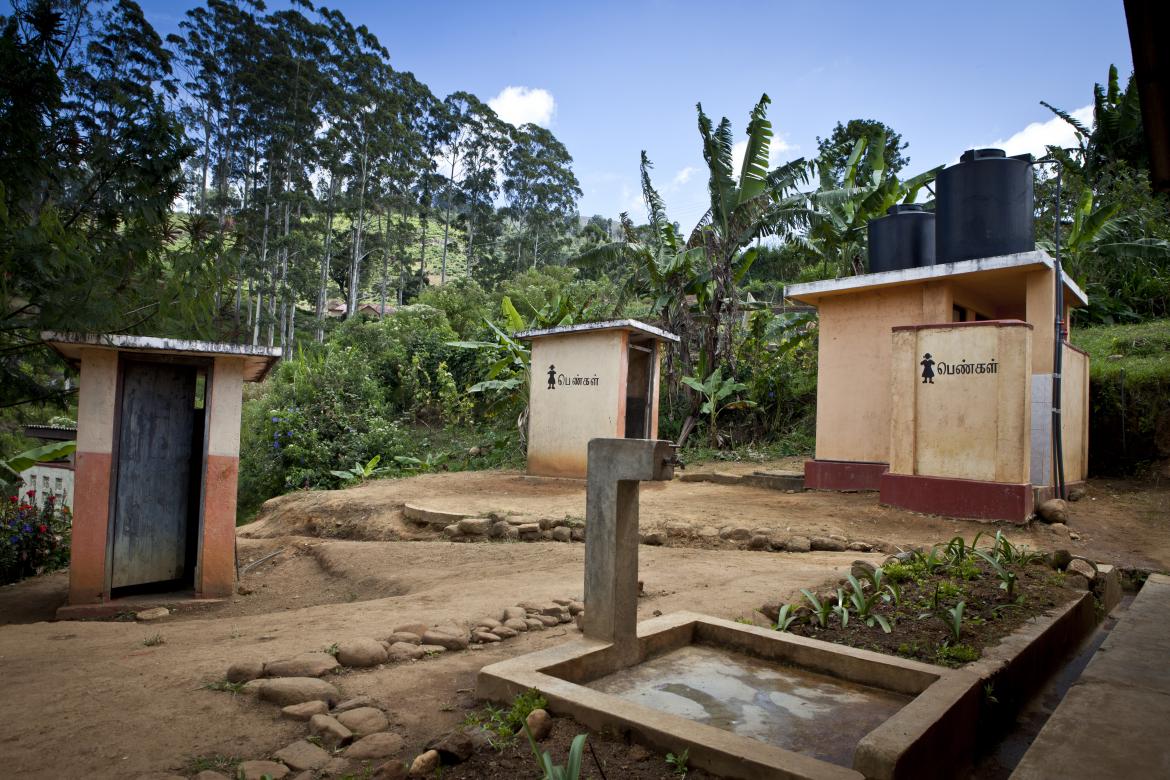
To commemorate Menstrual Hygiene Day today, let me highlight recent advances that help to promote menstrual hygiene management in education.
While progress is hopeful, more open and frank dialogue that destigmatizes menstruation, and continuing research to monitor the impact of promising pilot interventions are needed to ensure that girls are able to participate fully and succeed in schools.
- MHM in Ten (2014-2024) . Columbia University and UNICEF co-hosted the first annual virtual conference on MHM (menstrual hygiene management) in schools in 2012, and at the 2017 conference there were over 1000 online attendees from 70 countries. At the MHM in Ten (2014-2024) meeting, participants formulated the clear vision “that girls in 2024 around the world are knowledgeable about and comfortable with their menstruation, and able to manage their menses in school in a comfortable, safe and dignified way.” This multi-agency coalition identifies key priorities for a global constituency that works to promote MHM in schools.
- Increased access to menstrual cups. The simple provision of menstrual hygiene materials is still a challenge in most developing countries. Many girls resort to materials that are uncomfortable or ineffective. One of the “newest” materials available is the menstrual cup. It was actually invented in 1935 but it’s taken a long time to reach modest acceptability. It is a reusable cup that is inserted into the vagina to collect menstrual blood. It can be used for up to 10 years and costs approximately US$10. Pilot programming is still on-going, with over 75 different brands. With an increased number of manufacturers, there is higher chance of better supply, better design, and lower costs. These developments in new materials and approaches are all definitely good news.
- Continuing development of tools to measure gender equality in education beyond school attendance. Beyond anecdotal stories and questioned data about the link between school absences and menstruation, the link between menstruation and poor school performance is hard to document. To address the constant request for proof of impact of MHM on education, organizations are researching different methods to measure the impact of menstruation on girls in school. My own organization, Save the Children, is making progress :
- We have developed and tested an assessment tool to measure girls’ menstruation-related stress, self-efficacy and school participation. This can be used to assess MHM program processes.
- We are creating a compendium of resources for programs to integrate MHM strategies into all programs. These efforts will help to identify practical and common approaches to MHM.
- Monitoring progress on water and sanitation in the Sustainable Development Goals (SDG). Two of the SDGs include a focus on MHM, even though the word menstruation is not explicitly used. SDG 4 - Build and upgrade education facilities that are child, disability and gender sensitive and provide safe, nonviolent, inclusive and effective learning environments for all; and SDG 6 - achieve access to adequate and equitable sanitation and hygiene for all and end open defecation, paying special attention to the needs of women and girls and those in vulnerable situations; both are widely interpreted to contain a focus on MHM. The Joint Monitoring Program (JMP) of UNICEF/WHO is charged to monitor the status of water and sanitation in schools within the context of the SDGs, having a direct and positive impact on MHM in schools. These agencies and the SDGs have emphasized that facilities should be accessible with clean water, latrine doors that lock, hand-washing stations with soap, disposal bins to throw away disposable pads, and private space for girls to change.
View previous conferences’ reports
With advances like these it should not be necessary in the future for girls to continue attending a school without any toilets or drinking water, or only a single latrine for all the students with a door that often will not close. It should not be necessary for a girl to attend classes where there is no running water to manage her menses, or no trash bin for disposing of a used pad. It should not be necessary for a girl’s education to be disrupted each month due to her menstrual period.
Comments
Thanks, nice article. I would like to know how do we access assessment tool to measure girls’ menstruation-related stress, self-efficacy and school participation. I would like to know hoe to use this, in assessing girls menstrual health.
In reply to menstrual hygiene by Bolaji
Dear Bolaji -- please send me an email -- letting me know who you are and how you would like to use the draft tools.
slee@savechildren.org
Merci pour toutes les informations mises à notre disposition