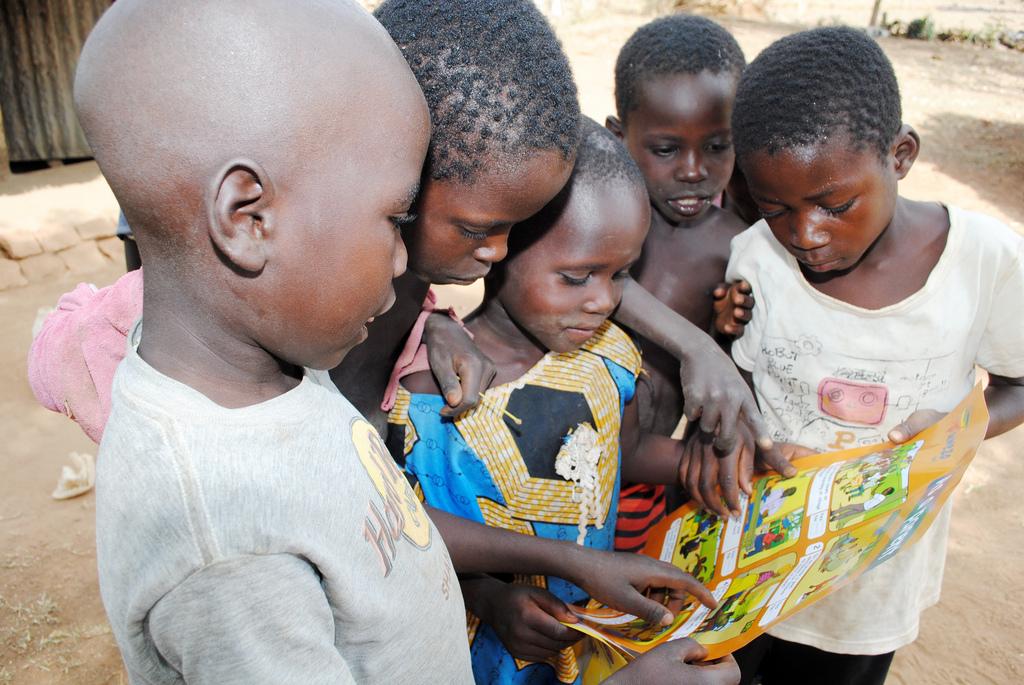
Like many developing countries, Uganda has achieved significant success in increasing primary school enrolment. Like many developing countries, however, Uganda has also come up against significant obstacles in translating that success into better learning and achievements for young people.
What do we mean by ‘better learning’?
• Increased numbers of children completing, not just starting, primary school;
• improved levels of literacy and numeracy;
• more highly developed skills that prepare children for their future lives
These are the kinds of skills which enable young people to continue learning after they’ve left school, to develop secure livelihoods and to live productive lives as citizens, workers and parents. These are the kinds of skills which enable them to lift themselves and their families out of poverty.
However, the much hoped-for improvements in learners’ skills are not happening. Why is that?
In Uganda, many people point to weaknesses in school inspection as one of the key factors in low – and sometimes even declining – levels of achievements. And, indeed, they may be right. School inspectors have their work cut out driving through mud and potholes from school to school throughout the country. And what do they do when they get to their schools? They count children, teachers, textbooks, desks, latrines, classrooms, lesson plans – you name it, they count it! They prepare reports for the government ministry, but rarely any action follows.
But there is hope. In Uganda, Hon Major Jessica Alupo, Minister of Education and Sports, recently stated categorically that learners are at the centre of the work of every school and every district – not furniture, not paper, not structures. Certainly, all these things have their place in making classrooms places where children want to learn, but they don’t bring about learning.
What makes learning happen are:
• teachers who care about children, are knowledgeable about how learning happens and make lessons interesting;
• school leaders who set high standards, support their staff well and work to make their school one which everyone wants to attend, teachers as well as students; and
• an environment for learning in which every single child matters and is expected to succeed, the able and those who have difficulties in learning, the well supported and those whose learning has been interrupted by conflict, poverty, bereavement and disrupted family lives.
In other words, people matter, people make learning happen.
The Minister spoke at the launch of Uganda’s Education and Sports Sector Review where a series of six slim booklets with the overarching title Evaluating and Improving the Quality of Education was launched. The aim of these booklets is to refocus inspection and other forms of school evaluation on improving the learning, achievements, safety and happiness of children. The materials were compiled over the past two years by VSO volunteers working with the Ministry’s Directorate of Education Standards, Uganda’s national schools inspectorate.
The guides present practical strategies for helping primary, secondary and vocational schools to improve the quality of the education they provide. The final guide in the series is for use in training and supporting inspectors themselves, not just in Uganda but in any country.
What is so special about these guide books?
• They are products of effective collaboration amongst inspectors, head teachers, school staff, district officers, tutors working in colleges of education – and, of course, VSO volunteers.
• They have been written by the Directorate of Education Standards and sponsored by VSO and Link Community Development.
VSO and UNICEF are producing CDs containing both the guides and other support materials. The guides will also be made available on the websites of the sponsoring organisations.
Publication: Evaluating and Improving the Quality of Education
1. How can we improve our schools? (PDF document, 1.18 MB)
2. How well is our school led? (PDF document, 1.58 MB)
3. How well are our learners doing? (PDF document, 1.60 MB)
4. How can we improve our teaching? (PDF document, 2.45 MB)
5. How well do we support our learners? (PDF document, 1.69 MB)
6. How we inspect (PDF document, 2.31 MB)
By Elizabeth Ritchie, VSO Volunteer in Uganda
VSO is an independent international development organization that works through volunteers to fight poverty in developing countries.
Changing the World, One Inspection at a Time
Uganda has faced signficant obstacles in translating higher enrollment rates into better learning and achievement for young people. School inspections can be useful but only when they are paired with action from the government ministry.
by Elisabeth Ritchie
|
3 minutes read