
Over the last decade the understanding of how important education is in emergency situations increased. There are now many examples of good education responses helping children to cope in a very difficult situation, providing children and communities with a hope for the future, and offering physical and psychological protection. But there are also two important gaps that need to be closed.
Record low funding
Funding for Education in Emergencies (EiE) has decreased from 2.4% in 2011 to 1.4% in 2012, leaving a huge gap against the estimated need of 4% of humanitarian aid to education. This funding gap needs to be closed.
Investing in preparedness
Not only is there a need for more and better education responses in emergencies, there is also a need for more and better preparedness. Prevention pays, in lives and in investments says the World Bank in Natural Hazards, Unnatural Disasters – the economics of effective prevention.
Every dollar spent on risk reduction saves between $5 and $10 in economic losses from disasters. So including education in preparedness is a smart investment.
This means that donors and humanitarian organizations need to have preparedness plans to ensure effective responses. Likewise, governments need to develop contingency plans for a flexible and sustainable system to respond to emergency situations. Promoting effective preparedness and contingency plans can help closing the funding gap for education in emergencies.
Lessons learned from Sri Lanka: What kind of preparedness is needed?
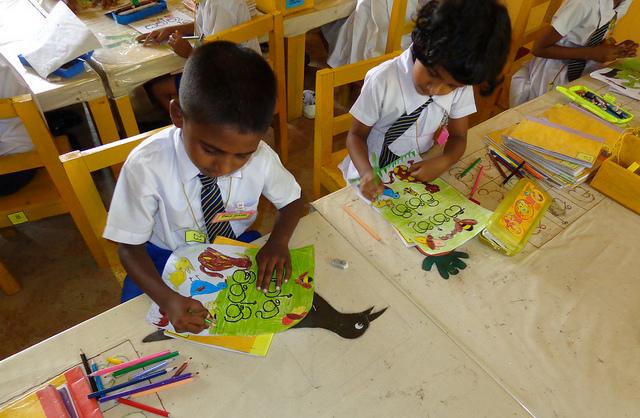
Facing man-made disasters as well as a major tsunami, Sri Lanka learned lessons for preparedness for future emergencies. A recent study “Learning Review and the Preparedness of Education in Emergencies in Sri Lanka” summarizes these lessons from 10 years of work in conflict and disaster. The most important lessons are:
- The Government of Sri Lanka, including the Ministry of Education developed mechanisms for the coordination of recovery and reconstruction activities. These experiences improved preparedness and capacity building for future emergencies. Being prepared will help to identify factors that can support education response to man-made or natural disasters.
- Involvement of highly motivated communities enabled learning activities to start shortly after the tsunami, and to continue with limited interruption in areas affected by ethnic conflict.
- Catch-up education programs, accelerated learning programs and child friendly schools were identified as useful interventions.
- Government policies that did not discriminate on the basis of ethnicity, language, geographical location and gender supported equitable access to education throughout the conflict period.
Also, the flexibility of administrative regulations in disaster situations needs to be part of the policy. The Government of Sri Lanka continued to pay all staff in the areas that were under control of the LTTE rebel movement during the conflict period and supported delivery of education to students in those territories. The rebels too supported the continuation of these services. This had an extremely beneficial effect on students in conflict-affected areas being able to continue their education.
Preparedness is the bridge
Save the Children has a dual mandate which means we work both in long-term development and humanitarian work. We bridge these two areas through disaster risk reduction and preparedness planning. Working with children and youth in school is a central part of our preparedness strategy. All schools should have a school disaster management plan so that both teachers and children know what to do if there is an earth quake or a flood.
What we need is a humanitarian revolving fund to support funding for education in emergencies. We call on donors and governments to support such an initiative.