Driving education transformation in Africa: Highlights from the GPE African partner countries meeting in Addis Ababa

Over three days, participants engaged in rich dialogue, shared lessons learned and explored forward-looking actions to advance education reform across Africa.

by Michelle Mesen, GPE Secretariat, and Michaela Reich, GPE Secretariat
|
4 minutes read
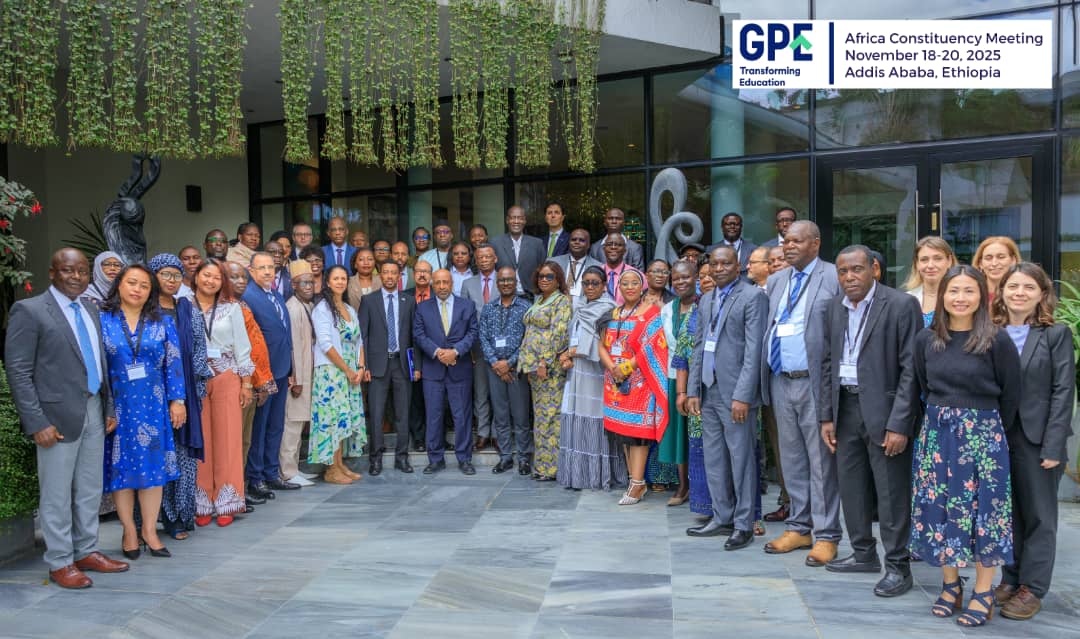
Participants in the 2025 Africa constituency meeting Addis Ababa – Ethiopia. Credit: GPE

Participants in the 2025 Africa constituency meeting in Addis Ababa, Ethiopia.

Credit: GPE

From November 18 to 20, 2025, Addis Ababa became a hub of ideas, collaboration and momentum as 40 senior education ministry representatives from across Africa convened for the GPE Africa Constituency Meeting.

Over three days, participants engaged in rich dialogue, shared lessons learned and explored forward-looking actions to advance education reform across the region.

“This meeting is very useful. It allowed for fruitful exchanges between the different countries present, enabling everyone to learn from each other's experiences.”

Naji Abdel Aziz
GPE Partner County Focal Point for Mauritania

Participants reflected on their achievements under the GPE 2025 strategy, highlighting meaningful progress despite persistent challenges.

Since 2015, the region has seen improved school completion rates, even as numbers of out-of-school children have stagnated, which is an encouraging signal that education systems are becoming more efficient, notably by reducing repetition.

Today, under strong government leadership and with support from local partners, 42 African partner countries have developed partnership compacts that identify the priority reforms they selected to transform their education systems.

At the same time, the GPE grant portfolio in the region has reached record levels in both volume and utilization this fiscal year , underscoring growing momentum and implementation capacity.

The meeting served as a dynamic platform for peer learning and strengthened regional collaboration, while also looking ahead to the GPE 2030 strategy and discussing pathways toward making education financing more sustainable.

Ethiopia’s vision for education reform

Driving education transformation in Africa: Highlights from the GPE African partner countries meeting in Addis Ababa

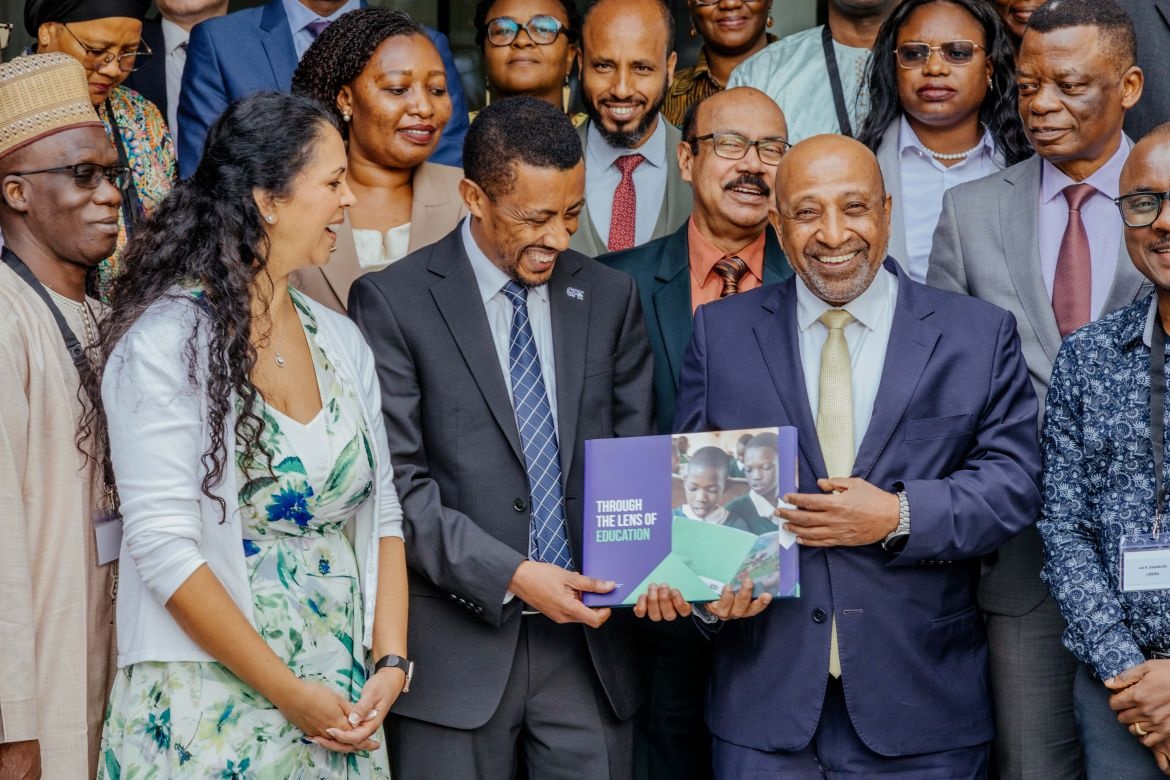
GPE Regional Manager Belay Addise gives a book to Professor Berhanu Nega, Minister of Education of Ethiopia.

Credit:
GPE

A meeting highlight was an address by Hon. Professor Berhanu Nega, Ethiopia’s Minister of Education, who shared his country’s ambitious reform agenda.

Minister Berhanu emphasized that community engagement lies at the heart of Ethiopia’s education strategy, and expressed appreciation for GPE’s flexibility and partnership in responding to the country’s evolving needs.

Ethiopia’s reforms focus on improving learning outcomes, and include key actions such as:

  • Expanding pre-primary education to ensure children are ready to learn
  • Scaling up school feeding programs to improve attendance and learning outcomes
  • Mobilizing communities to help close financing gaps
  • Improving the efficiency and transparency of textbook distribution
  • Reforming teacher training, with a renewed emphasis on subject matter expertise and digital skills
Driving education transformation in Africa: Highlights from the GPE African partner countries meeting in Addis Ababa

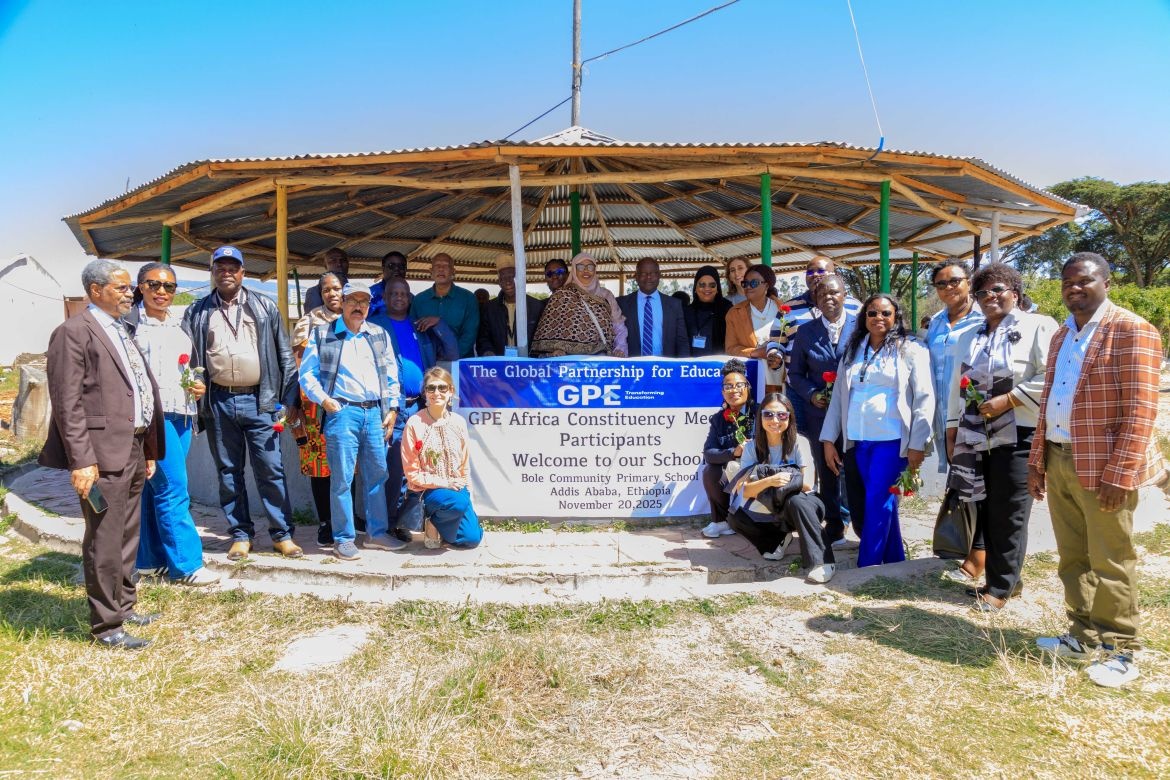
Group photo during a school visit during the 2025 Africa constituency meeting in Addis Ababa

Credit:
GPE

Participants had the opportunity to see these reforms in action during visits to Bole Community School and Dejazmach Wondirad Primary School.

Conversations with ministry officials, school leaders, teachers, and students provided valuable insights into the school feeding program. The program is effectively managed through strong collaboration between the community and the government.

Meals are locally sourced and served twice daily, offering highly nutritious components that support children’s growth and positively impact learning outcomes.

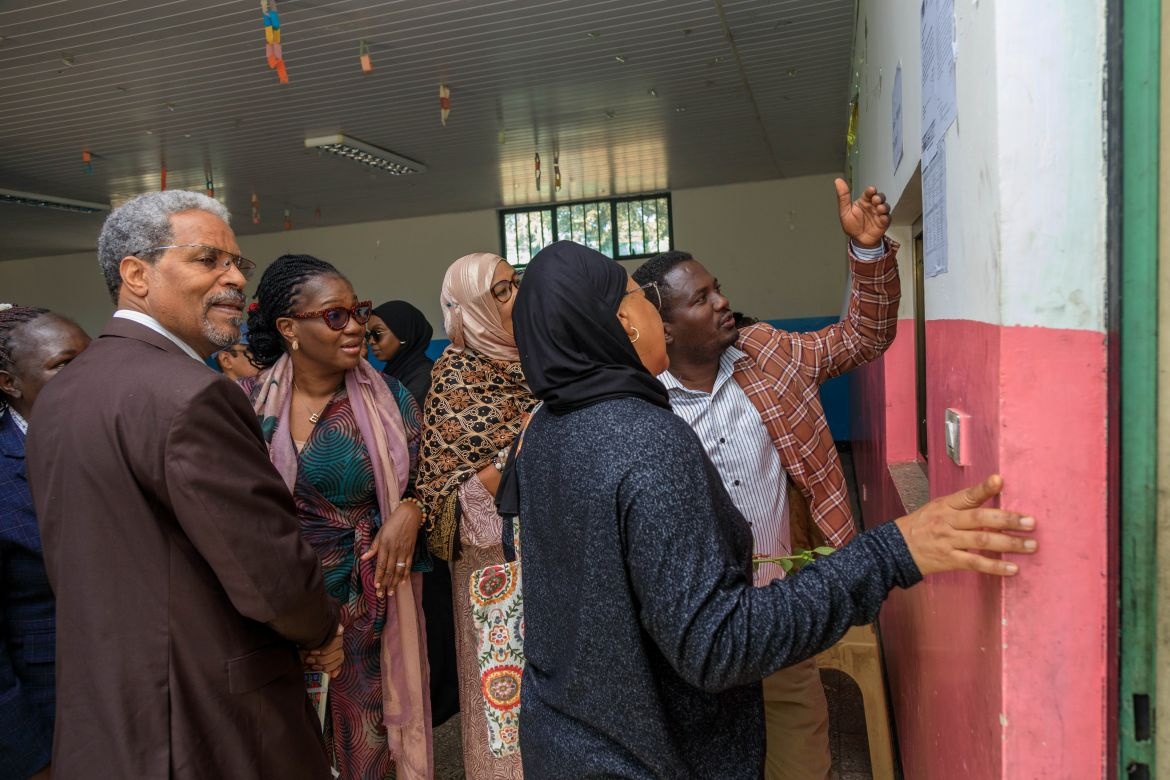
Participants also visited a resource center equipped to promote inclusive education and observed the active inclusion of children with disabilities in classroom settings. In addition, they learned about the critical role communities play in managing capitation grants and ensuring efficient use of school resources.

Driving education transformation in Africa: Highlights from the GPE African partner countries meeting in Addis Ababa

Participants make observations during a school visit, as part of the Africa partner countries' meeting

Peer learning that transcends borders

Throughout the meeting, participants reaffirmed the value of peer learning and regional collaboration, particularly among neighboring countries facing similar education challenges.

Together, in a participatory approach, GPE and partner countries are working collaboratively to improve the education system, and tools are provided to partner country focal points to help them accomplish their mission.

Herilalaina Eddie Andriantahina
GPE Partner Country Focal Point for Madagascar

There was strong consensus on the need to strengthen evidence-based approaches, share innovations, and work collectively on cross-cutting priorities such as equity, learning outcomes, and system resilience.

Across the region, priority reforms consistently emphasize inclusive and equitable system transformation. Many countries are focusing on:

  • Expanding pre-primary education to prepare children to learn
  • Strengthening foundational literacy and numeracy
  • Improving teaching quality and workforce management
  • Reducing disparities and enhancing school safety
  • Promoting effective governance and resource management, with gender equality integrated across reforms

Financing the future: Creating pathways to sustainability

As the global financing landscape evolves, participants emphasized the urgent need for a renewed approach to education financing.

A dedicated session explored how countries can move from dependency toward sustainability by aligning external support with national systems and deploying innovative financing tools rooted in fiscal realities.

“Sustainable financing for education was a very interesting session because it tackled real issues developing countries like Malawi are facing: limited fiscal space, debt burden, decreasing donor inflows, among others. I particularly liked the options provided so as to ensure that the education sector gets the resources it requires to improve quality of education.”

Victoria Geresomo
GPE Partner Country Focal Point for Malawi

Discussions centered on positioning education as a core national investment, strengthening partnerships, and developing credible, long-term financing pathways that catalyze domestic investment.

These conversations are especially timely as GPE’s 5th financing campaign "Multiply Possibility" gains momentum. The campaign aims to raise US$5 billion and mobilize an additional US$10 billion in co-financing, reinforcing education as a cornerstone of sustainable development and giving 750 million children in more than 90 countries a better education.

Looking ahead

The meeting concluded with a shared commitment to deepen collaboration, accelerate reform, and advance sustainable financing for education systems across Africa.

As partner countries prepare for the transition to GPE 2030, the energy, innovation, and collective resolve demonstrated at this meeting signal a powerful path forward.

A path where strong partnerships accelerate transformative changes for learners across the continent.


Multiply possibility: GPE Case for Investment 2026-2030

Education unlocks infinite possibilities, transforming lives, communities and the world.

Discover the Case for Investment

Related blogs

Comments

This is to appreciate the wonderful work you doing to my country Ethiopia. Perhaps from my observation in your website, if possible we want to partner with you on the early learning/foundational learning.
This is from the African Center for Early Childhood Development where we are leveraging the implementation of the national ECDE policy framework in Addis Ababa and additional five regions.
Thank you
Meseret

Leave a comment

Your email address will not be published. All fields are required.

The content of this field is kept private and will not be shown publicly.

Comments

  • No HTML tags allowed.
  • Lines and paragraphs break automatically.
  • Web page addresses and email addresses turn into links automatically.