Making education spending count: Why Africa’s parliaments matter

Education budgets alone won’t improve learning. Across Africa, parliaments have a crucial role in ensuring education investments are spent effectively, equitably and backed by evidence. Drawing on Nigeria’s experience, Hon. Mark Useni explores how stronger parliamentary oversight can help turn education spending into better opportunities and learning outcomes for every child.

by Mark Bako Useni, International Parliamentary Network for Education
|
5 minutes read
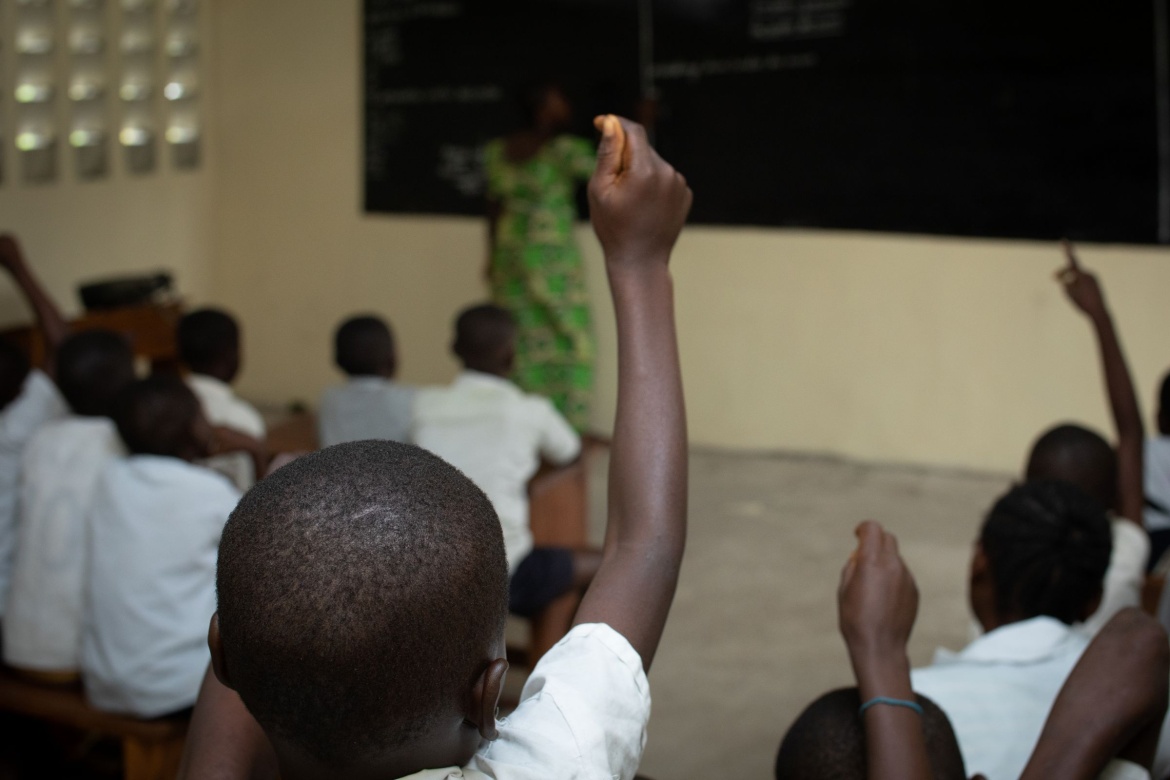
Children raise their hands as teacher Amunazo Belinda gives a lesson at Manua school near Kindu, in Maniema province, Democratic Republic of Congo. Credit: GPE/Elvix Kwanu

Children raise their hands as teacher Amunazo Belinda gives a lesson at Manua school near Kindu, in Maniema province, Democratic Republic of Congo.

Credit: GPE/Elvix Kwanu

Across Africa, education systems face growing pressure to deliver more with limited resources. Governments are navigating constrained public finances, rising demand for education and persistent inequalities in access and learning.

These challenges demand difficult choices about where resources are allocated and how existing investments can deliver better results for children.

But too often, the discussion about education financing focuses on how much money is available, rather than how effectively it is used. Parliaments need to be more closely engaged in these conversations.

At the recent 5th GPE Knowledge and Innovation Exchange (KIX) Africa Research Symposium hosted by UNICEF and the International Development Research Centre (IDRC) in Nairobi, I joined fellow parliamentarians, all members of the International Parliamentary Network for Education from Kenya, Senegal, Zambia and the Democratic Republic of Congo, along with government officials, researchers and education partners to examine how countries can make better financing decisions.

One question anchored our discussions: how do we ensure that evidence about what works actually influences education budgets and spending to improve the quality of education?

For members of parliament, this question goes to the heart of our responsibilities.

Beyond approving the budget

Parliaments play a critical role in shaping how education systems are financed. We legislate, approve budgets, represent our communities and hold governments accountable for how public resources are used.

An education program may be backed by strong evidence and included in national policy but still fail to deliver on improving learning if resources are poorly allocated, funding is delayed or implementation is not properly monitored. Without sustained parliamentary scrutiny, gaps between approved budgets, actual expenditure and implementation can persist without sufficient accountability.

Parliament has the authority to question these discrepancies, to demand explanations and to press for corrective action. Our oversight must therefore extend beyond budget approval to examine whether resources reach schools and communities, whether programs achieve their objectives and whether public expenditure is translating into better learning.

And when evidence shows that something is not working, parliament must be prepared to act through exercising the functions of oversight, budgeting and legislating to ensure accountability for effective implementation.

Lessons from Nigeria

In Nigeria, our work to reform the Universal Basic Education (UBE) Act, which has now been forwarded to the President for assent, illustrates how parliamentary action can strengthen education financing.

As Chair of the House Committee on Basic Education and Services, I have been working to amend the legislation governing basic education, including proposals to strengthen federal financing and incorporate early childhood care and education into free and compulsory education.

These reforms are intended to strengthen the financing framework and expand access to education. However, Nigeria's basic education remains severely affected by low public investment (at just 1.3% of GDP) and severe cross-state disparities in funding. This crisis is worsened by incomplete state matching commitments, weak planning capacities and slow fund execution, leaving fewer than half of the states able to access their full disbursements on time.

But legislation alone cannot guarantee that resources will be used effectively.

In Nigeria’s federal system, where education responsibilities are shared across different levels of government, parliamentary scrutiny is essential to ensure that financing arrangements work in practice and resources reach the institutions and learners they are intended to support. Our legislative and oversight responsibilities must reinforce one another.

Passing a reform is an important step, but ensuring that it works in practice requires sustained scrutiny. This includes rigorous budgeting sessions, committee investigations into how funds are spent, and post-legislative reviews to verify that resources reach those they are intended for.

Ensuring resources reach those that need them the most

Nigeria’s experience reflects a wider challenge facing education systems across Africa: ensuring that financing reforms deliver meaningful improvements for the children and communities that need them most. Using resources efficiently is not simply about spending less. It means ensuring that investments respond to learners’ needs, address barriers to education and improve learning.

Efficiency must therefore go hand in hand with equity.

The Global Education Evidence Advisory Panel (GEEAP) can help us with efficient budgeting decisions as the report ‘Cost Effective Approaches to Global Learning’ outlines some of the best initiatives in low- and middle-income countries to improve the quality of education. But within low-income contexts, there are still disparities between children living in urban communities and those living in remote, rural or disadvantaged communities where they often face greater barriers to quality education.

Schools serving these communities may require additional investment to address teacher shortages, inadequate infrastructure or other challenges that prevent children from learning. An allocation that appears equal on paper may not be equitable in practice.

Financing that fails to address these disparities risks leaving the same children behind, regardless of how well resources are administered.

Members of parliament must scrutinize these choices, asking not only whether public funds are being spent as intended, but whether they are reaching the learners who need them most and producing the learning outcomes we expect. This requires reliable information about how resources are allocated, spent and translated into results.

Researchers, civil society organizations and education partners can strengthen parliamentary scrutiny by providing evidence about where financing gaps persist, which approaches are improving learning and where public expenditure is falling short.

This evidence can inform parliamentary budget debates, committee inquiries and legislative reform, helping translate research into decisions about how education resources are allocated and used. But engagement must happen throughout the budget and policy cycle, not only after decisions have been made.

Parliament should be part of the conversation from the outset

As African countries navigate constrained public finances and growing demand for education, we, as members of parliament, must exercise our legislative, budgetary and oversight powers to ensure available resources are allocated equitably, spent efficiently and translated into better learning.

If we want education financing to deliver better results, parliament must be part of the conversation and part of the solution.

Related blogs

Leave a comment

Your email address will not be published. All fields are required.

The content of this field is kept private and will not be shown publicly.

Comments

  • No HTML tags allowed.
  • Lines and paragraphs break automatically.
  • Web page addresses and email addresses turn into links automatically.