Teachers in Cambodia prepare to bring climate change education into classrooms
by UNESCO Cambodia
|
4 minutes read

Through the Climate-Smart Education Systems Initiative, Cambodia is supported by GPE and UNESCO to equip teachers with the tools and confidence to teach climate change in meaningful ways.

This story was published previously on UNESCO’s website.

When Vuthy Khorn first entered the classroom as a history and geography teacher, climate change was not something he thought he was teaching.

Like many teachers, Vuthy covered content that was already present in the curriculum, but without linking it to broader environmental challenges. Climate change felt distant and intimidating.

 Vuthy Khorn

“I had no idea what climate-related topics meant. I just didn’t like them. The terminology seemed too complicated.”

Vuthy Khorn
History and geography teacher, Cambodia

In Cambodia, climate change is part of daily life. Floods, droughts and extreme heat increasingly affect communities, especially in rural areas.

These disruptions also reach schools: in 2022, floods damaged or closed 280 schools across 14 provinces across the country, putting learning continuity at serious risk.

Teachers in Cambodia prepare to bring climate change education into classrooms

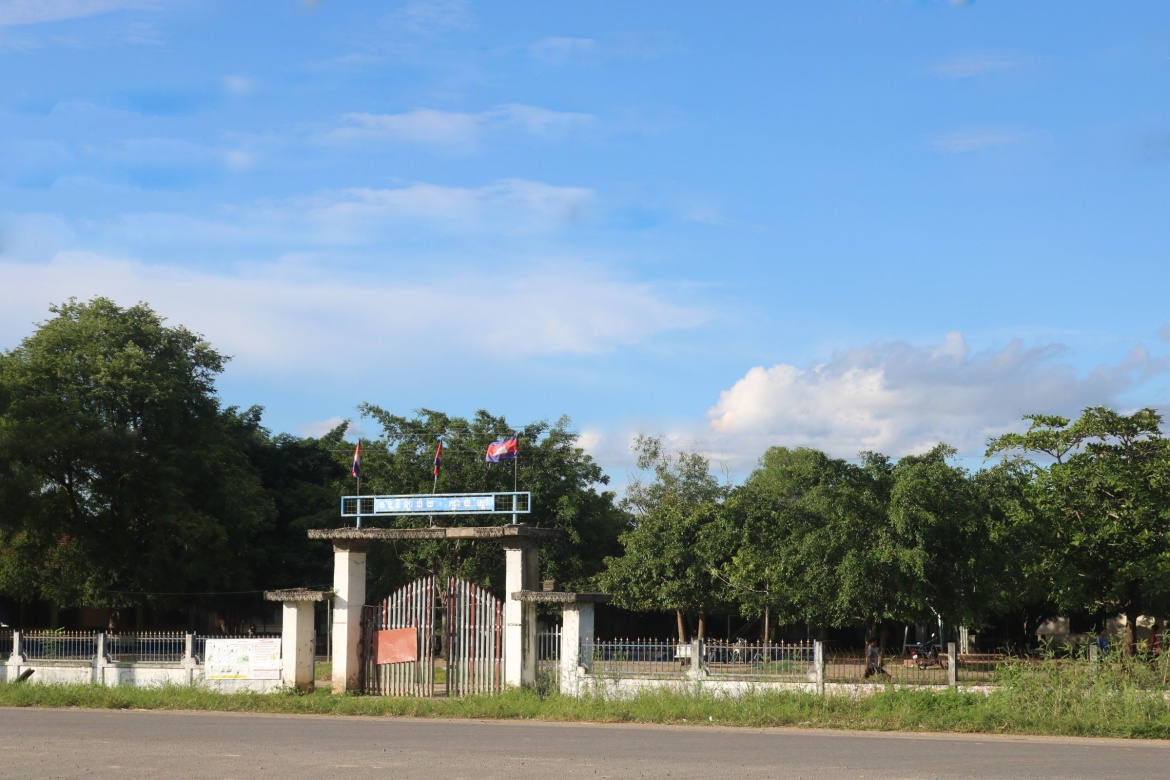
Entrance to a school in Cambodia, where teachers are being trained to integrate climate change education into classroom learning.

Credit:
KEM VOEURN/Shutterstock.com

In response, climate-related topics are increasingly reflected in education policies and curricula. Yet for many teachers, translating these themes into classroom practice remains a challenge. Bridging this gap requires approaches that connect climate concepts to everyday learning.

Integrating climate change education into teaching practice

To support this shift, UNESCO, together with national partners, including the General Department of Teacher Education and Training, the Ministry of Education, Youth and Sport, is working through the GPE-funded Climate Smart Education Systems Initiative (CSESI) to strengthen teachers’ capacity and support the integration of climate education into lessons and classroom practice.

For teachers who have been participating in a series of CSESI workshops from the start, this has marked a turning point.

Vuthy Khorn

“The way the content was designed made climate change education easier to understand and very contextualized. It completely changed my perspective.”

Vuthy Khorn
History and geography teacher, Cambodia

Through these workshops, teachers and teacher trainers work together to unpack climate concepts and translate them into practical teaching tools. They explore how to simplify scientific terminology, adapt lesson plans, and design activities that relate directly to the learner's reality and local contexts.

From abstract concepts to real-life lessons

At the center of this effort is the Battambang Teacher Education College (BTEC), where educators and lecturers are developing an instructional package for pre-service and in-service teacher training, helping teachers translate climate concepts into meaningful classroom lessons.

The goal is to embed climate change education across subjects such as mathematics, chemistry, Khmer literature, history, and physical education.


Teachers in Cambodia prepare to bring climate change education into classrooms

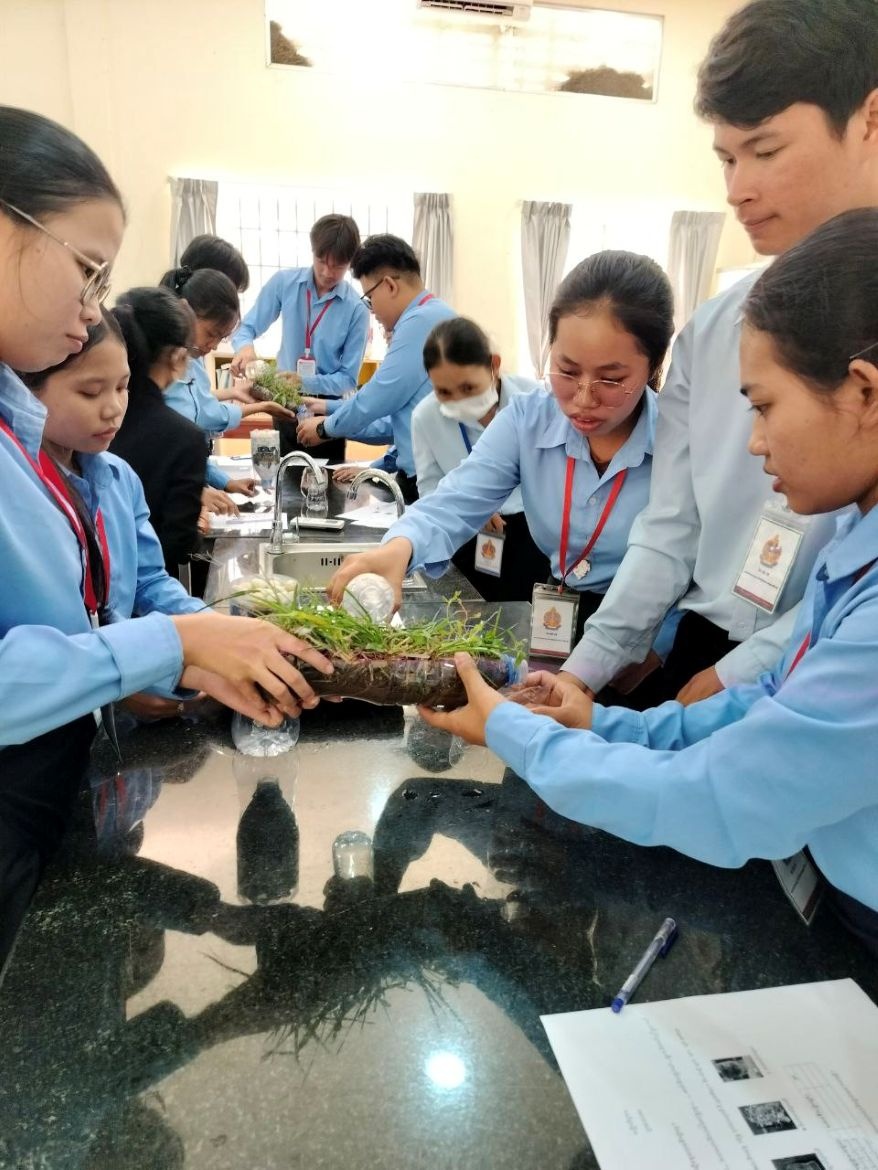
Teacher trainees take part in a hands-on classroom activity as part of efforts to strengthen climate change education in Cambodia.

Credit:
Battambang Teacher Education College (BTEC)/Sopha Rann

For example, teachers in Cambodia have explored how a mathematics lesson on multiplication could incorporate real-life applications, such as calculating carbon dioxide (CO₂) absorption by trees.

By simplifying terminology and linking abstract concepts to real-world challenges, these approaches make learning more engaging and relevant.

“Primary school teachers are agents of change. When we train them in climate education, students learn from their teachers and influence their families and communities, helping create a more resilient society in Cambodia.”

Ratha Chea, Director of Battambang Teacher Education College, Cambodia

Building on this approach, Vuthy integrates climate change into his history lessons in meaningful ways. He connects past events to present-day climate realities.

Students explore how environmental factors such as drought or flooding have influenced societies over time, and then reflect on how similar challenges affect their own communities today.

Teachers in Cambodia prepare to bring climate change education into classrooms

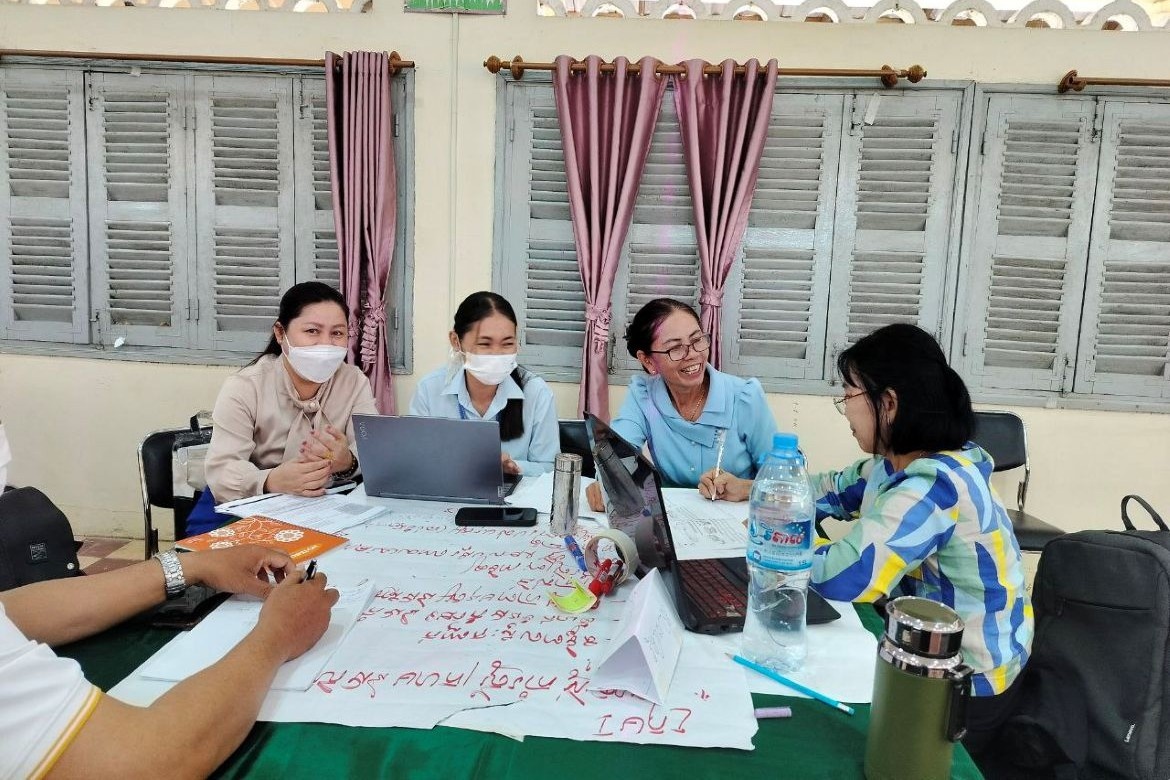
Participants work in groups during teacher training on integrating climate change and environmental sustainability into classroom learning.

Credit:
Battambang Teacher Education College (BTEC)/Sopha Rann

Adapting climate education to local contexts

Now, as a teacher trainer, Vuthy also supports other teachers and encourages them to look closely at their surroundings to develop their own tailored climate-related lessons.

Teachers in Cambodia prepare to bring climate change education into classrooms

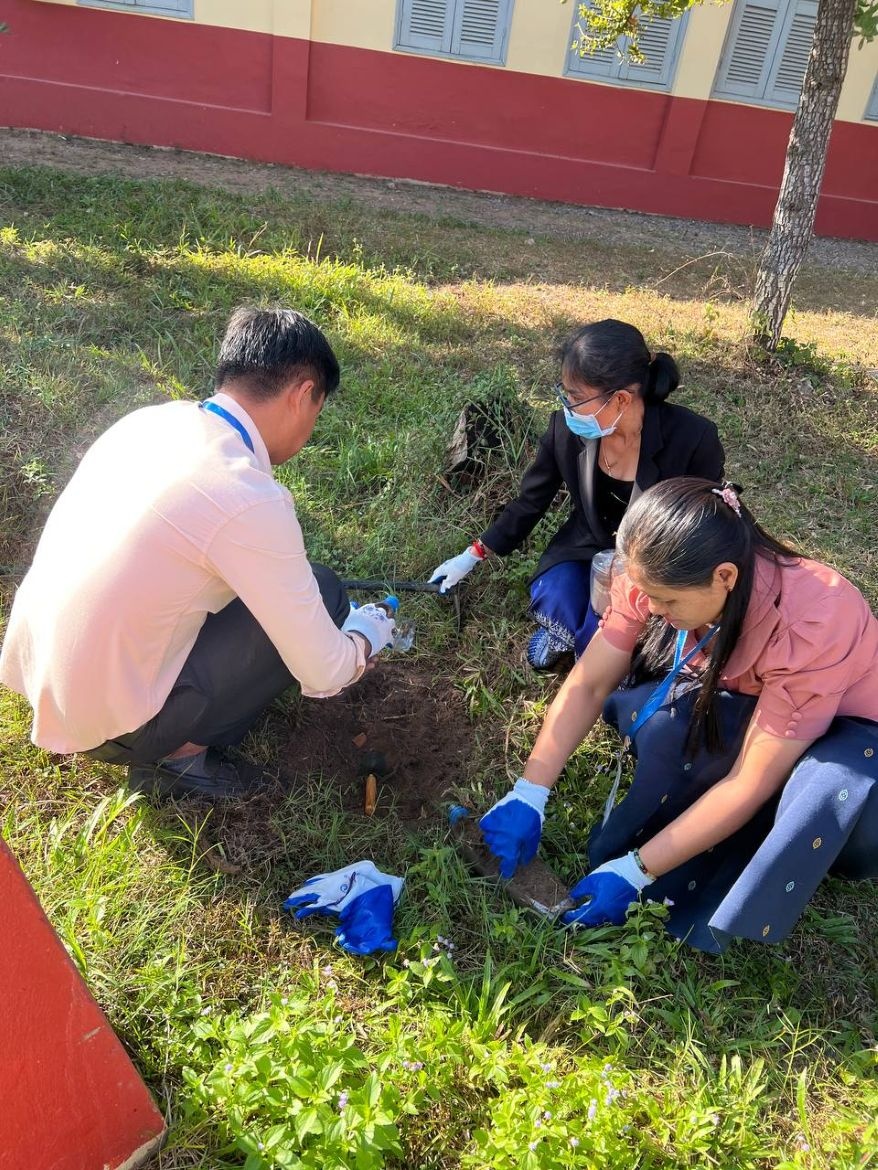
Teacher trainees take part in a hands-on environmental activity on school grounds during climate change education training in Cambodia.

Credit:
Battambang Teacher Education College (BTEC) / Uy Sokheang
Vuthy Khorn

“Teachers in mountainous areas will approach climate issues differently from those living near rivers or in flood-prone areas. I guide them to reflect on their own environment, identify local challenges, and think of practical solutions.”

Vuthy Khorn
History and geography teacher, Cambodia

Through CSESI, GPE, UNESCO and partners are helping Cambodia turn climate education from policy into practice.

By strengthening teacher training and providing practical tools, this work is enabling teachers like Vuthy to bring climate change into their classrooms in simple and meaningful ways, equipping students with the knowledge and skills to respond to the challenges around them.

About The Climate Smart Education Systems Initiative

The Climate Smart Education Systems Initiative (CSESI) is a global program funded by the Global Partnership for Education (GPE), and intended to strengthen the institutional capacity of Ministries of Education to integrate climate change adaptation and environmental sustainability into national education sector plans, budgets, and strategies, curriculum and teaching.

It also enhances the Ministry’s capacity for cross-sectoral coordination on climate and environment-related policy and programming.

This initiative is globally implemented by UNESCO, its International Institute for Educational Planning (IIEP), and Save the Children.

Since the project inception in 2024 in Cambodia, UNESCO has been supporting the development of evidence-based policies and plans, strengthening climate data for education planning, and integrating climate change into curricula, pedagogy, and teacher training.

Related blogs

Leave a comment

Your email address will not be published. All fields are required.

The content of this field is kept private and will not be shown publicly.

Comments

  • No HTML tags allowed.
  • Lines and paragraphs break automatically.
  • Web page addresses and email addresses turn into links automatically.