A version of this blog was published originally on the GADRRRES website.
Even as the dust was hardly settled over the village of Blatten, representatives from across countries and sectors descended on another part of Switzerland to discuss protection of people and communities from future crises.
The Global Platform for Disaster Risk Reduction (GP2025), co-hosted by the UN Office for Disaster Risk Reduction (UNDRR) and the government of Switzerland, was held in Geneva from 2 to 6 June.
Thousands of delegates from the Caribbean to Comoros to the Cook Islands came together to act for resilience today – the theme of the Platform.
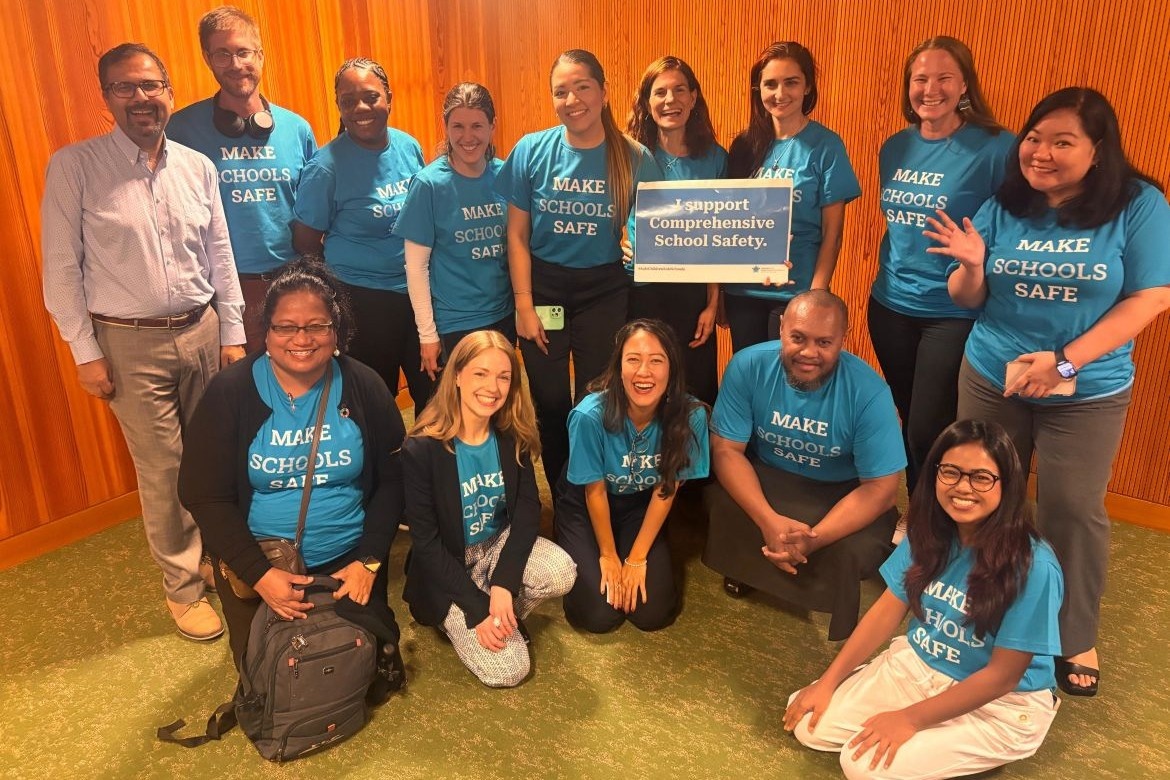
With thanks to the championing efforts of the co-hosts, one topic emerged as a clear focus: safe schools.
Here are 4 things we learned about safe schools at GP2025.
1. Global evidence shows the urgent need for accelerated action.
The annual impact of disasters on education is catastrophic. Research from UNDRR released immediately before the Platform highlights that disasters cost education systems an annual average loss of $35.9 billion.
The key findings from the Comprehensive School Safety Policy Survey 2024 add a human dimension to this financial loss. Governments in the survey recognized a wide range of hazards impacting education systems, with nearly nine in 10 governments highlighting health, bullying and violence, and climate change impacts as affecting schools.
However, responses are not as widespread as the impacts demand:
- just 12% of governments reported systematically funded upgrades of school buildings;
- nearly half of governments stated that educational continuity guidance was limited, poorly distributed, or poorly understood;
- less than one in five governments mandate teacher training on disaster risk reduction.
The need for scaled up action across the pillars of the Comprehensive School Safety Framework is clear.