
Climate-smart education to multiply possibility for all

Climate change is disrupting learning worldwide. Learn how investments in climate-smart education are helping countries protect schools, strengthen resilience and secure children's futures.

by GPE Secretariat
|
5 minutes read
Students and their teacher in Phalombe District, Malawi, attend a lesson moments before participating in the third safety drill. Credit: GPE/Trans.Lieu

Students and their teacher in Phalombe District, Malawi, attend a lesson moments before participating in the third safety drill.

Credit: GPE/Trans.Lieu

The accelerating impacts of climate change are changing how children go to school and learn. Through grants, technical assistance and partnerships, GPE works to strengthen education systems so that they can withstand the impacts of climate change and build resilience.

Since 2021, GPE partner countries have saved $2.5 billion in potential damages from climate events. Through the current financing campaign “Multiply Possibility,” a fully funded GPE could save partner countries $7.7 billion by 2030 by funding the construction of climate-resilient schools and classrooms.

Building climate-smart education systems

Schools can be powerful platforms for resilience: they keep children safe during disasters, equip communities with climate knowledge and support recovery.

Despite this potential, education persistently receives a small share of climate financing— just 1.5% of global climate finance in 2021. GPE is uniquely positioned to drive climate adaptation and action through education, with partner countries steadily increasing their focus on joint climate-education initiatives.

Since 2021 alone, the proportion of GPE grants financing climate resilience has nearly doubled—echoing the pressing needs for countries to adapt education systems to keep children learning.

With its 5-year strategic plan, GPE 2030, GPE will scale up support for partner countries to embed climate risk into education sector planning, financing and delivery, and align education investment with broader climate policies and national adaptation goals.

Climate-smart education to multiply possibility for all

Pre-primary teacher Dhan Kumari Dhakal and her students play and learn about animals. Padmodaya Secondary School, Ramshah Path, Kathmandu. Nepal.

Credit:
GPE/Federico Scoppa
  • Through the Climate Smart Education Systems Initiative, GPE is supporting 10 Pacific partner countries using a coordinated regional approach closely aligned with the Pacific Regional Education Framework, financed in part through a $14.9 million GPE grant and implemented in collaboration with the Pacific Heads of Education Systems. The initiative is strengthening climate risk analysis and education sector planning, developing technical guidance for safer and greener schools, supporting climate-responsive curricula and teacher development, and strengthening ministries' capacity to pursue climate finance opportunities.
  • As part of the same initiative, Nepal participated in a workshop organized by its ministry of education, UNESCO and the UNESCO International Institute for Educational Planning (IIEP) to strengthen capacities of government officials in using climate data to identify schools vulnerable to climate risks and how to keep children learning when climate shocks occur. The first in a series, the workshop brought together education authorities and climate agencies so that they could review available education and climate data as well as discuss how these data could be used together to better support planning and improved coordination across climate and education sectors.
  • Three years on from Cyclone Freddy, the ministry of education in Malawi has developed standard operating procedures for schools, translated into local languages and adapted into child-friendly versions, that focus on preparations, safe evacuation and how to continue education in the event of climate-related hazards (floods, cyclones and heatwaves). Malawi is one of the first GPE partner countries to join the Climate Smart Education Systems Initiative.
  • Through the initiative, the ministry of education in Lao People’s Democratic Republic has also organized a workshop with Save the Children to build capacity for government staff on climate-smart education, disaster-risk reduction and emergency response preparedness, and to increase awareness of policies and commitments. The workshop supported greater coordination for the climate change and disaster emergency response within the country’s education sector.
  • Across the Caribbean, 5 GPE partner countries are making strides in responding to climate risks through the climate smart initiative. With additional technical support from UNESCO-IIEP, Dominica, Grenada, Guyana, Saint Lucia and Saint-Vincent-and-the-Grenadines are strengthening data systems to capture climate data important for education, including national climate risk analyses, and develop climate adaptation plans for the education sector. Partner countries are also unlocking climate finance for education supported by financial advisors from the Climate Finance Access Network.
  • As one of the world’s most climate-vulnerable nations, Tonga faces frequent cyclones, tsunamis and rising sea levels that threaten schools, disrupt learning and put children at risk. The government has made climate resilience within education a national priority, working to safeguard education infrastructure, integrate climate change into curricula and ensure teachers and students are equipped to cope with shocks. With support from GPE and partners through the BRACE initiative (Building the Climate Resilience of Children and Communities through the Education Sector), Tonga is strengthening its education system so children can keep learning during crises and schools can serve as safe spaces for communities.
Climate-smart education to multiply possibility for all

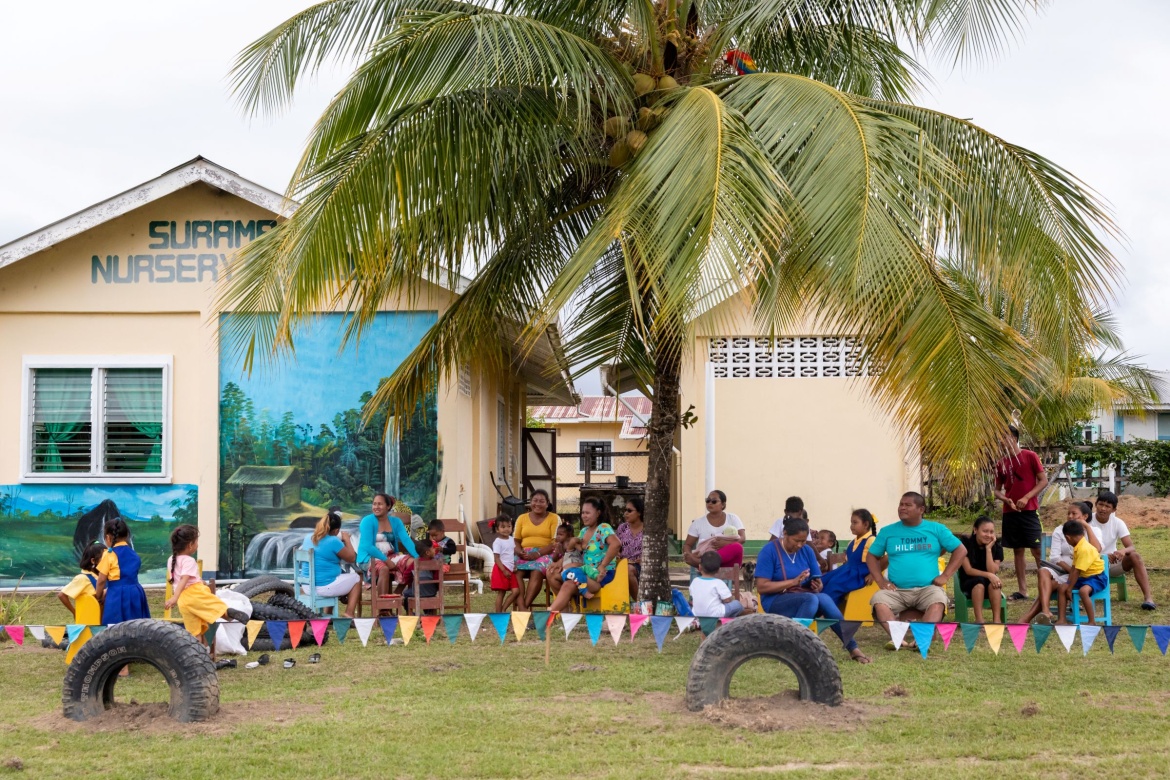
Parents and students watch the nursery school's competitive games activities from the sidelines outside Surama Nursery School, Region 9, Guyana.

Credit:
GPE/Kelley Lynch

Scaling up cross-sector investments

Through the Climate-Smart Education Systems Initiative, GPE is working with Save the Children, UNESCO and UNESCO-IIEP to increase ministry capacity in 35 partner countries and territories to coordinate across education and climate sectors as well as access education-climate linked financing.

GPE and the Green Climate Fund—the world’s two largest funds for education and climate—have joined forces through BRACE.

Implemented by Save the Children, BRACE has over $46 million in funding to build climate-resilient schools in countries most at risk to climate shocks, marking the first major investment of climate finance in the education sector.

Building on this groundbreaking collaboration, GPE will continue to deepen partnerships with climate actors to unlock new and greater climate finance for education and support governments through a pipeline of climate-smart investments.

Adapting education in step with a changing climate

Funding education remains an essential part of mitigating the impact of climate shocks on the opportunities for today’s children and youth.

As societies are reshaped by climate events alongside shifts in technology and population demographics, education systems must evolve to equip learners with the skills, adaptability and resilience needed to succeed in the 21st century.

Investing in education and climate together can lay the foundation for a more stable and prosperous world for all.

Read the 2025 progress report for the Climate Smart Education Systems Initiative.

-----------

Related blogs on climate change and education in:

#####

Read other blogs in this series

Related blogs

Comments

thank you for supporting education for children and also i want to include South Sudan because we have a lot of children not attending schools and not professional teachers so if we can get support to this areas is well fine

Leave a comment

Your email address will not be published. All fields are required.

The content of this field is kept private and will not be shown publicly.

Comments

  • No HTML tags allowed.
  • Lines and paragraphs break automatically.
  • Web page addresses and email addresses turn into links automatically.