
A deaf student fighting for equal access to education. A young climate advocate turning frustration into solutions. Meet two GPE youth leaders as they share the personal stories, unseen struggles and powerful motivations behind their advocacy journeys.
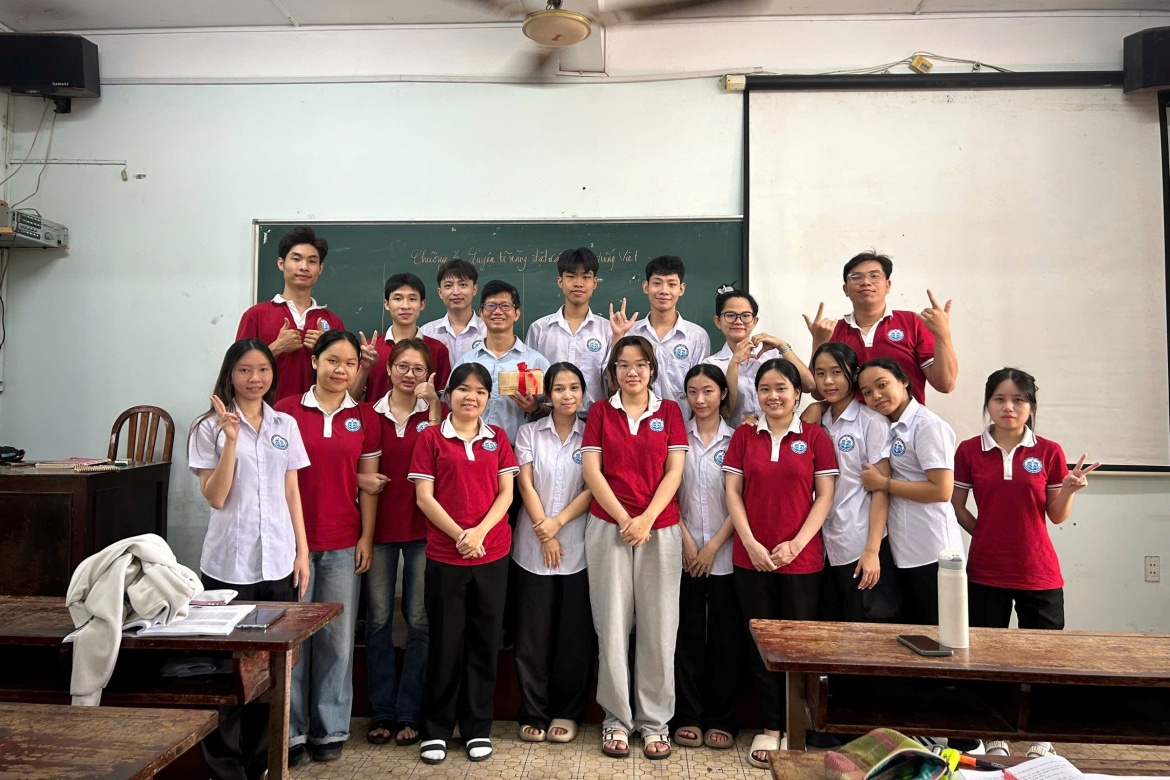
Students in class. Viet Nam

Tường Minh Trần
TườngTrần: "I only knew that something wasn't fair."
My advocacy did not begin with a formal campaign or policy platform. It began with my own experience as a deaf student navigating Viet Nam's education system.
Growing up, I experienced many of the barriers that deaf students face, including limited access to information, lack of sign language support, and unclear pathways into higher education. When my school in Dong Nai closed, many deaf students suddenly lost not only educational support, but also guidance around university admissions and future opportunities.
Instead of stepping away, I began helping other deaf students search for information online, prepare applications, understand admission procedures, and communicate with institutions. What started as helping individual students soon grew into broader advocacy focused on the systemic barriers preventing deaf students from accessing higher education.
One major issue involved disability certification requirements. Through advocacy efforts, the Ministry of Education and Training agreed to remove the phrase "especially severe" in a regulation that qualifies students’ disability. Before that, only students with this label could be considered for support. As a result of the change, the first deaf student received support to gain admission to a university, and other students applying for higher education are benefiting from this support.
This change took a long time: writing emails, following up with institutions, speaking with ministry representatives, and working with organizations to explain the realities deaf students were facing. Eventually, policy adjustments helped remove barriers that had prevented many deaf students from accessing higher education opportunities.
I didn't begin with a strategy. I only knew that something wasn't fair and that I wanted to help change it.

Students engage in group learning. Viet Nam

Lauritta Boniface
Lauritta Boniface: "The future is not abstract. It is deeply personal."
My advocacy journey started much closer to home than most people imagine.
Growing up, I witnessed plastic pollution, poor waste management, flooding, and environmental neglect in my community. I saw how plastic pollution led to flash floods which affected families, women, young people, and vulnerable communities.
One moment that stays with me was the first time I recycled plastic waste. It sounds simple, but it changed the way I saw the world. I realized how much of my life I had spent ignoring the problem, even though it was right in front of me. At the same time, I began to understand something powerful: solutions also begin with ordinary people.
That realization shaped everything that followed.
Today, my work focuses on climate action, education, renewable energy, and empowering young people and women. Whether I'm working in a classroom, a community, or an international forum, I am driven by the belief that people deserve to inherit a sustainable future.
The future is not abstract. It is deeply personal.

Students gather in the school yard during an awareness session at a primary school in Nigeria
Finding our advocacy superpowers
One thing advocacy has taught both of us is that impact is not about having all the answers.
Tường: Persistence rooted in lived experience
One of my greatest strengths as an advocate is the ability to speak concretely and directly about the barriers deaf students face. Rather than discussing inequality only in abstract terms, I try to bring forward real stories, practical examples, and lived realities that institutions cannot easily ignore.
I focus on very specific barriers: lack of information, lack of sign language support, and unclear admissions policies. These are not abstract problems to me; they are things students experience every day.
My advocacy is also grounded in persistence. Change did not happen quickly, and many processes required repeated follow-up, clarification, and communication with different stakeholders. There are times when I do not receive responses immediately or when the process becomes unclear, but I continue step by step.
Lauritta: Making climate action feel human
My superpower is making complex climate issues feel human. I have learned how to connect people emotionally to environmental issues in ways that inspire participation rather than fear.
Climate change can often seem technical, distant, or overwhelming, especially for students and grassroots communities. Through storytelling, community engagement, and creative education tools, I try to make climate action practical and accessible.
One example is the PLAN Climate Action Game, an innovative learning tool developed by my organization, Ecocykle, to simplify climate concepts through interactive play. I understood early that many climate conversations felt too technical and overwhelming for young people. To address this, we created the game as a more engaging and accessible way to introduce climate education and move beyond conventional teaching methods to make learning memorable, practical, and action-oriented.
Seeing the impact supported by evidence was really meaningful. Assessments conducted during implementation showed that participants demonstrated stronger knowledge retention and a better understanding of climate-related concepts after engaging with the game. Seeing young people discover their voices and confidence through climate education continues to inspire me every day.
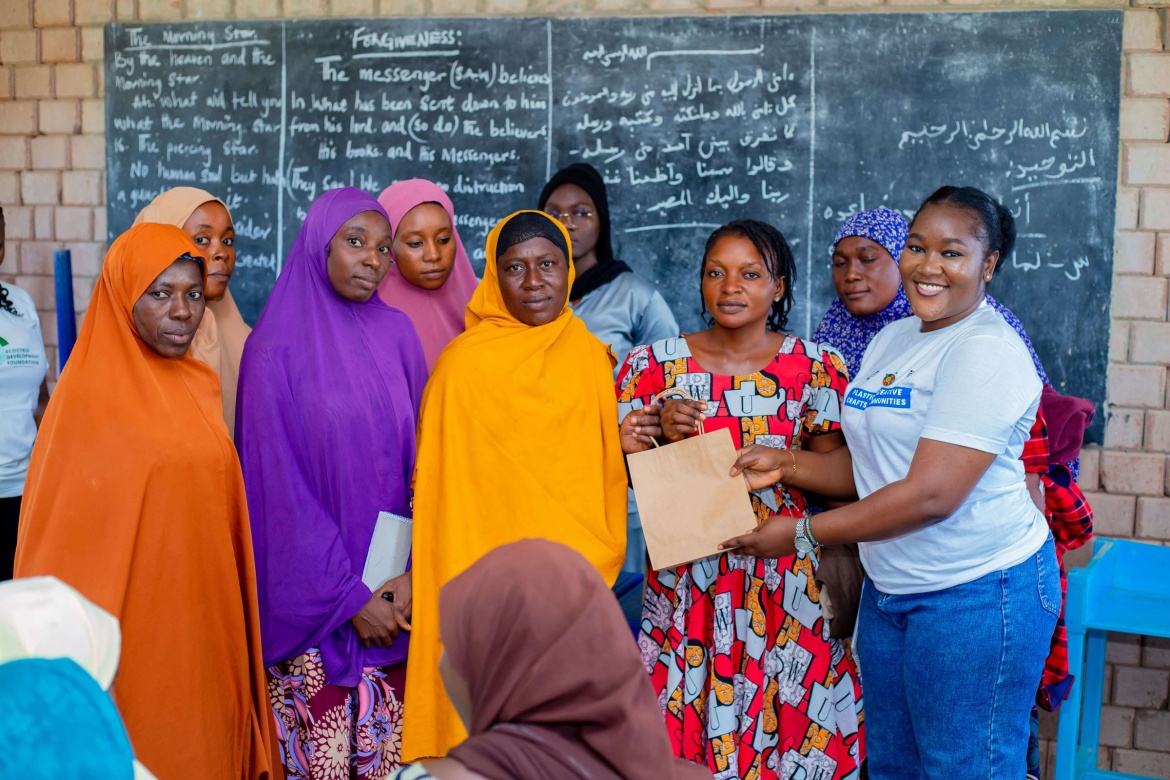
Participants at a community education and engagement session received learning materials.
What people don't usually see: the struggles
Lauritta: The emotional toll of advocacy
Earlier this year, I found myself in a difficult place emotionally. I had cancelled two international trips and was seriously questioning whether I could keep going. When I spoke with my co-founder, he immediately understood exactly what I was feeling.
People often see the visible successes, but they do not always see the emotional exhaustion, the constant problem-solving, or the sacrifices required to sustain meaningful work. Advocacy is not only about passion. It also requires resilience, consistency, and the ability to keep going even when progress feels slow. More recently, funding cuts have made it harder for many important ideas and initiatives to move forward.
Tường: Carrying too much alone
Advocacy work is not always easy. Much of the work depends heavily on individual effort: balancing direct student support, policy engagement, stakeholder communication, and problem-solving at the same time.
I have faced challenges around burnout, limited access to formal advocacy training, lack of funding for interpretation support, and the difficulty of scaling my work beyond one-on-one student support. Communication barriers and unequal access to information can slow down processes and create misunderstandings.
There are also moments when things do not go as planned. Some students are not accepted. Some policies take a long time to change. Sometimes progress feels uncertain.
But that doesn't mean the work stops.

Participants at a group activity during a youth engagement workshop, showcasing collaboration, teamwork and shared learning.
Why we can't do this alone
One of the most important lessons we have learned is that advocacy is never a solo effort.
Lauritta
In the first few years of my organization, nearly 80% of the projects we completed were possible because of collaboration. Through partnerships, we have been able to scale climate literacy projects, strengthen grassroots engagement, amplify youth voices, and create more sustainable solutions.
None of the work we do would be possible without youth and women's networks, volunteers, educators, community leaders, and organizations that believe in collective action.
Tường
One of the biggest lessons I have learned is that advocacy cannot depend on one person alone.
When leadership changes inside institutions, progress can become uncertain again. That is why teamwork matters. Different people can follow up, maintain communication, and make sure the work does not stop.
In my experience in Viet Nam, many parents of deaf students still have to pay for sign language interpreters. If they have to cover this cost for just their student, it can be unaffordable. But if several deaf students share the cost, it is easier for families.
Advocacy is not about being a perfect activist. It is about continuing to move forward with whatever resources, support, and opportunities are available at that moment.

Students pose beside a banner during an educational activity at their high school in Viet Nam.
Looking ahead
Lauritta
What gives me hope is seeing young people and women leading climate innovation, demanding climate education, and creating solutions for their communities.
Over the next decade, I want to see climate education become a fundamental part of learning everywhere. I want young people to be recognized not only as beneficiaries of policy, but as decision-makers and solution builders.
Tường
My hope is simple: a future where disability is not a barrier to education.
I want deaf students to have equal access to information, support, and opportunity. Every student deserves the chance to learn, participate, and achieve their goals.
Although our journeys are different, we share a common belief: the people closest to a problem are often closest to the solution. Advocacy begins when someone decides that things can be better, and then takes the first step toward making that change happen.
Leave a comment
Your email address will not be published. All fields are required.