Nigeria : Enhancing the resilience of refugee and host community students and families
by Save the Children, and GPE Secretariat
|
5 minutes read

With support from GPE and Save the Children, Nigeria has ensured equitable access to quality learning for thousands of highly vulnerable children.

Ongoing conflict in Cameroon has forced over 121,000 refugees into Nigeria, intensifying pressure on already strained host communities in Adamawa, Akwa Ibom, Benue, Cross River and Taraba states.

Schools have welcomed refugee students, but overcrowded classrooms, poor infrastructure, a lack of learning materials, and too few teachers have made it challenging to provide education for all.

With a GPE grant of US$5 million for 2024-2025 and implementation support from Save the Children, the government has expanded access to quality education for over 24,000 refugee children and 7,000 host community children across the five states.

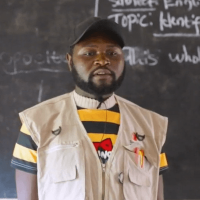
Ayotunde Kehinde Omotomi

“GPE and Save the Children have not just delivered a program but created lifelines for highly vulnerable refugee and internally displaced children. They have ensured that education reaches hard-to-access and underserved communities, proving that in the face of crisis, equitable access to quality learning is achievable with dedicated partnerships.”

Ayotunde Kehinde Omotomi
Deputy Director, Basic Education Department, Federal Ministry of Education, Nigeria

Below are examples of how the program is strengthening the education system and supporting even the most marginalized children.

Improving infrastructure, teaching and learning materials

At Inkiri Primary School, learning used to be a struggle. The school consisted of a tent and four rundown classrooms without desks or benches, and the head teacher was responsible for teaching grades 1 to 6.

With support from the GPE-funded program, two new classrooms and gender-segregated toilets were constructed, and students received essential learning materials, including books, pens and pencils.

Nigeria : Enhancing the resilience of refugee and host community students and families

One of the gender-segregated toilets constructed with support from the GPE-funded program.

Credit:
Save the Children

The program also helped the school to recruit and train volunteer teachers in literacy and numeracy approaches, including Teaching at the Right Level (TaRL), which tailors lessons to each child’s learning pace.

Yusulu Liberty

“When I came to this school, the children’s language skills were poor. Some struggled to pronounce even the letter ‘a’. After the training, I implemented what I had learned, and the children have improved.”

Yusulu Liberty
Volunteer teacher, Inkiri Primary School

Yusulu Liberty, a refugee from Cameroon, is among the volunteer teachers supported through the program.

In partnership with the Teachers Registration Council of Nigeria, Save the Children has supported volunteer teachers to achieve professional certification.

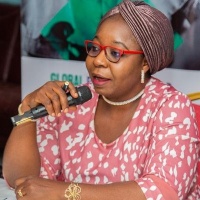
Augustina Godwin

“Taraba State recognizes the GPE project as a monumental success in providing educational stability during a crisis. The impact of this partnership is two-fold: it ensured thousands of highly vulnerable refugee and displaced children gained immediate access to quality learning, and built a foundation for the future. By supporting the professional certification of our dedicated volunteer teachers, GPE has helped secure a high-quality, sustainable teaching workforce for our hard-to-reach-communities. This partnership shows that no child in Taraba needs to be left behind.”

Augustina Godwin
Honorable Commissioner, Ministry of Basic and Secondary Education, Taraba State

Supporting students with disabilities

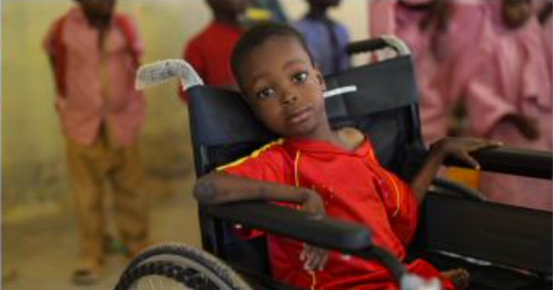
“We did not realize Sodiq had a disability until he struggled to sit and eat on his own. When it was time to begin school, his father took him on a bicycle and I would pick him up. This became challenging, as I manage the household and his father is often away. We didn’t want him to miss class, so his father constructed a small plastic carriage for other children to help transport him. Things changed when Sodiq participated in a disability screening at school and received a wheelchair. Now, his daily life is much easier, especially going to school.”

Hassana Usman
Mother of Sodiq, a primary school student with a physical disability
Nigeria : Enhancing the resilience of refugee and host community students and families

With his new wheelchair, Sodiq can travel more easily to and from school.

Credit:
Save the Children

Children with disabilities are among the most vulnerable in a crisis-affected context and often excluded from education.

Through the GPE-supported program, assessments were conducted in host communities across the five states to identify and support children with disabilities to go to school and learn.

Sodiq is one of 210 students (97 boys and 113 girls) who have received assistive devices – including wheelchairs, hearing aids, glasses and crutches – helping ensure children with disabilities are not left behind.

Improving livelihoods for vulnerable families

The program also supported livelihoods for refugee and host community families, with an aim to enhance their economic resilience and increase education access for their children.

Nigeria has one of the highest shares of out-of-school children in the world. Poverty forces many children to drop out of school to engage in child labor to support their families.

In the highly vulnerable context of Adamawa, Akwa Ibom, Benue, Cross River and Taraba states, support for income-generating activities for refugee and host community families helped prevent their children from dropping out of school.

With GPE funding, Save the Children established 80 Village Savings and Loans Associations across the five states. These associations teach local business owners how to keep records, manage profits and invest.

Nigeria : Enhancing the resilience of refugee and host community students and families

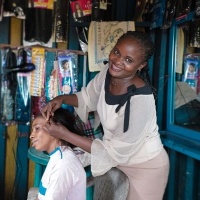
Thanks to a cash transfer and financial management training, Mercy now works out of a hair salon instead of her home. She has increased her earnings, making it easier to feed her family and pay for her children’s school supplies.

Credit:
Save the Children

Mercy, a widow and a mother of two in Akwa Ibom, previously braided hair from her home to support her family.

With a cash transfer and financial training made possible through the support of Save the Children and GPE, she rented a small salon and expanded her business by stocking hair products.

She later diversified her income, investing in a palm kernel business and selling shoes, applying the financial skills she learned through her local savings association.

Mercy

“I don’t want my children to ever lack food or school materials again. I am diversifying so that I can earn in all seasons. Thank you GPE and Save the Children.”

Mercy
Hairdresser and mother of two, Akwa Ibom, Nigeria

Thanks to the strong partnership between the government, GPE, Save the Children, schools and communities, Nigeria is expanding access to quality education for vulnerable children and transforming lives across Adamawa, Akwa Ibom, Benue, Cross River and Taraba states.

Jane Mbagi-Mutua

“Together, we have not only delivered results but laid a strong foundation for lasting change in education for both refugees and host communities. I am immensely proud of what we have accomplished and excited about the future we are building for every child.”

Jane Mbagi-Mutua
Deputy Country Director, Save the Children Nigeria

Related blogs

Leave a comment

Your email address will not be published. All fields are required.

The content of this field is kept private and will not be shown publicly.

Comments

  • No HTML tags allowed.
  • Lines and paragraphs break automatically.
  • Web page addresses and email addresses turn into links automatically.