
Changing futures: Hearing impaired children in Punjab, Pakistan, hear for the first time
by Helen Wylie, and Jingjie Yang
|
3 minutes read

With funds from GPE, UNICEF is providing hearing aids for children with hearing impairments in Punjab.

This blog was originally published on the UNICEF website.

“I can't tell you how I feel right now. This will change my daughter's future,” says Azeem, father of five-year-old Hoorain, who was diagnosed with hearing impairment at two years old.

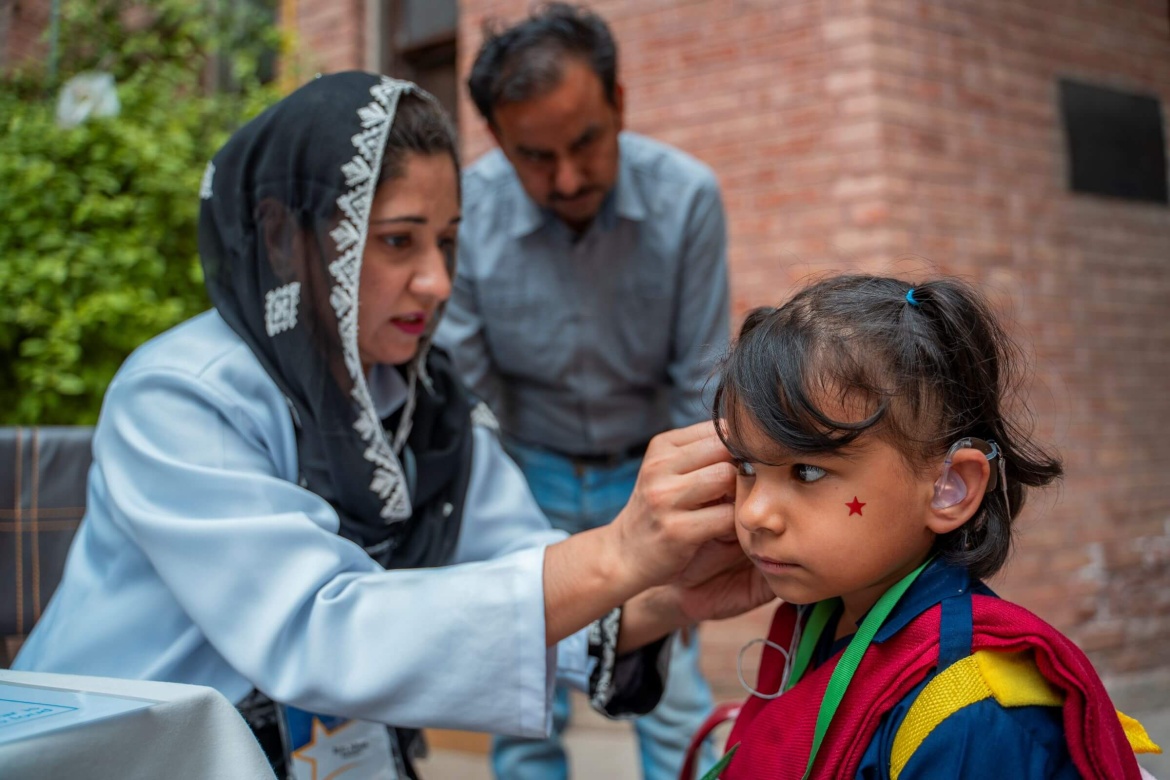
He is with his daughter at a government school in Lahore for children with hearing impairments. But today is no ordinary school day. Instead of attending class, Hoorain is waiting to be fitted with hearing aids, which will allow her to hear for the first time and begin developing speech.

“We have fitted hearing aids for 350 students across three special education institutions for children with hearing impairments in Lahore so far,” says Asma, an audiologist contracted by UNICEF. “When we activate sound for the first time, the reaction from both children and parents is remarkable. As an audiologist, that is the most rewarding part of my work.”
Changing futures: Hearing impaired children in Punjab, Pakistan, hear for the first time

Hoorain’s father, Azeem, watches as her hearing aids are fitted.

Credit:
UNICEF/Pakistan/Fahad Ahmed

Expanding access to support

For many families in Pakistan, access to support for children with disabilities remains limited. Parents like Azeem—who works as a laborer—often lack the financial resources or information needed to seek specialized care, which can affect children’s opportunities to learn and progress through mainstream education.

With support from GPE, UNICEF and the Special Education Department, the government of Punjab aims to reach more than 23,000 children with assistive devices, including providing over 3,500 children in Lahore with hearing aids.

This effort is part of the GPE-funded Transformation in Access, Learning, Equity and Education Management (TALEEM) program, a five-year initiative to improve access to inclusive and equitable education in Punjab, including for children with moderate to severe disabilities.

The program has also trained 10,591 teachers (6,818 women – 64%) in government schools on inclusive learning pedagogy, classroom adaptations, and techniques for supporting children with diverse learning needs, and supported inclusive education policy development, laying foundations for institutionalizing inclusive education across Punjab’s school system.

Changing futures: Hearing impaired children in Punjab, Pakistan, hear for the first time

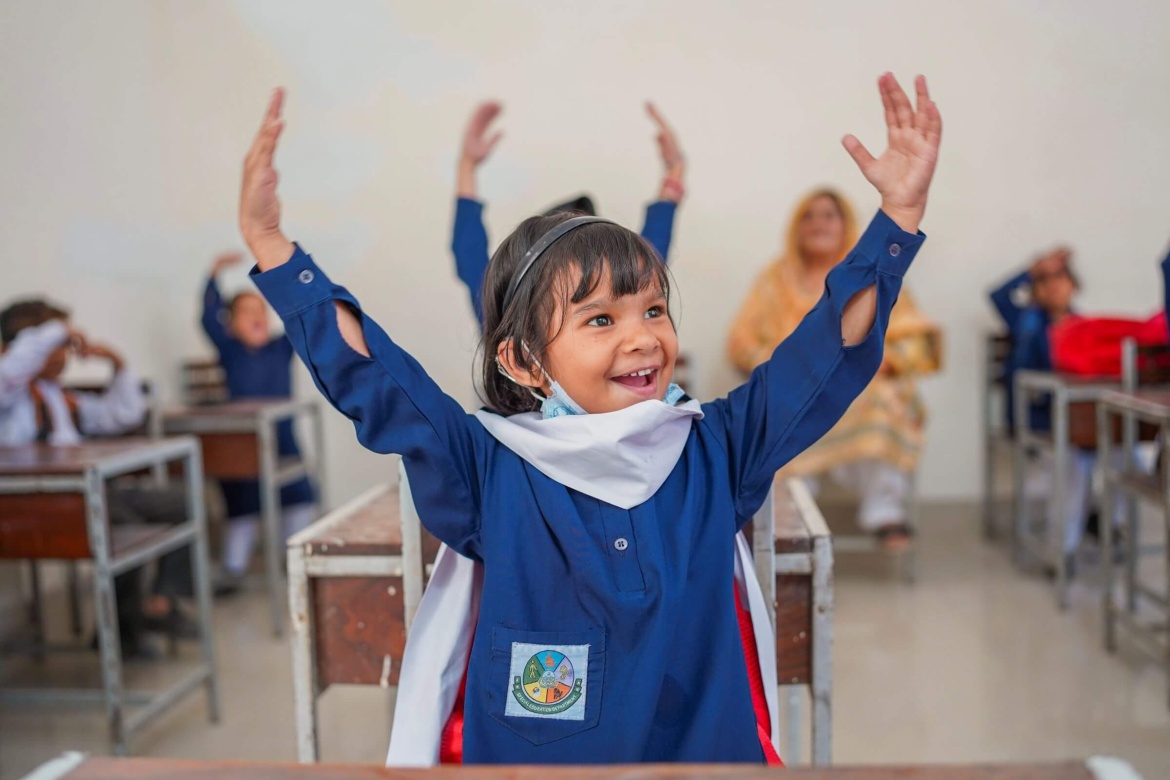
Hoorain actively participates in a class one month after receiving her hearing aids.

Credit:
UNICEF/Pakistan/Fahad Ahmed

From technology to learning

As part of the program, children undergo health screenings to identify their needs before receiving tailored assistive devices. Follow-up care and family counselling are also provided to support their development, along with the training of teachers.

The technology, combined with ongoing support, has the potential to significantly improve learning for children with hearing impairments, says Kamran Iftikhar Lone, Education Manager at UNICEF Pakistan’s Punjab Office. “The hearing aids are more than devices. They provide life-changing support. We hope that most of the children enrolled in special schools will be able to transition into mainstream schools and continue their education.”

A future taking shape

One month after receiving her hearing aids, Hoorain is beginning to speak—starting with her name, her siblings’ names and simple words.

“Getting the hearing aids has made a big difference in her life,” says Azeem. “She talks more with her siblings and plays with them. When they call her, she now responds. Hoorain is now able to set up her hearing aid herself before going to school. Her teachers are very happy with her academic performance as she has started to learn quickly.”

“In her last exams, she came first in her class,” Azeem adds with pride. “My daughter has a bright future.”

GPE supports Punjab, Pakistan on its path to education system transformation, focusing on the priority reform of improving learning outcomes through provision of literacy and numeracy and skills at the pre-primary and primary levels and remedial learning at middle levels with a special focus on girls and out-of-school children.

Punjab is benefitting from several GPE grants that continue to support a range of areas across the system.

Measures to make the education system more inclusive include establishing gender responsive teaching and learning processes and better identifying and supporting the learning needs of children with disabilities.

Related blogs

THANK YOU

Leave a comment

Your email address will not be published. All fields are required.

The content of this field is kept private and will not be shown publicly.

Comments

  • No HTML tags allowed.
  • Lines and paragraphs break automatically.
  • Web page addresses and email addresses turn into links automatically.