
How GPE donors are prioritizing gender equality in education

GPE has made gender equality a core priority since its founding, now central to its GPE 2030 strategy. See how donor countries are aligning policies, funding, and programs to promote gender‑responsive education and advance equality for girls worldwide.

by GPE Secretariat
|
5 minutes read
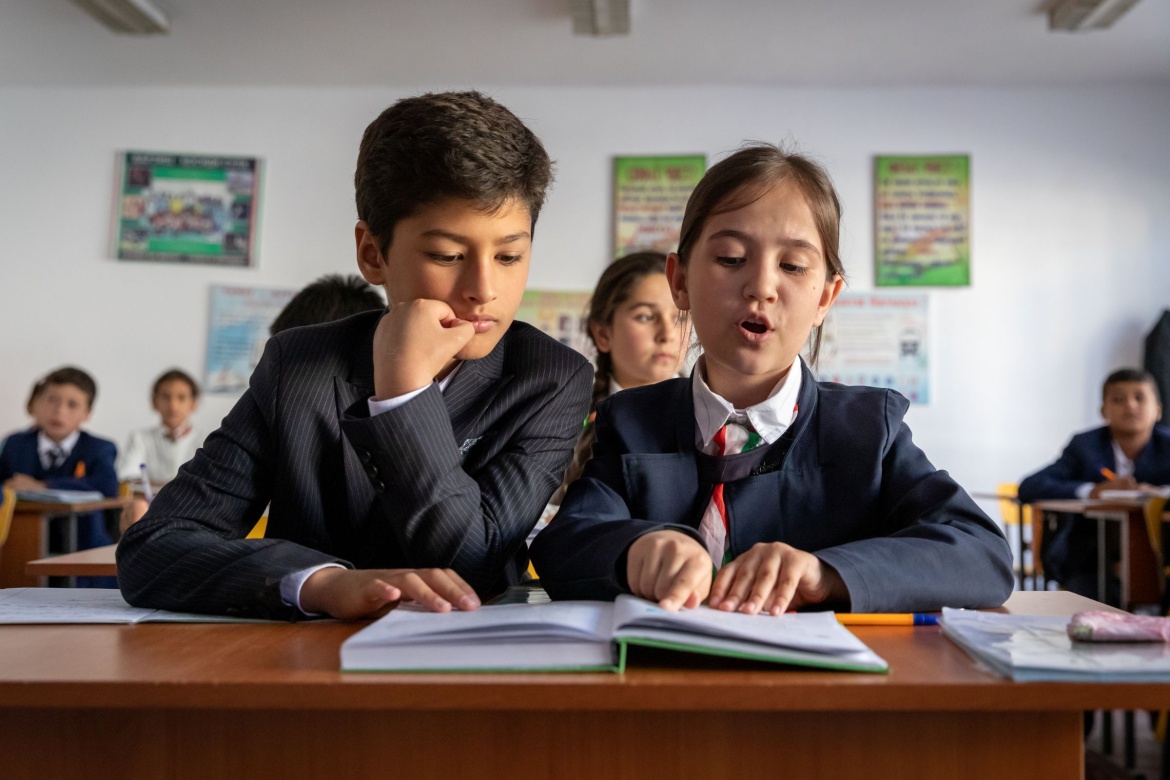
Pirakov Aliakbar (left) and Hasanova Shukrona (right), grade 4 students at school 51, in Kulob, Tajikistan. Credit: GPE/Kelley Lynch

Pirakov Aliakbar (left) and Hasanova Shukrona (right), grade 4 students at school 51, in Kulob, Tajikistan.

Credit: GPE/Kelley Lynch

A world that underuses the potential of half its people will never reach its full promise.

Achieving gender equality has been a core GPE principle since the partnership was established in 2002.

Over the years, the approach and programs have been refined and the latest strategy GPE 2030 reinforces our focus on gender equality as a core element, building on the lessons from previous strategies.

In 2020, GPE created the Girls’ Education Accelerator to support girls in the countries where they fall furthest behind, and has so far invested through this funding window $225 million in 15 countries, reaching 3.6 million girls.

In 2025, 92% of GPE grants supported gender equality in at least one activity. Grants developed under GPE 2025 almost doubled the share of GPE’s financing going to gender equality initiatives compared to the previous operating models.

GPE donors also place equality between girls and boys, in particular through education, as an essential objective and have adopted a range of policies and programs to achieve it. Let’s have a look at some of them.

Australia

  • Australia's International Gender Equality Strategy (2023–2026) places gender-responsive education at the heart of its Indo-Pacific engagement, including GPE-supported programming.
  • Australia’s International Development Policy also prioritizes gender equality: all ODA investments valued at AU$3 million and above must have a gender equality objective and 80% of investments must effectively address gender equality in implementation.

Canada

  • Canada's Feminist International Assistance Policy launched in 2017 places gender equality and girls' education under its "human dignity" pillar. The country pledged to invest at least 80% of its bilateral aid to achieve the policy’s goals.
  • Canada pledged CAD300 million to GPE for 2021–2025, with a focus on gender-responsive education planning and increasing girls' access to quality schooling.

European Union

  • The EU's Gender Equality Strategy 2026-2030 proposes concrete actions to embed gender equality into every aspect of life, including education.
  • Its roadmap includes actions to attract more girls to STEM (Science, Technology, Engineering, and Mathematics) fields and careers, to include boys and men in activities, and to produce material on tackling gender stereotypes for schools and teachers.

France

  • France's International Strategy for a Feminist Foreign Policy (2025–2030) places gender equality at the center of its development action and its International Strategy on Basic Education (2024–2028) explicitly prioritizes girls' education and mainstreams gender equality through education programming. Accordingly, France has dedicated half of its contribution to GPE (2021-2025) to girls’ education.
  • France is a co-founder of the Gender at the Centre Initiative (GCI), launched during its G7 Presidency in 2019, which integrates gender into education policies across sub-Saharan Africa.
  • In 2025, 68% of the French Development Agency (AFD) investments worldwide contributed to reducing gender inequalities and empowering women and girls.

Germany

  • Gender equality remains a central cross-cutting issue in German development cooperation and continues to be embedded in the strategies, programs, and funding criteria of the ministry.
  • Germany is one of the largest ODA donors for gender equality globally, committing an annual average of $13.6 billion to gender equality and women's empowerment in 2022–2023, and the largest contributor to the GPE Girls’ Education Accelerator.

Ireland

  • Ireland’s 2019 development policy A Better World focuses on gender equality as a core priority. Ireland has been ranked third among OECD members for the share of its development spend targeting gender equality.
  • Alongside education in emergencies, girls’ education is a key priority for Irish Aid. In 2021, Ireland ringfenced €10 million of its 2021-2025 pledge to GPE for the GPE Girls’ Education Accelerator.

Italy

Norway

  • Norway's A Just World is an Equal World: Action Plan for Women's Rights and Gender Equality (2023–2030) mandates that at least 50% of all bilateral development funding have gender equality as a primary or secondary objective, including in education. The plan addresses the particular vulnerability of girls' education in conflict-affected settings.
  • Norway is revamping its development strategy through its “Project Turning Point”, which will culminate in a White Paper due in summer 2027. This document will overhaul Norway’s current development priorities by reimagining how Norway will deliver assistance, with a focus on what yields the best results and best contributes to the country’s interests.
  • While consultations are underway, the initiative will likely place gender equality and the promotion of democracy firmly at the core of Norway’s international engagement, reaffirming the country’s commitment to fundamental rights and universal values across development policy. Through broad government collaboration and strong partnerships, Norway aims to lead global efforts against setbacks in gender equality, actively defending sexual and reproductive health and LGBTQ+ individuals across all policy areas and in multilateral forums.

Spain

  • Education features prominently in Spain’s Feminist Cooperation Strategy launched in 2025, institutionalizing gender equality as the backbone of its international development cooperation.
  • In 2024, Spain increased its contribution to GPE and pledged €3 million to the Girls' Education Accelerator.

United Kingdom

  • The FCDO's International Women and Girls Strategy 2023–2030 is built around three pillars — educating girls, empowering women and girls, and ending gender-based violence — with a commitment that 80% of bilateral programs will address gender equality by 2030.
  • In March 2026, setting out the UK’s ODA spending priorities, the Foreign Secretary committed this will rise to 90%, making women and girls a top departmental priority.
  • As the largest bilateral donor to GPE, the UK covers the largest share of GPE grants to partner countries, whose beneficiaries were 51% girls during the 2021-2025 period. Through technical assistance, active participation in GPE grants within partner countries and chairing GPE’s Performance, Impact and Learning Committee, the UK works on multiple fronts to advance gender equality and girls’ education through its participation in GPE.

Related blogs

Leave a comment

Your email address will not be published. All fields are required.

The content of this field is kept private and will not be shown publicly.

Comments

  • No HTML tags allowed.
  • Lines and paragraphs break automatically.
  • Web page addresses and email addresses turn into links automatically.