
Kaduna State, Nigeria: Giving more children the chance to learn
|
4 minutes read

With support from GPE and other partners, Kaduna State is increasing access to education for the most marginalized children.

Musa*

“I want to be a doctor.”

Musa*
12-year-old student, accelerated basic education program, Kaduna State, Nigeria

Before enrolling in an accelerated basic education program, Musa was one of Nigeria’s 10 million out-of-school children. Bright and curious, he faced systemic barriers to education, like poverty, and was unable to attend school for four years.

Everything changed when a Save the Children team visited his community in Sabon Gari, Kaduna State, to identify and pre-enroll learners in the Reaching Out-of-School Children program, led by the Kaduna State Ministry of Education with support from GPE, the Islamic Development Bank and other partners.

The program supports children who have been out of school to catch up on lost learning.

Musa was enrolled and quickly became an advocate for education. He helped mobilize 11 other out-of-school children in his community to join the program.

His story reflects the program's broader goals: reduce the number of out-of-school children, ensure inclusive education and quality learning, and strengthen community engagement across Kaduna State.
Kaduna State, Nigeria: Giving more children the chance to learn

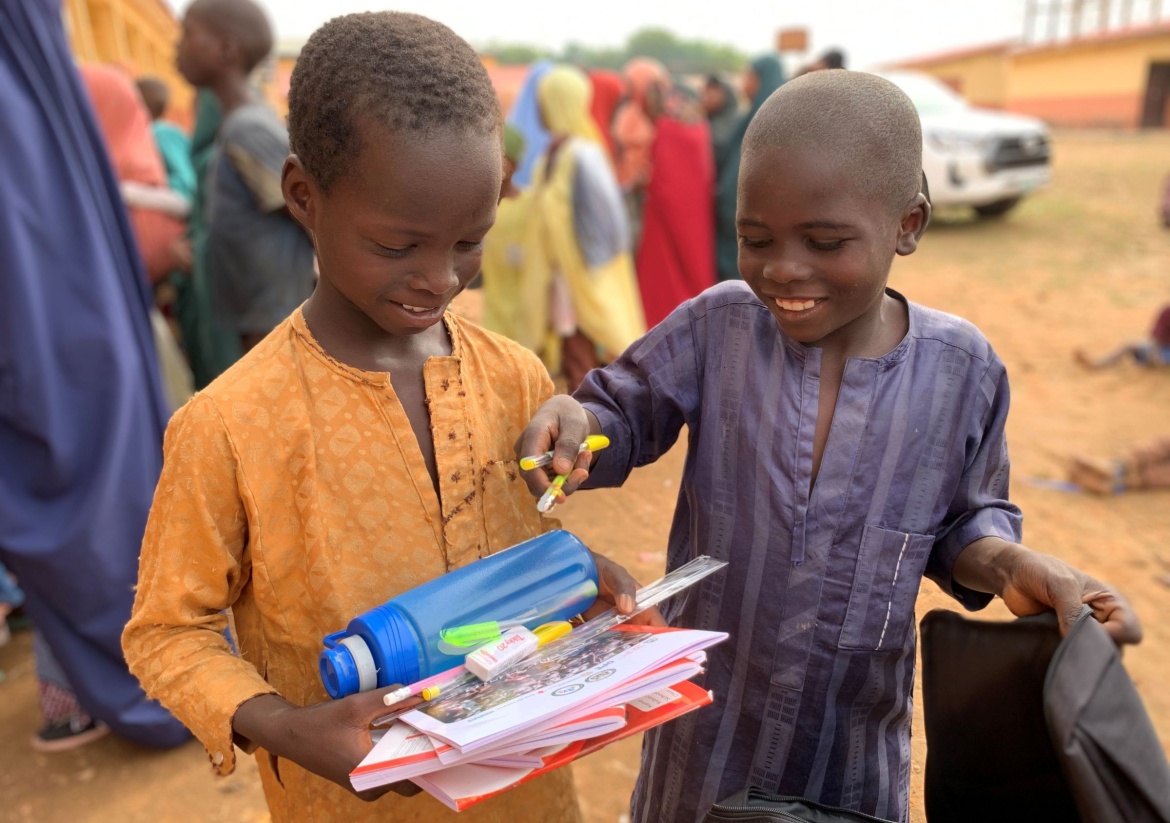
Musa shows another student the school supplies they received through the accelerated basic education program for children who had been out of school in Kaduna State.

Credit:
Save the Children

Barriers to education

Kaduna State has one of Nigeria’s highest numbers of out-of-school children: a household survey conducted by Kaduna State Bureau of Statistics in 2020 found that 31% of primary-school-age children were not in school.

Poverty remains a major barrier, forcing many families to prioritize income-earning activities over education. Some families also prefer non-secular education, which can limit children’s access to formal schooling.

At the same time, infrastructure and resource deficits make it challenging for the state to provide inclusive and equitable quality primary education for all.

Deploying innovative finance to expand access

The Kaduna State Ministry of Education is pursuing systemic change through the Reaching Out-of-School Children program, which aims to get more children in school and developing the skills they need to thrive.

This effort is backed by a GPE Multiplier grant of US$15.45 million (2024–2028), that helped crowd in a broader co-financing package from a range of cofinancing partners, which include:

With implementation support from the Islamic Development Bank, Kaduna State is increasing access to learning opportunities, improving enrollment and supporting completion of quality primary education—particularly for girls, adolescents and children with disabilities.

The program has also strengthened education planning and outreach. A community mapping exercise across 9 local government areas identified 41,545 out-of-school children (59% boys, 41% girls).

The 2024/2025 Annual School Census covered public, private and Integrated Qur’anic and Tsangaya education centers, ensuring better availability of credible and timely data for policy planning and implementation.

Lives changed though the positive impact of the program

Kaduna State, Nigeria: Giving more children the chance to learn
Credit:
Save the Children

Sani*

For nine years, 17-year-old Sani studied only under the Qur’anic Tsangaya system.

Through the Reaching Out-of-School Children program, he joined accelerated basic education classes designed to accommodate the schedules of those following religious studies.

Through the program, Sani is strengthening his literacy and numeracy skills.

After six months, he can now identify the English alphabet, read simple sentences and participate confidently in class.

“I want to become a lawyer so I can speak for others and make a difference,” he says.

Aisha*

Aisha, a 14-year-old student in an accelerated basic education program, used to miss class because she lacked access to menstrual hygiene supplies.

She would go home at least twice a day to check herself, and her embarrassment made her withdraw from friends and school.

This changed when Save the Children distributed a hygiene kit that consists of one pack of reusable sanitary pads, four packs of disposable pads, three pieces of underwear, three multipurpose soaps, three antiseptic soaps, a 10-liter bucket, a flashlight, a pack of cloth pegs, and 15 yards of drying rope.

“I used to feel scared during my period because I didn’t want to stain my clothes,” Aisha says. “Now I feel free. I am very happy.”

Aisha is one of over 930 female students who have received a hygiene kit. With the supplies and support, she can attend school with confidence and focus on her learning.

Kaduna State, Nigeria: Giving more children the chance to learn
Credit:
Save the Children

Garba

Garba Abdu Babawo is a basic education teacher, the Desk Officer for Disability Inclusion at the Kaduna State Universal Basic Education Board, and the Kaduna State Secretary of the Joint National Association of Persons with Disabilities.

Garba has mobility challenges that require him to use a tricycle, and he understands the systemic exclusion faced by children with disabilities due to inaccessible infrastructure, stigma, and a shortage of trained teachers trained in inclusive practices.

Through the program, he helps identify and enroll out-of-school children with disabilities in catch-up clubs and accelerated basic education programs.

He travels across the state to reach underserved communities, mobilize families and caregivers, engage community leaders, and mentor fellow teachers with disabilities.

“Every child deserves a chance to learn, no matter their ability,” Garba says.

His leadership has helped shift community attitudes and reinforce local systems to support inclusive education.

In an environment of tight fiscal constraints, innovative finance solutions allow GPE to catalyze financing at scale which enables partners to support Kaduna State in getting more children into classrooms and learning, especially those facing the greatest barriers to education.

*Name has been changed

Related blogs

Very good working for the betterment community this countryes community is very poor this countryes

Leave a comment

Your email address will not be published. All fields are required.

The content of this field is kept private and will not be shown publicly.

Comments

  • No HTML tags allowed.
  • Lines and paragraphs break automatically.
  • Web page addresses and email addresses turn into links automatically.