
Learning to earning: Why education is a smart investment in the future

At a time when governments face tight national budgets and competing crises, one of the best short- and long-term investments governments can make is in their people.

by Stefania Sechi, GPE Secretariat
|
4 minutes read
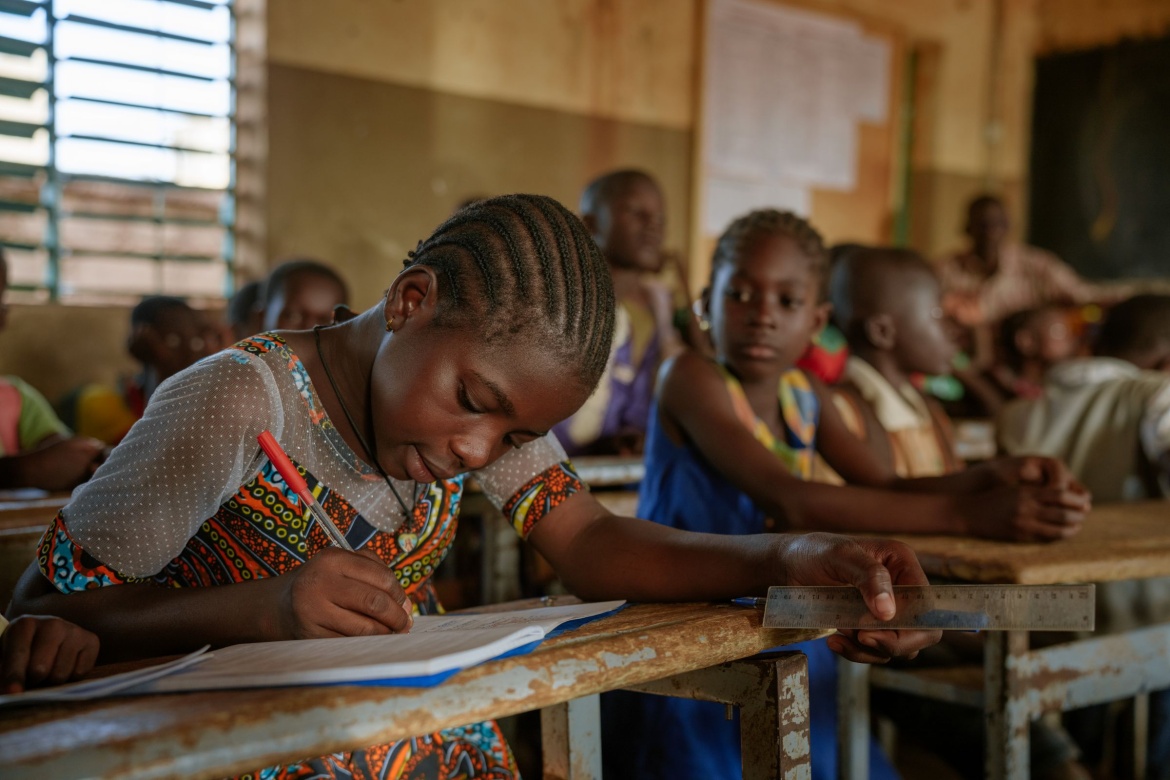
Djélika Bonkoungou, 11 years old, originally from Zeguedguin in the Centre-North region of Burkina Faso, taking notes in class. Credit: GPE/Trans.Lieu

Djélika Bonkoungou, 11 years old, takes notes in class. Burkina Faso

Credit: GPE/Trans.Lieu

Imagine the world in the year you were born. What did the most advanced communication technology look like? What were the major global concerns people debated? Which jobs were most in demand?

Chances are that the world today looks very different. Artificial intelligence is reshaping entire industries, climate shocks are disrupting lives and livelihoods, and many of the occupations in highest demand did not exist one generation ago.

Another generation from now, the picture will shift once again.

Technologies evolve, new jobs appear and societies transform often faster than we expect. Yet behind every shift lies a constant: us, the people who navigate change.

Our collective ability to innovate, seize new opportunities and rebuild depends on the skills and creativity we carry with us. That’s why education must be positioned and financed as a strategic investment: because it’s the most powerful tool to help young people and countries thrive in a world that keeps changing.

Education as an investment: Why it pays off

Education delivers some of the highest social and economic returns of any public investment. Quality, inclusive education systems strengthen productivity and resilience, sustain economic growth and help in reducing poverty and inequality over time.

The costs of failing to invest in education are equally clear.

Today, 272 million children and youth worldwide are out of school with many at risk of being permanently excluded from learning and decent future work—at an estimated cost to the global economy of US$10 trillion each year.

Girls are disproportionally affected and among GPE partner countries, two-thirds of girls who are out of school also live in settings affected by fragility and conflict.

Excluding people with disabilities from education can cost countries up to 7% of the gross domestic product (GDP). And gender employment gaps are associated with nearly 20% losses in long-run GDP per capita.

Without deliberate action, countries risk losing entire generations. In contexts of demographic pressure, conflict and tight budgets, investing in young people’s skills, especially of those left behind, is not just fair but smart economics and essential for future prosperity.

3 considerations to turn learning into earning

For education to deliver on its promise, countries need functioning education systems that equip young people with skills that matter for work and for life. Three considerations help make this happen:

  1. Learning as a journey, with education as the first step.

    When young people enter the labor market with outdated or irrelevant skills, they are far less likely to access decent employment.

    Skills build over time. A strong foundation in literacy and numeracy supports the development of 21st-century skills such as critical thinking, problem solving and socio-emotional skills.

    Employers consistently value these competencies that also help young people to adapt to technological and green transitions as well as navigate a changing labor market.

    Schools are central to this journey by integrating skills across curricula, classroom practices and assessments.

  2. Put equity first.

    Initiatives to develop skills often target young people who already have basic foundations or are still in school. But many do not, having missed foundational learning, and they possibly face additional barriers to accessing education linked to poverty, gender, disability, displacement or conflict.

    Recognizing the different realities young people start from and offering diversified, realistic options, including opportunities to rebuild foundational skills, can open routes to further learning and decent work, becoming a true game changer for young people and their communities.

  3. Invest in what works and embed it in systems.

    With tight budgets, countries cannot afford expensive programs that deliver little.

    Now more than ever it is necessary to shift resources toward approaches with clear evidence of impact, adapt them to context and scale them through education systems with policy, financing, implementation capacity and accountability mechanisms.

    Partnerships can help by aligning support behind government-led priorities and reducing fragmentation of projects.

GPE 2030: A clearer focus on learning to earning

GPE 2030—GPE’s strategic plan for 2026 to 2030—places stronger emphasis on the link between education and future opportunities.

Partner countries can now use grant financing to support evidence-based interventions that strengthen the transition from school to work, including:

  • integrating employability and skills components within secondary education
  • creating pathways for youth who are over-age or out of school to return to learning or move into work.

Interventions will be guided by evidence and equity with particular attention to young people at risk of being left behind.

This blog opens a series on learning to earning.

In the next pieces, we will explore the evidence on economic returns on investing in education and skills, highlight promising interventions with strong results and share insights on what helps young people make a successful transition from school to work.

Multiply possibility: GPE Case for Investment 2026-2030

Education unlocks infinite possibilities, transforming lives, communities and the world.

Discover the Case for Investment

#####

Read other blogs in this series

Related blogs

Leave a comment

Your email address will not be published. All fields are required.

The content of this field is kept private and will not be shown publicly.

Comments

  • No HTML tags allowed.
  • Lines and paragraphs break automatically.
  • Web page addresses and email addresses turn into links automatically.