Training teachers for inclusion in Tanzania: Emmanuella’s story

Tanzania, with support from GPE and Sida, is equipping teachers with the skills to ensure students with disabilities are not left behind.

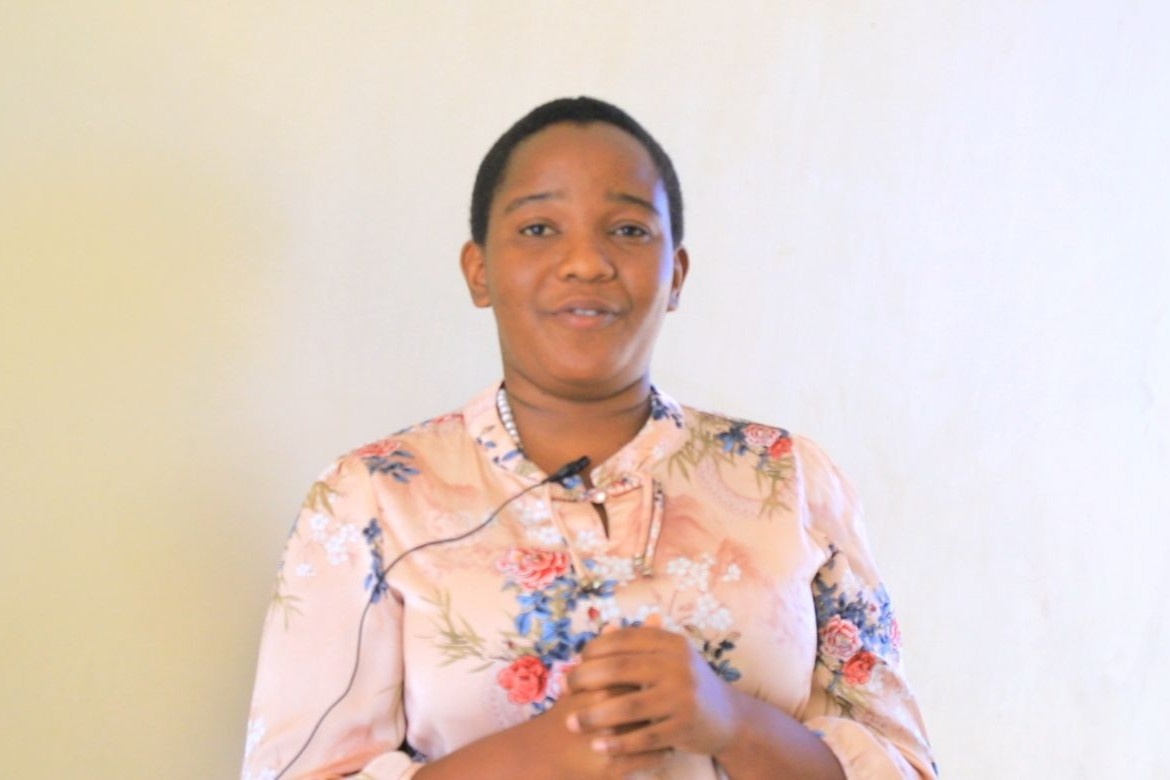
Emanuella was selected for a GPE-funded scholarship through the Teacher Service Professional Development Program in Tanzania. Credit: Swedish International Development Cooperation Agency (Sida)

Emanuella was selected for a GPE-funded scholarship through the Teacher Service Professional Development Program in Tanzania.

Credit: Swedish International Development Cooperation Agency (Sida)

Emmanuella has always known she wanted to become a teacher—but not just any teacher.

Growing up in her community in Tanzania, she often saw children with intellectual disabilities being supported by community members. Those moments stayed with her, shaping her ambition to work with children who are too often left behind.

Today, she is training to become a special needs teacher—part of a new generation of educators working to make classrooms more inclusive across the country.

In Tanzania, over 82,000 children with disabilities are enrolled in primary school, but around 40% do not complete it. The government is working to change that with support from GPE and the Swedish International Development Cooperation Agency (Sida).

Training teachers for inclusion

While the government has committed to inclusive education, many teachers are not fully equipped with inclusive teaching practices that enable all children to participate effectively in the learning process.

Aligned with Tanzania’s Partnership Compact, GPE and partners are supporting the government to improve teaching and learning, including better support for students with special needs.

With a GPE grant of US$127.8 million for 2023–2027, and Sida as grant agent, the program focuses on:

  • Strengthening teacher workforce planning and management
  • Ensuring gender equality and inclusion
  • Improving teaching and learning environments

A key priority is building a pool of teachers trained to support special needs. Scholarships are enabling pre- and in-service teachers to learn how to support students with intellectual impairment, hearing and visual impairments, deaf-blindness and albinism.

A life-changing opportunity

After completing secondary education in 2016, Emmanuella enrolled at Mhonda Teachers College in Morogoro to pursue a certificate in early childhood education.

In 2024, she continued her studies at Patandi Teachers College in Arusha, where she explored specializations including visual, hearing and intellectual impairment, and autism. She chose to specialize in intellectual disabilities and autism.

In 2025, Emanuella was selected for a GPE-funded scholarship through the Teacher Service Professional Development Program. The support has been life changing. Her tuition and daily expenses are covered, she has access to health insurance, and she can focus fully on her studies without financial stress.

She says the sponsorship has allowed her to “study peacefully,” giving her the stability needed to succeed academically.

Her goal is clear: to create a safe, supportive environment where children can receive specialized care, individualized learning and opportunities to thrive.

Training teachers for inclusion in Tanzania: Emmanuella’s story

Students at Maandalizi Kikaangoni TuTu center in Kikaangoni listening to a radio class, Zanzibar.

Credit:
GPE/Feruzi (Trans.Lieu)

Building an inclusive education system

Emmanuella is one of almost 800 pre- and in-service teachers to receive a scholarship—expanding the number of educators prepared to support students with special needs in mainstream classrooms.

The program is also helping the education ministry procure equipment and assistive devices for students with special needs, including Braille materials and hand magnifiers; hearing aids; wheelchairs; albino sunglasses, hats and lotion; and building blocks and puzzles for children with intellectual impairments. Teachers will be trained to use the equipment and devices.

At the system level, the government is developing guidance for inclusive education. While some guidelines exist across different policies, such as infrastructure standards in the School Construction Strategy or quality benchmarks in the School Quality Assurance Handbook, there has been no single, comprehensive reference.

To bridge this gap, the GPE-funded program supported a nationwide analysis of existing guidance. Based on the findings, the government developed a national guide that:

  • Serves as a standardized reference for inclusive education practices
  • Sets minimum standards for inclusive learning environments
  • Specifies essential equipment and learning materials
  • Provides clear procedures for schools to follow when students with special needs are enrolled.

This is critical to ensuring more consistent and effective delivery of inclusive education across schools.

Strengthening the teacher workforce

These efforts are part of a broader push to improve teacher planning and management.

With GPE funding, the government has developed an integrated teacher workforce data system, which harmonizes several systems used to collect teacher data, such as the Basic Education Management Information System, Teachers Services Commission Management Information System, and Online Teacher Application System.

In 2024, 10 systems were integrated resulting in the creation of the Mwalimu Data Lake, now being rolled out nationwide.

Better data and centralized supervision are helping ensure teachers are deployed where they are most needed, notably in disadvantaged areas. In 2025, 98% of newly recruited primary teachers were placed in priority schools.

A new Teacher Forecasting Framework will further align teacher supply with demand and promote equitable distribution across regions, gender and subjects.

Infrastructure investments are also underway, including teacher housing and the construction or rehabilitation of 300 Teacher Resource Centers in underserved areas. These centers provide space for communities of learning, access to teaching and learning resources, and ongoing in-service teacher professional development.

Looking ahead

For Emmanuella, the journey is just beginning—but the impact is already taking shape.

With better training, stronger support systems and a commitment to inclusion, teachers like her are helping ensure that more children with disabilities not only attend school but succeed in it.

Related blogs

Leave a comment

Your email address will not be published. All fields are required.

The content of this field is kept private and will not be shown publicly.

Comments

  • No HTML tags allowed.
  • Lines and paragraphs break automatically.
  • Web page addresses and email addresses turn into links automatically.