How Côte d’Ivoire is advancing girls’ education and women’s leadership
Story Highlights
- In Côte d'Ivoire, fewer girls than boys complete lower secondary education, and women remain underrepresented in education leadership positions.
- The government has prioritized gender equality as a lever to achieve system change, deliver quality education to all children and contribute to a more prosperous society.
- With support from GPE and UNESCO, Côte d'Ivoire is empowering communities to support girls' education while equipping more women to take on school leadership and system administration roles.
“All girls should go to school.”
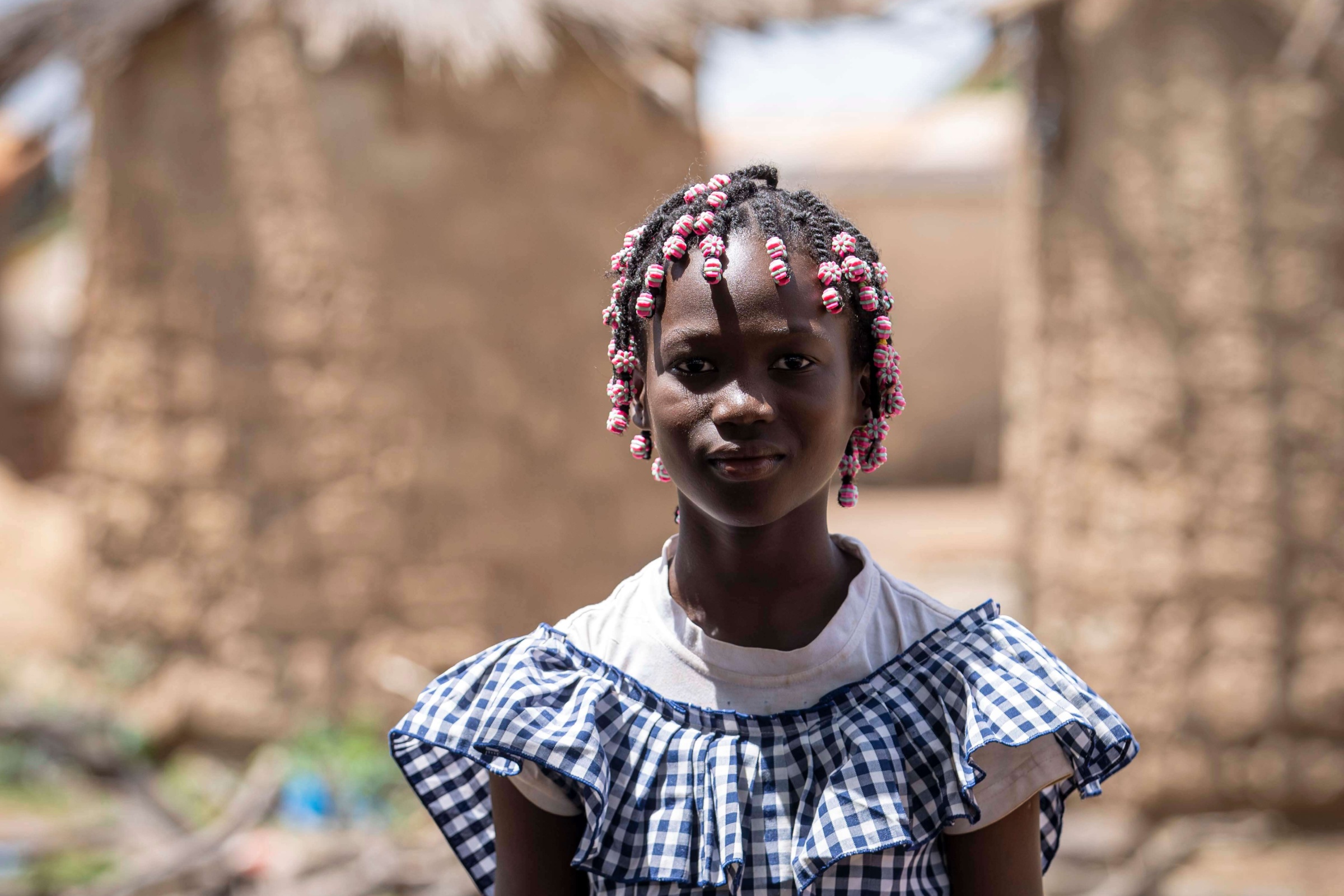
Fatima Koné knows the value of education. “I have learned how to read and write at school,” she says proudly.
Her favorite subjects are math and science, and she dreams of becoming a midwife.
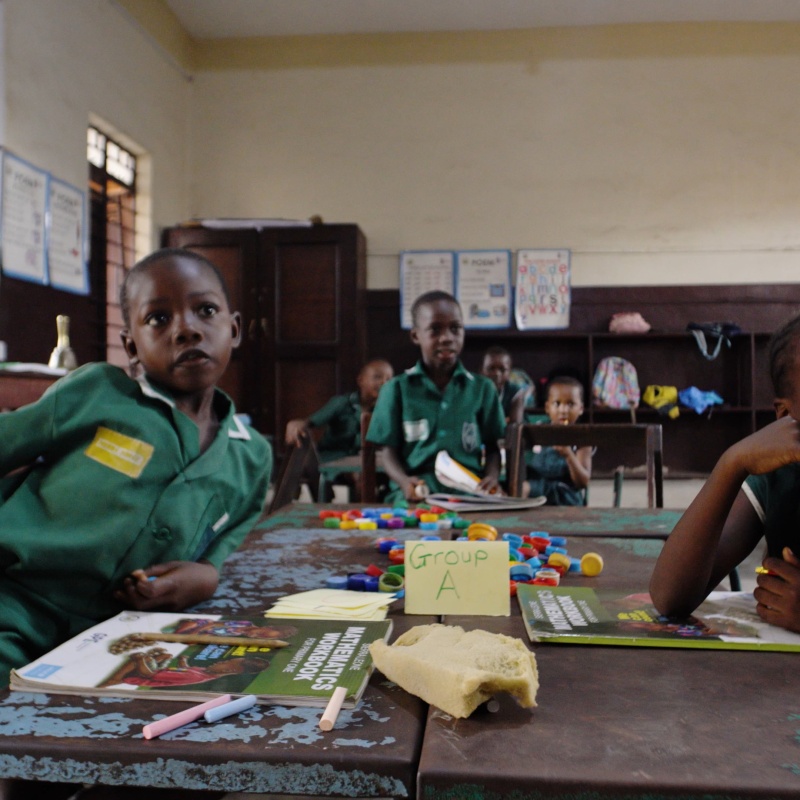
Fatima is in grade 5 at Dembasso Primary School, Bagoué region. In her community, not all girls attend school.
Many face barriers to continuing their education, including household chores, early marriage, the cost of school supplies and fees, parents’ concerns about safety, and a lack of female teachers and school leaders.
Girls’ education starts in the community
Across Côte d’Ivoire, mothers are helping break down these barriers by encouraging parents and caregivers to send girls to school.
Mariam Touré, one of the mothers involved, advises parents to speak openly with their daughters about the importance of going to school. “We don’t know how to read or write. It’s not easy. We can’t let our children end up like us,” she says.
Another mother, Patricia Ouattara, describes how attitudes in her village have begun to change. “This is a Muslim village. For many parents, school is for boys, not girls. The school director came to see me to say that we need to form a group to raise awareness among families, and now they’ve accepted the idea. The girls are going to school.”
Without this advocacy for girls’ education, these girls would still be at risk of dropping out of school and have limited opportunities for a prosperous future.
Mothers supporting girls’ education
In 2025, Mariam and Patricia became presidents of their local Club for Mothers of Female Students.
The clubs are part of a nationwide movement to increase girls’ participation in school through the government’s Program to Support the Transformation of Basic Education (Programme d’Appui à la Transformation de l’Éducation de Base, or PATEB).
PATEB aims to make education more equitable and improve the quality of learning for all students.
The program is funded by a GPE system transformation grant of US$35.9 million for 2024–2028, with implementation support from UNESCO.
The clubs were initiated by the Ministry of National Education and Youth to keep girls in school by involving mothers directly in supporting and monitoring their children’s education.
Research by UNICEF Innocenti (Data Must Speak) has shown that the clubs are an effective and relatively low-cost way to reduce girls’ dropout rates.
In 2022, 11% of primary schools had a club. The GPE-funded program is now helping strengthen existing clubs and establish new ones. So far, 90 clubs have been established at primary schools and 30 at lower secondary schools in rural areas.
Expanding support at the lower secondary level is especially important, as only 58% of girls complete lower secondary education in Côte d’Ivoire.
Empowering communities to help achieve gender equality
In addition to raising awareness among parents, the clubs offer a direct line of communication with girls facing challenges such as pregnancy and gender-based violence.
“This project has allowed us to organize activities to help our female students advance in their studies and transform their daily lives and mindset. We hold meetings to raise awareness among girls about the risks associated with teenage pregnancy. It has brought girls closer together. Here in the North, the topic of gender is taboo. We ask women to advise their daughters at home and help them take their studies seriously.”
The clubs also provide financial support for girls whose families cannot afford to pay for school. Women establish small cooperatives, including farming activities, and use the income to help children stay in school.
“The club gave us the tools we need to work in the fields and gardens. They gave us a motorcycle to transport the onions and tomatoes that we grow. Thanks to this, we are able to provide for our children—to pay for school supplies and school fees.”
Advancing women’s leadership in education
In addition to supporting girls’ education at the community and school levels, the government is making important reforms at the system level that further contribute to the sector’s equity goals.
While women's participation in education has improved over the past decade, inequalities remain significant.
In primary education, the proportion of female teachers rose from 26% to 38% between 2014 and 2024. In secondary education, it remained low, increasing from 15% to 17% over the same period. In leadership positions, in 2024, women accounted for only 13% of primary school principals and 22% of secondary school heads.
These inequalities are also reflected in education administration. “Within the ministry, more than 70% of decision-making positions are occupied by men,” explains Georgette Brou, Director of Equity and Gender Equality at the Ministry of National Education, Literacy, and Technical Education.
These imbalances are not only an issue of equity; they may also affect the functioning of the education system. IIEP-UNESCO’s Women in Learning Leadership program shows that the presence of women in teaching and leadership positions can strengthen how schools perform.
In Côte d’Ivoire, schools led by women record higher promotion rates for all students, both girls and boys, than those led by men.
A strong political commitment
In response, the government has launched an ambitious reform to promote equitable access to leadership positions in education.
“In 2025, the education ministry crossed a symbolic threshold, with more than 30% women among newly appointed school heads.”
This commitment builds on more than a decade of reforms recognizing the central role of school leaders in improving the education system (ESP 2016–2025, EGENA 2021). Côte d’Ivoire’s Partnership Compact (2024–2029) took a step further by integrating gender equality in leadership positions as a lever for transforming the system.
In 2026, the government led a strategic dialogue with education stakeholders, consolidating gains in gender equality and embedding gender issues sustainably within the country’s education system.
The reforms are carried forward through PATEB, which addresses barriers, policies and capacity development, and the Program for Strengthening the Basic Education System (Programme de renforcement du système éducatif de base, or PRSEB), which monitors progress in professional equality.
PRSEB is funded in part by GPE through a $22 million Girls’ Education Accelerator grant and $55 million in Multiplier funding, with implementation support from the World Bank.
One guiding principle shapes the reforms: increasing the number of women in leadership positions must be matched by measures that sustainably support women in these roles.
“Supporting women’s leadership is not only a matter of equality. It is a strategic lever for sustainably improving the quality, effectiveness and equity of the education system.”
From diagnosis to action: Supporting women leaders
Through PATEB, IIEP-UNESCO conducted a study in 2025 to identify the main barriers women face in accessing and exercising leadership positions in Côte d'Ivoire.
The study gathered perspectives from nearly 2,000 education stakeholders and informed a plan combining targeted support (training, mentoring, networks) and adjustments to the institutional framework.
Results are already emerging. “More than 250 women school leaders, either in post or newly appointed, have already been trained,” says Yao Ristid N’Da, PATEB Coordinator.
In 2026, nearly 100 female school heads and deputy heads took part in a new round of training, delivered by IIEP-UNESCO, including modules on gender-transformative leadership and managing resistance to change.
“It is not uncommon for a male colleague to find it difficult to accept being led by a woman,” said one school head during the training.

“I understood that resistance is part of the process of change. Today, I feel equipped to anticipate it and respond strategically rather than simply endure it.”
The training also helped shift perceptions around leadership itself, and the training will be rolled out on a larger scale.
“What particularly struck the participants was the relational dimension of leadership. Skills such as listening, empathy and support, often perceived as ‘feminine’ and long undervalued, are in fact essential to the functioning of schools and education administrations. They help establish a climate of trust, prevent conflict, and sustain team motivation.”
Gender equality as system transformation
From empowering mothers to support girls’ education to strengthening women’s leadership across the system, Côte d’Ivoire is translating political commitments into concrete action.
PATEB focuses on system-level transformation, addressing governance, human resource management and institutional bottlenecks that hinder progress in learning outcomes, while integrating gender equality as a core principle from program design to implementation.
PRSEB complements these efforts with targeted support for girls—particularly at the secondary level—through interventions such as providing individualized plans for girls at risk of dropping out and raising awareness about sexual and reproductive health.
Together, these reforms are helping more girls stay in school and enabling more women to take on teaching, administration and leadership roles across the education system.
Fatima’s belief that all girls should go to school is shifting from a dream to a reality.
GPE supports Côte d'Ivoire on its path to education system transformation, focusing on the priority reform of improving foundational learning so that all students gain the skills needed to thrive in school and beyond.
Côte d'Ivoire benefits from several GPE grants that support reforms across the education system in alignment with the country’s Partnership Compact.
Gender equality is integrated across all grants, while the Girls’ Education Accelerator provides targeted support to the most marginalized girls, improving equitable access to education.
More country journeys