
Malawi: Strengthening EdTech evidence with community perspectives
by Karen Levesque, Imagine Worldwide, Sarah Bardack, Imagine Worldwide, and Celeste Lopez, Imagine Worldwide
|
5 minutes read

What happens when an evidence-based EdTech program moves from pilot to nationwide scale?

For Imagine Worldwide, that question has guided years of research on onecourse, a personalized learning software proven to improve foundational literacy and numeracy.

With a strong track record of rigorous evaluation, onecourse is now at the heart of the Malawi Government’s Building Education Foundations Through Innovation & Technology (BEFIT) program— implemented by the government with support from GPE and partners.

BEFIT is an ambitious tablet-based initiative scaling to hundreds, and eventually thousands, of primary schools across the country.

As BEFIT expands at an unprecedented pace, Imagine’s research focus has evolved, building on rigorous evidence while expanding how quality and effectiveness are understood through community perspectives.

Building on a strong evidence base

Personalized EdTech has emerged as a powerful tool for improving foundational learning, and onecourse (provided by software developer onebillion) is among the most rigorously studied programs in the field.

To date, at least nine randomized controlled trials—across multiple countries, languages, and learning contexts—consistently show significant gains in literacy and numeracy.

Large-scale implementation introduces real-world complexities: implementation quality can vary, learner populations differ, and school and community contexts shape how programs function. Without adaptation, these factors can weaken impact over time.

After contributing five of the nine randomized controlled trials to the onecourse evidence base, Imagine Worldwide now complements learning impact monitoring with community-based research.

This work focuses on maintaining program quality, supporting sustainability, and strengthening community ownership as BEFIT continues to roll out across Malawi.

Capturing local perspectives through annual surveys

One of the primary ways Imagine monitors program quality at scale is through annual stakeholder surveys in Malawi.

These surveys gather perspectives from teachers, parents, school leaders, and children on how the tablet program is experienced by learners and schools.
Malawi: Strengthening EdTech evidence with community perspectives

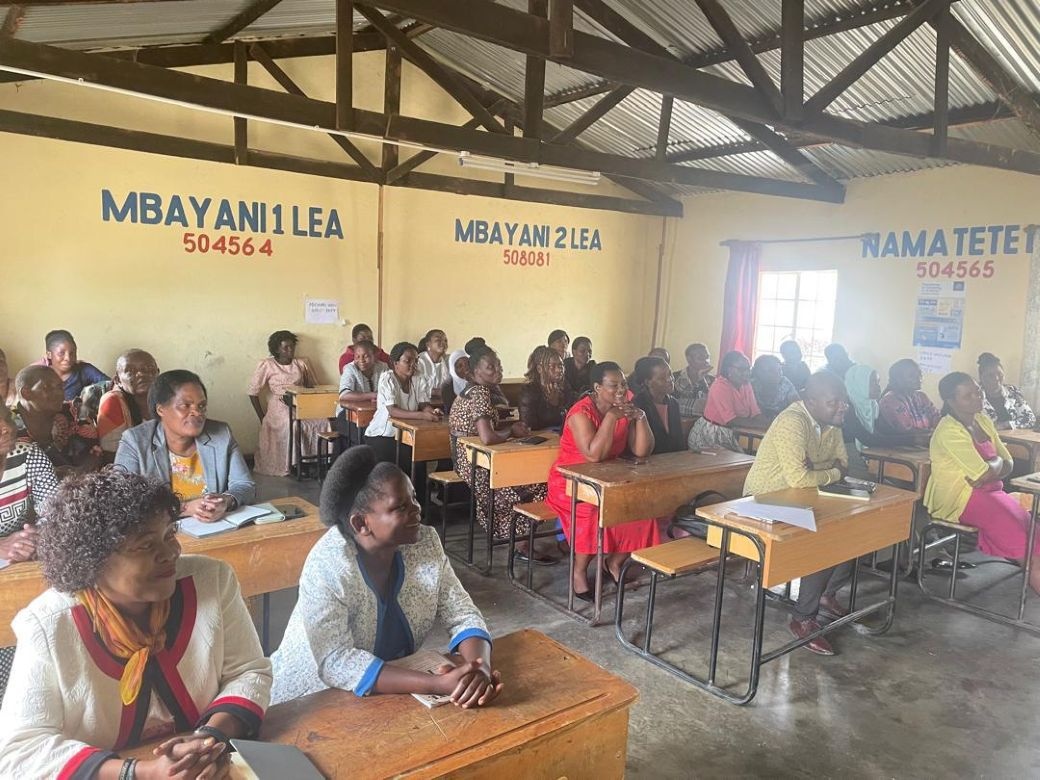
Teachers in Malawi gathering to hear the research results.

Credit:
Celeste Lopez

Early survey tools drew heavily on materials used in previous randomized controlled trials in Malawi and Tanzania, which reflected the priorities of researchers, funders, implementation partners, and government stakeholders.

To ensure that local perspectives more strongly shape how quality and impact are understood, Imagine conducted a study on community-defined social and emotional learning (CSEL).

This research asked two simple but powerful questions: What skills do communities believe children need to succeed in the BEFIT program? And are these skills being impacted by the program?


Community members identified a wide range of valued competencies, including:

  • Cognitive skills, such as attentiveness and memory
  • Intrapersonal skills, such as independence and motivation
  • Interpersonal skills, such as respect, obedience, carefulness, and engagement

These community-defined competencies were incorporated into the social and emotional learning section of the annual stakeholder survey.

One of the strongest impacts reported by 95% of the over 800 respondents was that learners paid more attention in regular class due to their participation in the tablet program.

The result is a more locally grounded picture of program quality and impact. Survey findings are used to inform adjustments to implementation and contribute to continuous improvement over time.

Understanding implementation at scale through stakeholder voices

In addition to surveys, Imagine conducts qualitative research to better understand how BEFIT operates in real-world settings.

Through site visits across Malawi’s central, southern, and northern regions, researchers observe tablet sessions and conduct interviews with government officials, head teachers, class teachers, community leaders, parents, and students.

These conversations explore issues such as:

  • Barriers that affect students’ time on task
  • Perceptions of academic outcomes for boys versus girls
  • Inclusion of students with special educational needs and disabilities (SEND)
  • Community sensitization and engagement
  • The roles of teachers, government officials, and learners in supporting quality implementation

When asked about student engagement, stakeholders consistently described high levels of focus and enthusiasm. As one class teacher explained: “Once a learner is working on the tablet, they focus… some learners who are often shy to raise a hand in class get quality time to freely interact with the tablet, like one-on-one with the teacher.”

Parents shared similar observations: “When they come home from school, they are able to explain to us whatever they learn through the tablets… They even write things for us to see.”

Malawi: Strengthening EdTech evidence with community perspectives

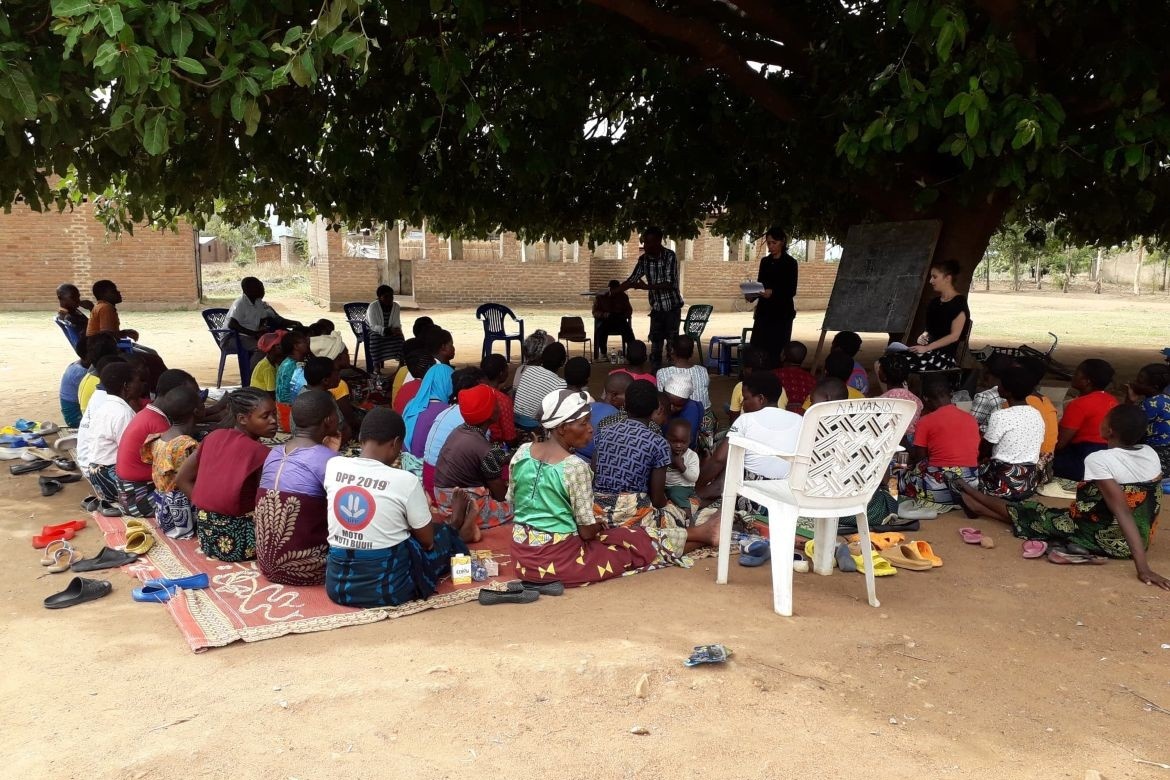
Community gathering to hear the research results. Malawi.

Credit:
Imagine Worldwide

Findings were generally consistent across regions. The most commonly reported challenge was tablet functionality, reinforcing the importance of reliable technology for learning.

Stakeholders emphasized equal expectations for literacy and numeracy for boys and girls and for students with and without SEND.

Community engagement was strong, with universal attendance at sensitization meetings, and the majority of respondents reported high levels of engagement from government officials, teachers, and students throughout the school year.

Insights from the interviews and observations are shared monthly with program teams to inform training, monitoring, and planning for future implementation cycles.

Sharing results with the communities: An ethical imperative

Community engagement does not end with data collection. Imagine views sharing results with research participants as a core ethical practice.

During a recent visit to Malawi, the research team returned to communities involved in the CSEL study, as well as exploratory research on reading precursors to share a summary of findings.

One key insight—that memory plays an important role in children’s success in the tablet program—prompted rich discussion.

Parents and teachers shared practical strategies they already use to support memory at home and in the classroom, such as asking children to recall shopping lists, play letter and number games, or explain what they learned at school.

Returning to share findings with communities reinforces that research is collaborative rather than extractive. Over time, Imagine has seen this practice generate several benefits:

  • Cross-cultural exchange, enabling shared interpretation of findings
  • Accountability and collective ownership, strengthening program relevance and sustainability
  • Credibility and trust, ensuring evidence is understood and used by the people it is meant to serve

Evidence that grows with communities

This work also contributes directly to Malawi’s education system transformation agenda under the GPE Partnership Compact, which prioritizes improving foundational learning.

By embedding rigorous research, community feedback, and continuous improvement into a nationally led program, BEFIT supports a shift from pilot projects to sustainable, system-wide change.

As BEFIT continues to expand, Imagine Worldwide’s approach demonstrates that strong evidence extends beyond randomized trials; it grows through ongoing engagement with communities, careful attention to implementation, and a commitment to sharing knowledge openly.

In this way, EdTech becomes more than a learning tool—it becomes a partnership rooted in trust, relevance, and shared responsibility for children’s success.

Related blogs

Leave a comment

Your email address will not be published. All fields are required.

The content of this field is kept private and will not be shown publicly.

Comments

  • No HTML tags allowed.
  • Lines and paragraphs break automatically.
  • Web page addresses and email addresses turn into links automatically.