
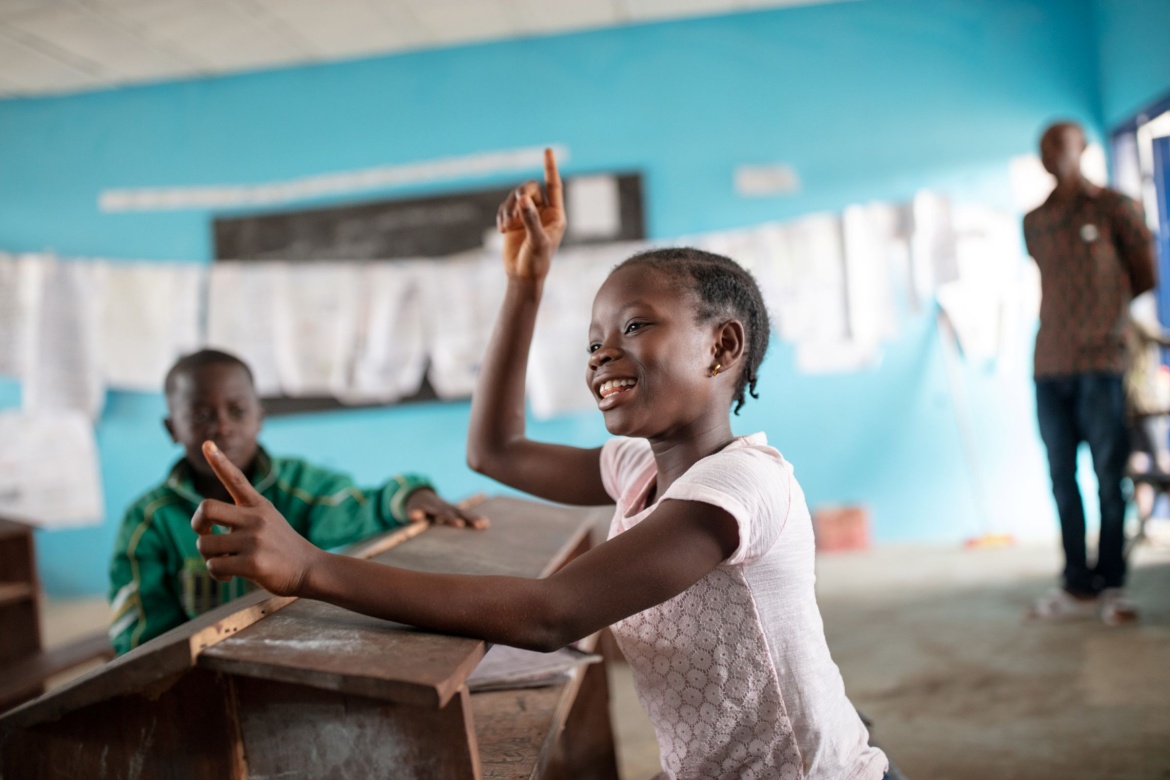
In an increasingly challenging global environment marked by economic downturns, climate‑induced disasters, escalating conflict and reduced international aid, children’s futures hang in the balance.
The leaders of tomorrow are sitting in today’s classrooms, and the education they receive will shape the futures they are able to build. Ensuring education systems include and work for every child has never been more urgent.
The global push for inclusive education has rightly expanded who belongs in school, but it has largely avoided a harder question: when the majority of children in school do not achieve basic literacy, can access alone be meaningfully called inclusion?
The push for inclusion
Historically, mainstream education systems often failed to accommodate children with learning differences which includes specific learning disabilities (such as dyslexia and dyscalculia) or neurological processing challenges (including attention deficits and executive function challenges).
Many were excluded from schools, misidentified or even considered “ineducable,” reflecting limited understanding of learning differences and low expectations at the time—not children’s actual abilities or potential.
In recent decades, global momentum has grown around the right to education for all children, calling for the shift away from separate, specialized schools or programs and toward education systems that include all children in mainstream schools.
Governments have increasingly committed to this goal. Yet efforts have often focused primarily on expanding enrollment and improving physical accessibility.
Far less attention has been given to what meaningful inclusion requires in the classroom, particularly in contexts with low resources, or what we in Luminos refer to as low-learning contexts, where almost all children have low literacy levels, often due to a variety of factors including ineffective instruction.
A global learning crisis
In many education systems, large numbers of children—especially those already facing disadvantage—spend years in school without mastering basic literacy or numeracy.
In low- and middle-income countries, 70% of 10-year-olds cannot read or understand a simple text.
This increases to an alarming 90% when just considering low-income countries. This is a pivotal age when children are expected to transition from learning to read to reading to learn.
If children cannot read by age 10, they will struggle to engage with more advanced content, diminishing the effectiveness of later schooling.
For children with learning differences, this gap between access and learning can be particularly stark: presence in the classroom does not guarantee meaningful learning progress.
In education systems where most children are not learning to read, simply ‘including’ children with learning differences is not enough. Truly inclusive systems must support all children to learn with effective instruction and timely support for those that continue to struggle.


Comments
Leave a comment
Your email address will not be published. All fields are required.