Unlocking the power of high-quality, locally produced children’s books for improved literacy results

With support from GPE, the education ministries in Tonga and Vanuatu, together with Save the Children and Library for All, are using an innovative approach to develop books that involves local communities. The result is locally relevant books that cultivate children's habit and love of reading.

by Caroline Dusabe, Save the Children Australia
|
4 minutes read
Children read books. Vanuatu. Credit: Save the Children

Children read books. Vanuatu.

Credit: Save the Children

Despite major improvements in school enrollment over the past two decades, the global state of children’s literacy and learning remains deeply concerning.

Described as ‘learning poverty’ by the World Bank and the UNESCO Institute of Statistics, global evidence shows that 7 in 10 children finish primary school without reaching minimum proficiency in reading.

These global trends of “schooling without reading” reveal a troubling reality in which millions of children progress through education systems without acquiring the foundational literacy skills they need for academic and life success.

Across the Pacific, only 43% of year 4 students met the minimum expected reading performance standards according to the 2021 Pacific Islands Literacy and Numeracy Assessment (PILNA).

According to the same study, only 21% of year 4 students in Vanuatu are meeting the standards, below the regional average mentioned above.

Tonga presents a similar picture, especially for year 6 students, where only 30% are meeting the standards. In both countries, boys are struggling more than girls in both literacy and numeracy.

The research is clear: children who read more have better learning outcomes.


To cultivate the love and habit of reading, children need three ingredients:

  • Enjoyable, high-quality, and diverse children’s books in both fiction and non-fiction genres, that respond to the reading preferences and interests of boys and girls
  • Time and space for reading at school and at home
  • Encouragement and positive modelling from the adults in their lives, such as teachers, parents, and other caregivers.

Children need two kinds of books that increase and sustain engagement.

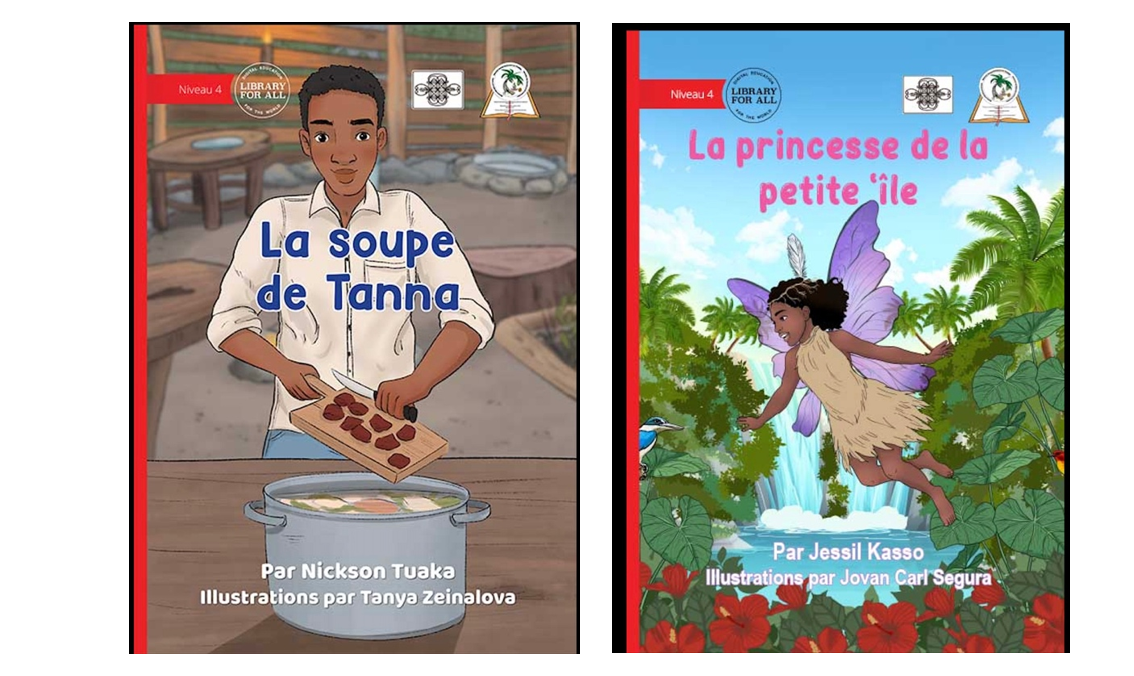
‘Mirror’ books reflect their own lives — showing people who look like them, speak their language, and share their culture; for example, ‘La Soupe de Tanna’ by Nickson Tauka, below, describes how to make a local soup famous in Tanna province.

Unlocking the power of high-quality, locally produced children’s books for improved literacy results

Some of the books developed by Ni-Vanuatu authors for the Vanuatu book collection.

Credit:
Save the Children

‘Window’ books show other places, people and cultures, helping children imagine the wider world. In the Pacific, there’s still a big gap in both the number and quality of children’s books, especially those written by Pacific authors for Pacific children.

Producing locally relevant books

With support from the Global Partnership for Education (GPE), the Ministries of Education in Tonga and Vanuatu, together with Save the Children and Library for All, are using an innovative approach to book development that supports and involves local community members to address this challenge.

Through the GPE system transformation grant in Tonga, Library For All held a writers’ workshop and trained more than 30 children’s authors. As a result, more than 300 titles are expected to be created for the Tonga Years 1-6 classroom collection, and 40,000 copies of books will be printed and delivered to schools by the end of 2027.

In Vanuatu, Library For All facilitated workshops with more than 100 local writers in 2024, with support from other donors, leading to the creation of more than 180 unique stories. 118 books have already been published, based on 59 of these original manuscripts. These are available in both French and English.

The books have been received well by both local educators and children, who have been particularly excited about seeing people that look like them, reading local names and topics they know.

With GPE support and contributions from the Church of Latter-day Saints, 64,000 copies of books from this collection will be delivered to all schools in Vanuatu in early 2026.

Fostering a culture of writing and reading

Beyond the books, this initiative created a literacy movement that will have a transformational impact on children’s literacy outcomes.

In both Tonga and Vanuatu, participants from the workshops are organizing small reading and writing communities and setting up reading clubs in their communities to promote reading, starting with their own families.

At the end of the workshop in Tonga, the writers mentioned that a community of champions for promoting the love of books has been created. Retired teacher and writer Mele Young Fa'oliu said, “I’m proud of the collaboration that we have created together to support children; I’m proud to be a Tongan.”

Unlocking the power of high-quality, locally produced children’s books for improved literacy results

Participants of the 2025 Tonga Writers’ workshop working on stories in small groups.

Credit:
Save the Children

The Vanuatu and Tongan collections will be added to the growing collection of more than 1,800 Pasifika books for children in Solomon Islands, Kiribati, and Papua New Guinea.

Increasing literacy rates is a key element of both their priority reforms, as stipulated in their partnership compacts. GPE is supporting the development of high-quality and locally relevant teaching and learning materials as one key strategy among others to improve the education system in these Pacific Islands.

The support received from the Australian Department of Foreign Trade and Affairs and the Australian High Commission as coordinating agency in both Vanuatu and Tonga is critical to ensure support to education systems from various partners, including Save the Children, are well aligned to realize the ambitious education reforms set out by the respective ministries of education.

The Vanuatu collection can be accessed through mobile reading applications at Mobile Reader Apps - Library For All.

More book collections from Library For All.

Related blogs

Leave a comment

Your email address will not be published. All fields are required.

The content of this field is kept private and will not be shown publicly.

Comments

  • No HTML tags allowed.
  • Lines and paragraphs break automatically.
  • Web page addresses and email addresses turn into links automatically.