
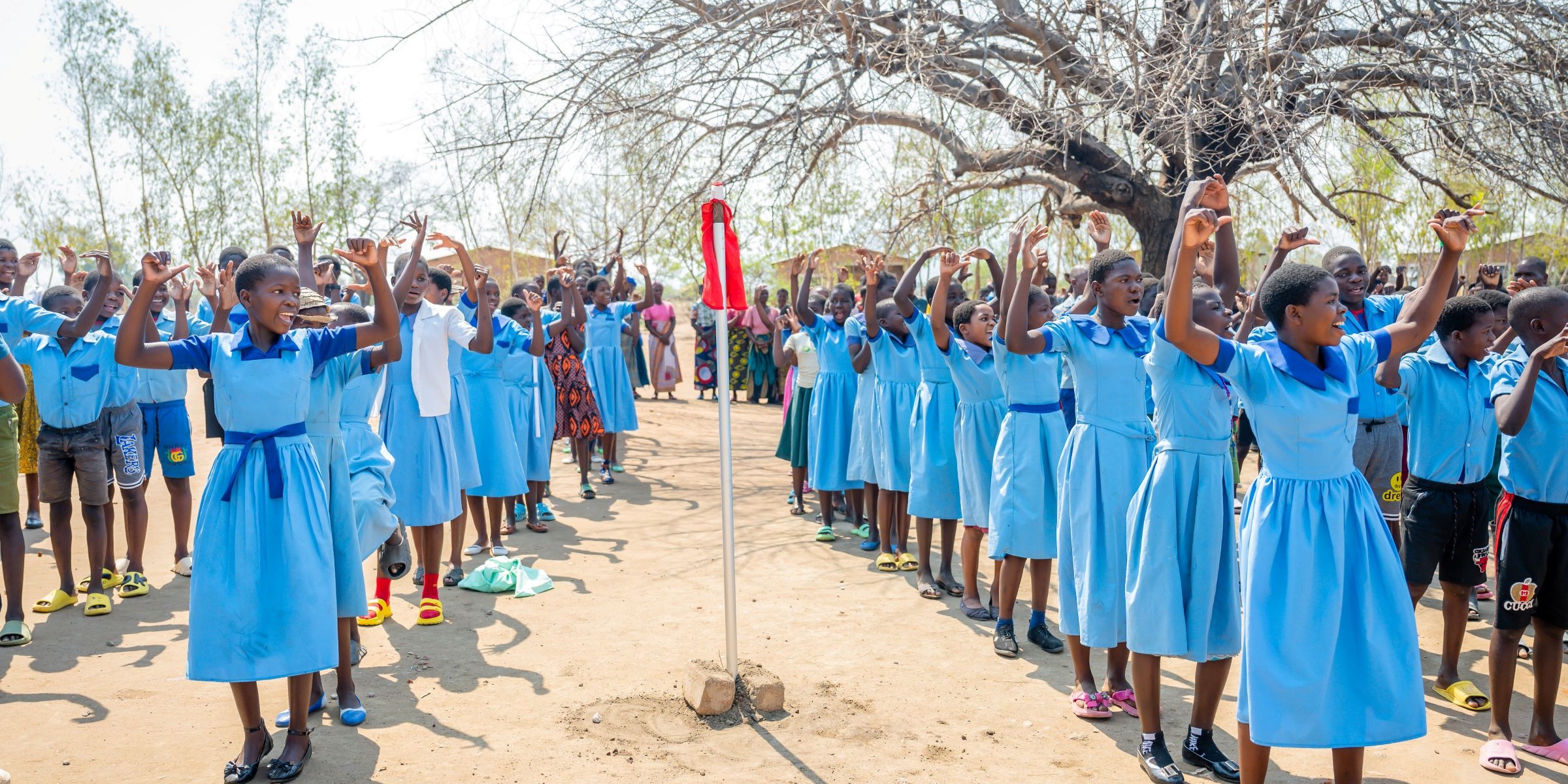
In Phalombe District, Malawi, students assemble ahead of a safety drill. Credit: GPE/Trans.Lieu

Partner since:

Total grant support: US$286,931,803

GPE 2025 grant eligibility:

  • Multiplier
  • Girls' Education Accelerator
  • System capacity
  • System transformation

Partnership compact
Priority: Improve quality foundational teaching and learning for all girls and boys.

Other key documents

Coordinating agency: UNICEF, UNICEF MALAWI

Engagement lead: Daisuke Kanazawa

Transforming education in Malawi

In Malawi, less than 20% of children ages 7 to 14 have basic literacy skills and even less have basic numeracy skills.

The lack of foundational learning contributes to students being more likely to repeat a grade or drop out of school. The government is working with GPE and other partners to ensure quality foundational teaching and learning for all girls and boys.

Malawi’s Partnership Compact describes plans for affecting transformative change. A focus on improving school readiness commits to improving access to inclusive and quality early childhood education through piloting an initial rollout of pre-primary preparatory classes.

To deliver inclusive foundational learning, Malawi will also focus on early primary grades by training teachers on formative classroom assessment and inclusive pedagogy, revise the curriculum, develop a standardized remediation program, reduce class size through infrastructure, and develop systems for safety and protection of girls and vulnerable children.

Education system capacity strengthening focuses on better teacher management, government coordination and financial management, and data collection and use.

Result story

Malawi: Building a climate-smart education system for the future

  • Malawi’s schools face increasing threats from floods, cyclones and other climate-related disasters that disrupt learning.
  • Safety drills at pilot schools teach students life-saving skills while strengthening community preparedness.
  • The Climate Smart Education Systems Initiative is building a more resilient education system that links national policy to local action.

Key data

11%

out-of-school rate for children of lower-secondary school age

19%

of government expenditure on education

Grants

(data as of November 11, 2026)

 
  • Type: System transformation and Multiplier

    Years: 2025 - 2029

    Allocation: US$67,900,010

    Utilization: US$15,493,557

    Grant agent: World Bank

  • Type: System capacity

    Years: 2025 - 2029

    Allocation: US$1,480,000

    Utilization: US$150,000

    Grant agent: World Bank

  • Type: System capacity

    Years: 2023 - 2027

    Allocation: US$250,000

    Utilization: US$177,800

    Grant agent: UNICEF

Civil society engagement

As part of its investment in civil society advocacy and social accountability efforts, GPE’s Education Out Loud fund is supporting:

  • The Civil Society Education Coalition (CSEC) for the 2024-2026 period. This builds on previous support from the Civil Society Education Fund (CSEF).
  • Transnational Networks Advocacy Capacity strengthened for improved ECDE legislation, policies and measures in Southern Africa (TRANAC) led by Zimbabwe Network of Early Childhood Development (ZINECDA) for the 2023-2026 period.
  • The Kuyenda Collective led by Forum for African Women Educationalists Malawi (FAWEMA) for the 2024-2026 period.
  • Girls Education Advocacy in the Region - Phase 2 (GEAR 2.0) led by Girls Activists Youth Organization (GAYO), Malawi for the 2024-2026 period.
  • Pamodzi for Inclusive Education in South-East Africa (PIESEA) led by Rays of Hope for the 2021-2024 period.

Learn more

Latest blogs and news