Education for all children: What this means for GPE

How GPE works with partners to create truly inclusive education systems, ensuring every girl and boy have the same learning opportunities.

by GPE Secretariat
|
4 minutes read
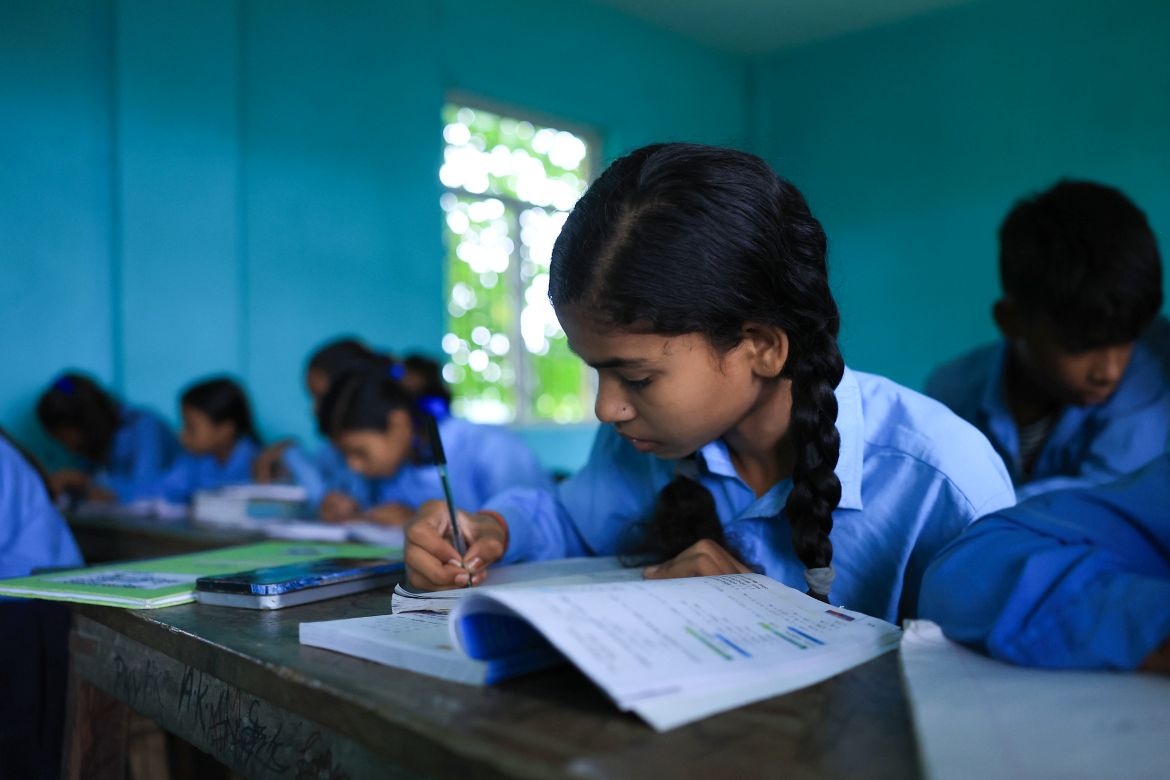
Students at the Shree Kankalini Secondary School in Hanumannagar Kankalini Municipality in Saptari District in Nepal's southern plains. Credit: UNICEF Nepal/Laxmi-Prasad-Ngakhusi

Students at the Shree Kankalini Secondary School in Hanumannagar Kankalini Municipality in Saptari District in Nepal's southern plains.

Credit: UNICEF Nepal/Laxmi-Prasad-Ngakhusi

A quality education for every child. This is GPE’s vision, shared by countless organizations and governments globally.

What does it take to achieve this vision in a world with shrinking investment in education and increasing uncertainty and inequality?

Delivering learning that meets the needs of every child means understanding what those needs are and the reality of each child’s education experience. This isn’t as obvious in practice.

Many barriers that keep children out of school overlap. Children can undergo multiple, simultaneous exclusions from learning whether tied to a disability, their gender, age, socioeconomic or refugee status, the language they speak, being part of a particular ethnic/racial or religious group, where they live or their access to technology.

These barriers cannot be treated in isolation if we want to change education systems at scale.
The 2024 GPE Annual Report shares how the partnership is changing education systems to include every girl and boy.

Through financing, technical assistance, advocacy and support to innovative partnerships, GPE works to ensure partner countries can achieve their goals to leave no child behind in learning.

Mobilizing funds so girls and children with disabilities can learn

GPE is committed to ensuring girls and boys have the same opportunities for education.

In addition to financing, GPE technical assistance such as the Gender Equality Initiative reinforces partner country capacity to promote gender equality in and through education systems.

Of 119 GPE grants active in fiscal year 2024, 87% included at least one activity with gender equality as an objective.

In 2024, the GPE Board also approved an additional $45.4 million for the Girls’ Education Accelerator - GPE’s financing window to accelerate progress for girls’ education where it is needed the most—responding to strong partner country commitment to prioritize investing in girls’ education.

Five additional partner countries can now access this funding: the Central African Republic, Eritrea, Guinea, Mozambique and South Sudan.

Education for all children: What this means for GPE

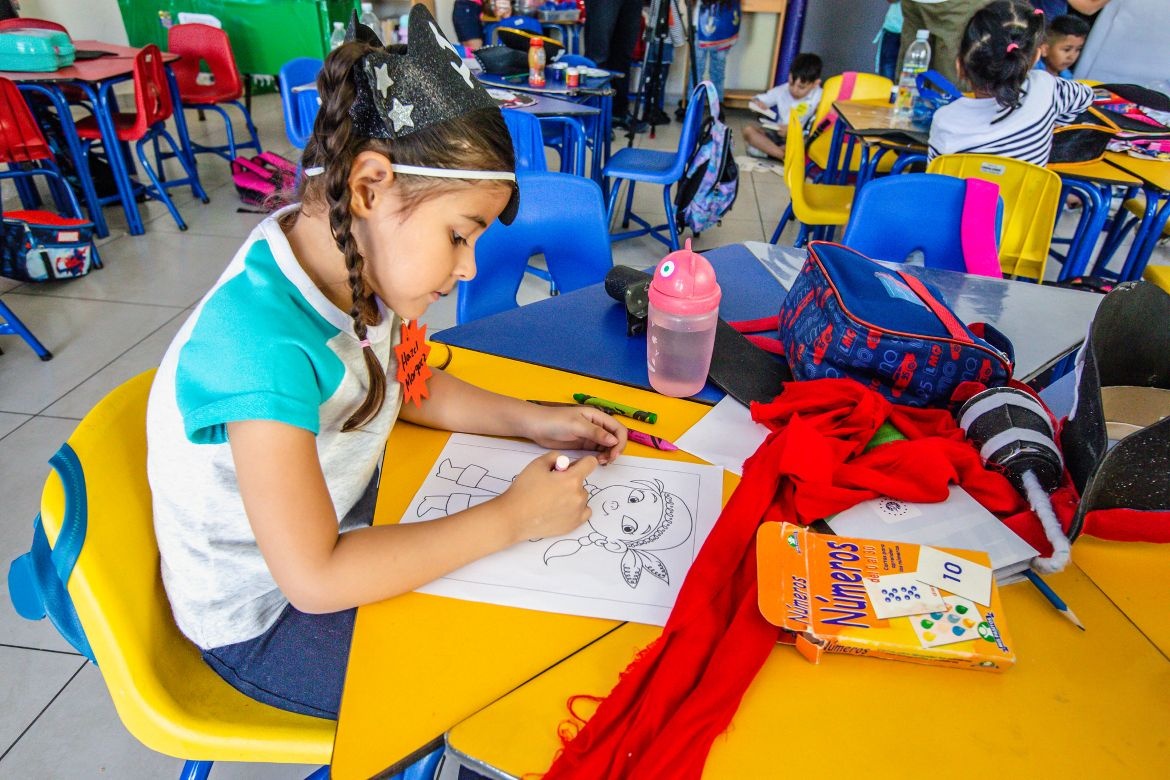
A student drawing a little girl in class at Centro Escolar Olof Palme in El Salvador.

Credit:
GPE

So far, 15 partner countries have secured a total of $225 million through the Girls’ Education Accelerator with 3.6 million girls expected to benefit from this targeted support, marking a significant step toward addressing what keeps girls from completing their education.

  • In El Salvador, funding through the Accelerator has been used to develop teaching materials that aim to change harmful gender norms and stereotypes while in Zimbabwe, funds have been used to encourage girls to complete 12 years of education from primary to secondary including through financial support for school fees, supplies and uniforms as well as peer mentoring.

GPE’s advocacy efforts to end violence against children in schools, including gender-based violence, also gained momentum in 2024 alongside the launch of the Safe Learning Initiative in Nepal and Sierra Leone in collaboration with the Safe to Learn Coalition as part of GPE’s technical assistance.

  • GPE advocated for different approaches to end gender-based violence in schools at the 2024 World Education Forum and participated in the first-ever Global Ministerial Conference on Ending Violence Against Children held in November in Colombia.
  • At the Global Education Meeting in Brazil, GPE spoke on the need to consider differences for girls and boys in education and across sectors, aligned with the focus of Brazil’s G20 presidency on equity and inclusion that recognizes education as a social equalizer and driving force of sustainable development.

Since 2021, $138 million has been invested to improve learning for children with disabilities across 109 grants:

  • In Moldova, hundreds of assistive devices (Braille typewriters, video magnifiers, screen-reading software and adapted keyboards) have been purchased for children with visual and hearing impairments using funds from a $4.7-million GPE Multiplier grant that leveraged an additional $18 million in cofinancing from other donors.
  • In Chad, the government screened students to assess their learning needs across schools in 4 regions initially by launching the “Project for Urgent Reinforcement of Education and Literacy in Chad.”
    Funded by $10 million in GPE grants managed by UNESCO, the education ministry trained teachers in inclusive educational strategies and psychosocial support, and identified students with visual and auditory impairments, developmental disorders and who were experiencing psychological trauma so as to better support their learning.
Education for all children: What this means for GPE

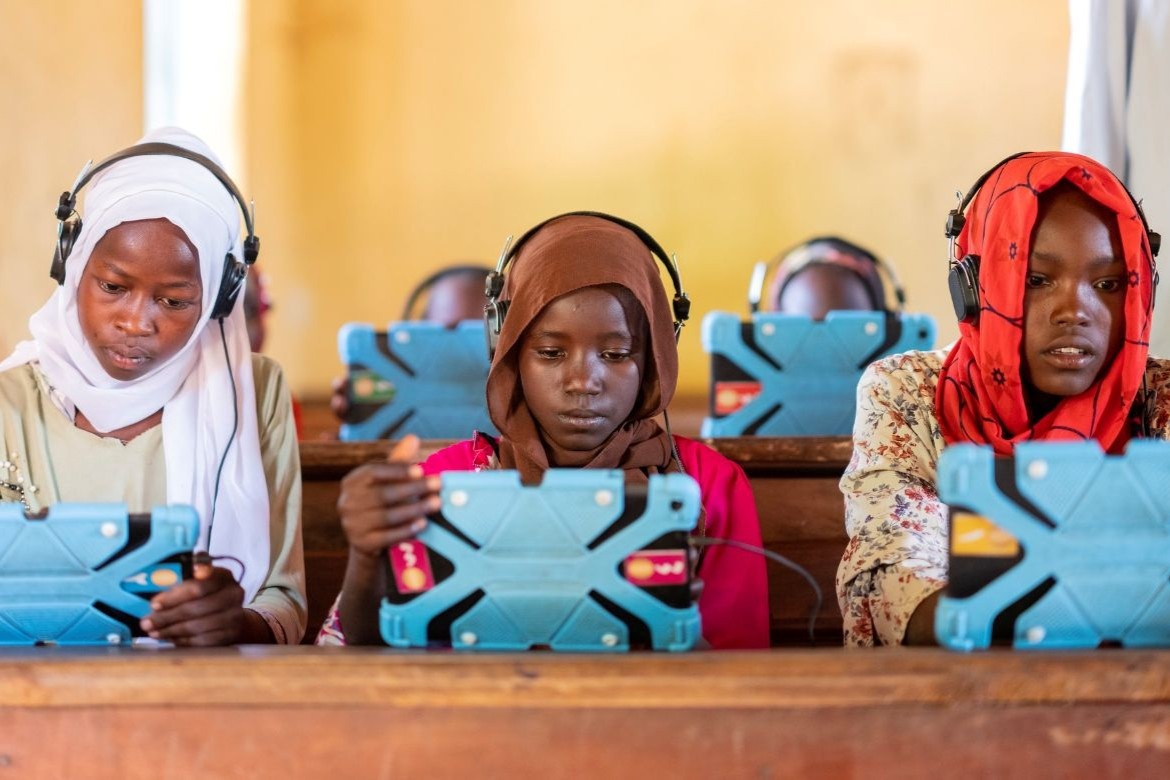
16-year-old student Sumaya Abdel Rahman Mahmoud Mohamad, right, studies on a tablet alongside students Oumnia Souleyman and Salima Khamis, part of an EdTech program developed by WarChild Holland named ‘Can’t Wait to Learn’, at a school in Djabel Refugee Camp, Eastern Chad.

Credit:
GPE/Michael Knief/AP

A strategy for sustainable impact

With over 118 million girls, more than 32 million children with disabilities and 72 million children impacted by crisis still out of school, ‘education for all’ needs to transform.

It cannot be achieved without more and better financing for education that matches country needs. It requires data on children with different backgrounds and strong partnerships between government, civil society, teachers, students, youth leaders and the private sector.

GPE remains dedicated to supporting countries to provide quality education for all children so that they can contribute to building more peaceful and prosperous societies.

We cannot stop until every girl and boy is not just in a classroom, but also safe, able to participate and no longer locked out from learning.

--------

To read more on how GPE addressed inclusion in education, read the 2024 Annual Report and check out our blog series on removing barriers for children with disabilities and technology for education.

Related blogs

Comments

Excellent Work. I appreciate all efforts which are making progress in education field.

partners to create truly inclusive education systems,

"This was a really informative post! Thanks for breaking down the topic so clearly. I especially liked how you included practical examples and helpful visuals. Looking forward to reading more!"