Compared with earlier approaches, an independent rapid review found that policy dialogue in partner countries increasingly drew on gender analysis to identify system barriers and in many contexts, discussions moved beyond enrollment gaps to consider issues such as school-related gender-based violence, gender norms, teacher deployment and leadership, and the availability of gender-responsive data systems.
The review also found that targeted financing through the Girls’ Education Accelerator played a role in encouraging partner countries to articulate more explicit strategies for reaching girls who face the greatest barriers to education, including those affected by poverty, disability, displacement and/or living in settings affected by fragility and conflict.
Ethiopia scales up efforts toward equity with GPE support
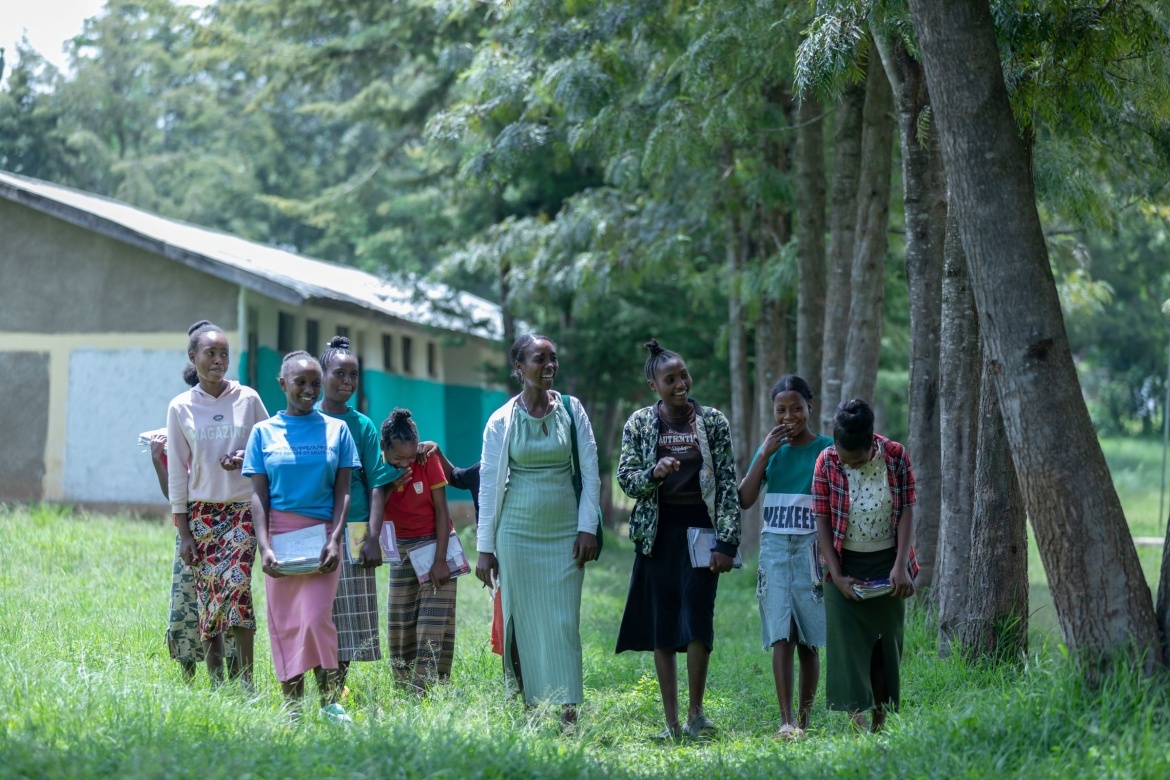
Under GPE 2025, Ethiopia is working with GPE and other partners to improve learning outcomes for all children by focusing on equity. It has expanded its network of Inclusive Education Resource Centers to 1,400 cluster schools and will scale these efforts further using financing from a combination of GPE grants to create 600 additional resource centers.
Recognizing that girls with disabilities face higher risks of exclusion and school‑related gender‑based violence, Ethiopia is also strengthening prevention and response measures alongside targeted community outreach to identify and enroll children who are out of school as well as girls considered at risk of dropping out.
Teachers and school leaders are also supported to adopt inclusive education approaches and female teachers in rural schools are being empowered to take up leadership positions in the education sector by enrolling in leadership training to increase pedagogical and management skills, for example.


Leave a comment
Your email address will not be published. All fields are required.