
How are countries improving education financing? Here are 16 ways they are committing to do so

Governments fund most education, yet many lower‑income countries still face major gaps. How are they stepping up? Explore the reforms GPE partner countries are pledging for 2026–2030 to strengthen and sustain domestic education financing.

by Stefania Sechi, GPE Secretariat
|
5 minutes read
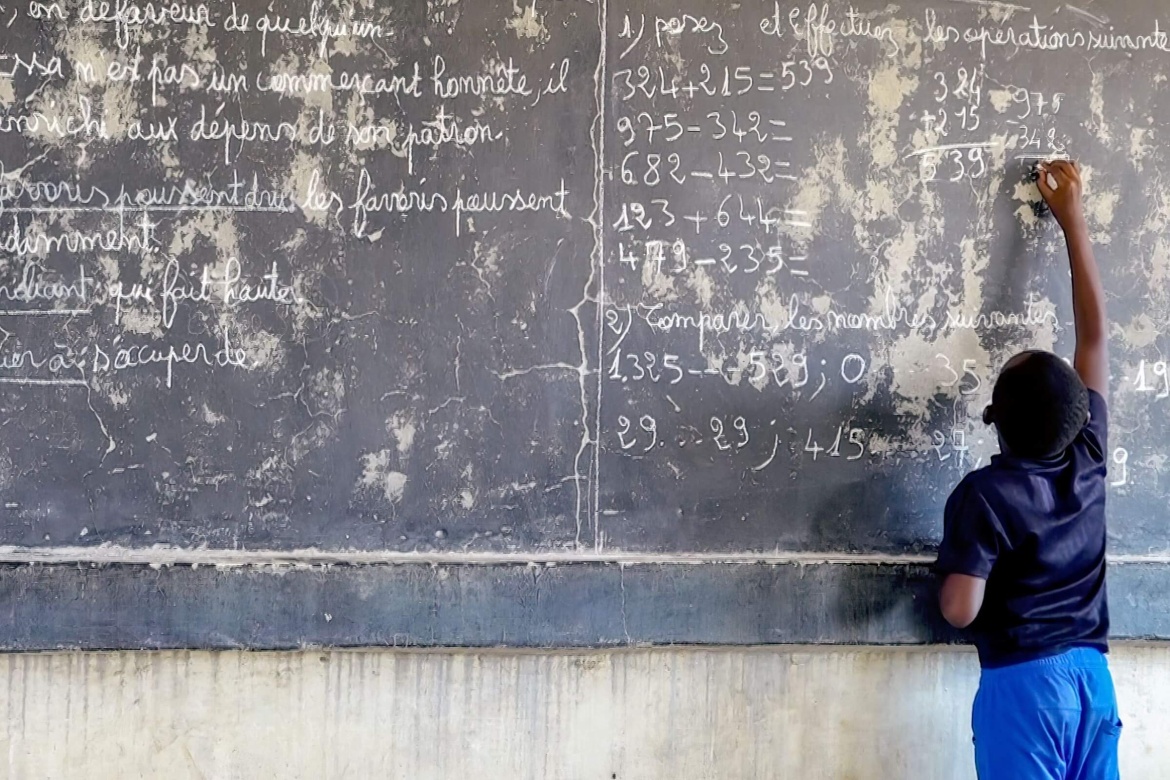
A student writes at the blackboard at the Kurakano School in Niger. Credit: GPE

A student writes at the blackboard at the Kurakano School in Niger.

Credit: GPE

Domestic financing accounts for over 90% of education spending, with national budgets by far the main and most reliable source of education financing. They are what allow governments to plan ahead, pay teachers, maintain schools, strengthen data systems, and keep services running through crises.

But in many lower-income countries, domestic financing is not sufficient to deliver quality education for every child. In these contexts, external support can help, not to replace, but to progressively strengthen national education financing systems.

This is why GPE puts domestic financing at the heart of its work. Through grants, technical support and policy dialogue, GPE supports countries in strengthening the systems and policies needed to make national investment in education adequate and more sustainable over time.

This is reflected in the strategic plan GPE 2030, which aims to “secure adequate and sustainable financing, with domestic resources as the anchor and external funding aligned and catalytic.”
GPE support encourages governments
to invest in education.

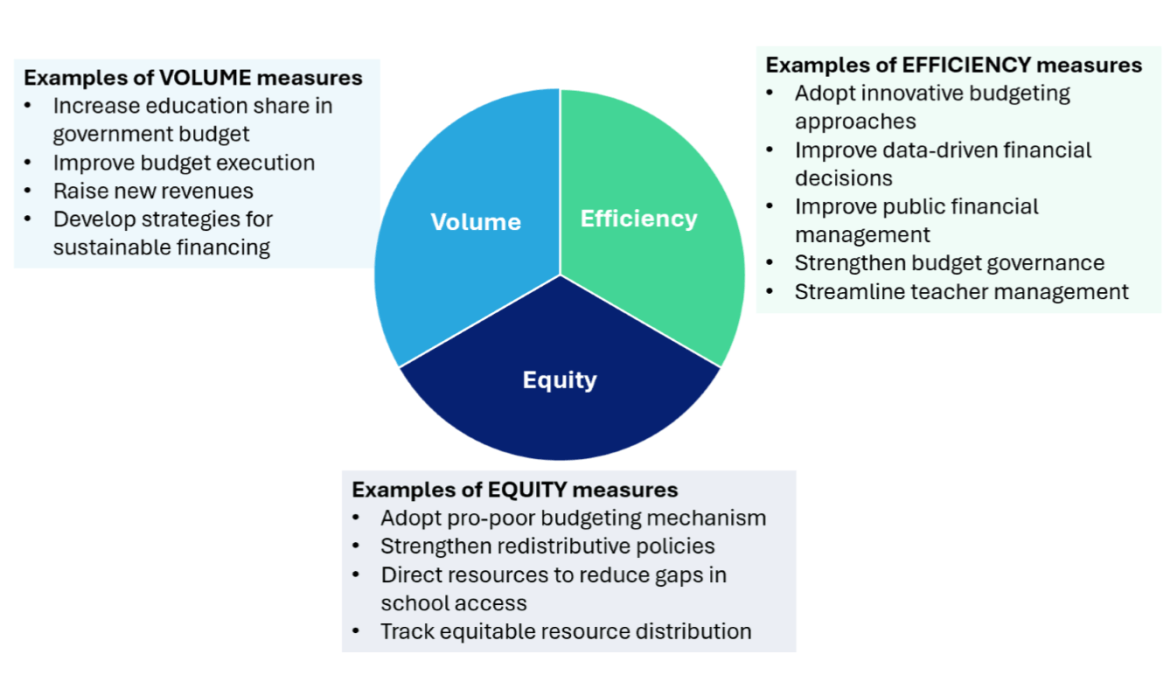
Over the years, partner countries have made clear progress. Each replenishment cycle is the opportunity for them to pledge to strengthen these investments, whether by mobilizing additional resources for education (volume), ensuring that the funds are used well (efficiency), and that they reach the children who need the most support (equity).

Three dimensions of domestic financing for education

How are countries improving education financing? Here are 16 ways they are committing to do so
  • In 2018, 50 partner countries committed to increasing public expenditures for education for 2018 to 2020 to a total of US$110 billion.
  • In 2021, 20 heads of state committed to prioritizing education, pledging to work towards spending at least 20% of their budgets on education over the next five years.
  • In 2026, partner countries are going a step further: not only sharing financial projections for the sector, but also committing to concrete policy actions to strengthen education financing systems - from expanding financing sources, to improving efficiency and equity in the allocation and use of resources.

This blog looks at the “volume” dimension of 2026-2030 domestic financing commitments.

Grounded in official policy and budget documents approved by national authorities, these commitments reflect the diverse approaches that partner countries are taking to strengthen the long-term sustainability of education financing, including efforts to prioritize education in the government’s budget, expand the financing base, boost budget execution, and strengthen the long-term sustainability of education financing.

Increasing education financing

  • Bhutan started to implement a Goods and Services Tax in January 2026, which will increase government revenue, a portion of which will be allocated to education.
  • Grenada established public-private partnerships for initiatives such as literacy programs, infrastructure development, and TVET training centers. One such partnership prioritizes reading literacy, backed by domestic government funding and local private sector contributions, matched equally by GPE and aided by technical partners, all working together to enhance learning outcomes.
  • Guinea plans to allocate 25% of the revenues from the Simandou mining project to education. The country also established the National Agency for the Financing of Education (ANAFE), which will play a central role in mobilizing innovative financing for education through taxes on alcohol and tobacco.
  • Malawi is launching a series of tax reforms, supported by better administration and compliance, which are expected to mobilize significant additional domestic revenue, enabling higher allocations to priority sectors like education.
  • Mongolia is implementing the 2024 Corporate Income Tax Law providing tax relief for businesses that invest in social sectors, including education. Under the law, companies can deduct investments in the sector from up to 1% of their taxable income.
  • Niger has set up the Vocational Training and Apprenticeship Support Fund (FAFPA) financed through a 2% levy on the payroll of Nigerien employees and 4% for foreign employees.
  • The government of Sindh province in Pakistan is allocating substantial funding to the Sindh Education Foundation, which implements a range of public–private partnerships. These initiatives aim to expand access and increase student enrollment, particularly in areas where government schools are not an option.
  • In St. Vincent and the Grenadines, the ministry of education is working with the ministry of finance to absorb costs of special programs that have demonstrated results into existing cost structures, ensuring sustainable financing for those initiatives. The country is also prioritizing education expenditure through targeted investments in TVET, digital infrastructure, and teacher training, with a 33% increase in post-secondary allocation.
  • Sao Tome and Principe is introducing a value added tax (VAT), allowing the broadening of the tax base, a possible better collection of revenues and the reinforcement of education financing, and improvement of the collection of customs revenues with the implementation of the international system for customs data.
  • Timor-Leste is advancing implementation of the new public financial management law adopted in 2025. This introduces multi-year budget planning to help the government plan public spending over the longer term.
  • Tajikistan plans a gradual increase in education spending, raising education’s share of the national budget from 2026 onwards and increasing education expenditure to around 7% of GDP, in line with national development and education sector strategies.
How are countries improving education financing? Here are 16 ways they are committing to do so

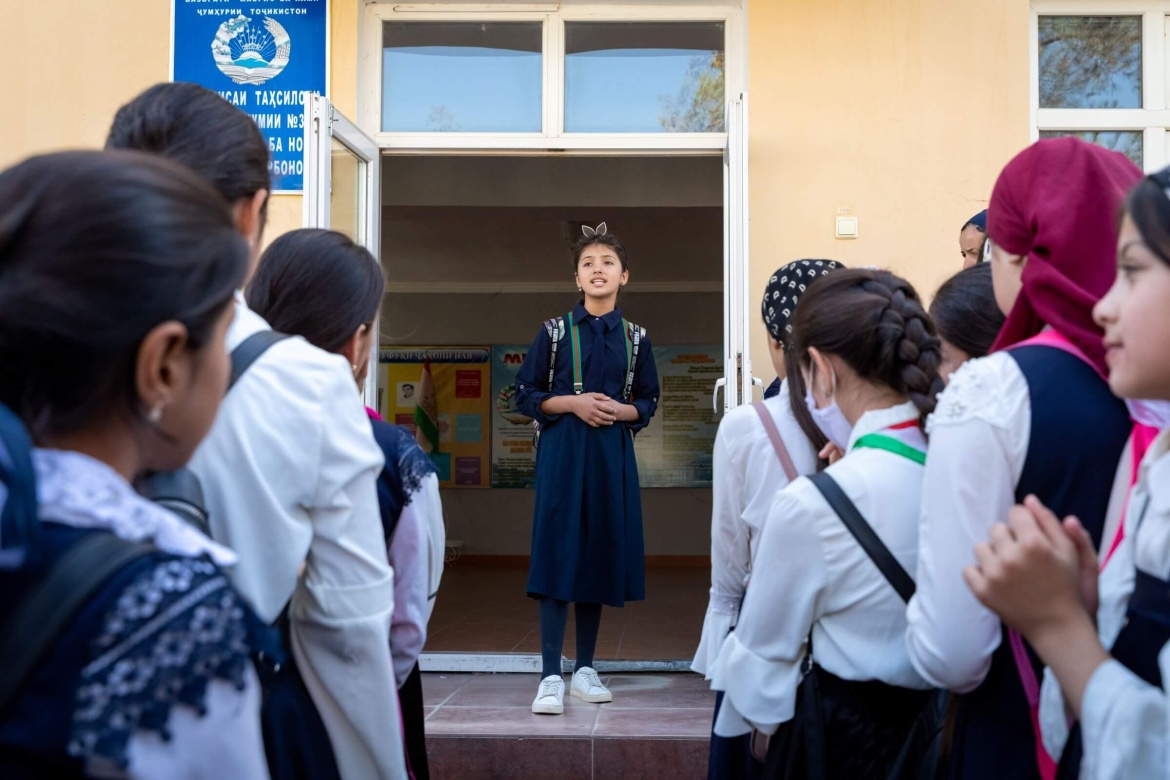
Student assembly before school at School #30, Kulob, Khatlon Region, Tajikistan.

Credit:
GPE/Kelley Lynch

Improving budget execution

  • Guinea signed an agreement with the Orange-Guinea Foundation, allowing for the direct transfer of funds to schools to support daily operations and to ensure better availability of resources at the local level.
  • In Maldives, a new policy enables Parent-Teacher Associations to generate revenue through renting school buildings outside of school hours and to mobilize their financial resources, as long as all funds are used exclusively for school improvement and student development.
  • Somalia is establishing contingency budgeting and emergency education financing mechanisms to ensure education doesn’t get deprioritized in times of crisis.
  • Tajikistan is making school‑ and district‑level education finance information more accessible to parents, teachers, and civil society, which is in turn enhancing their engagement and supporting accountability within the framework of partnership‑supported reforms.
  • The Zanzibar Education Sector Transformation Plan (ZESTP) plans for a gradual reduction of external financing to education by strengthening government systems, integrating donor support into the national budget framework, and aligning sector financing with medium-term fiscal planning processes.

In the next blog, we’ll look at countries’ commitments to making education budgets more efficient.

Related blogs

Comments

Education is the key to everything

Leave a comment

Your email address will not be published. All fields are required.

The content of this field is kept private and will not be shown publicly.

Comments

  • No HTML tags allowed.
  • Lines and paragraphs break automatically.
  • Web page addresses and email addresses turn into links automatically.