A student lifts their hand in class. Yirba Yanase Primary and Secondary School is located in Hawassa, Ethiopia. Credit: GPE/Translieu

Partner since:

Total grant support: US$744,923,176

GPE 2025 grant eligibility:

  • Multiplier
  • Girls' Education Accelerator
  • System capacity
  • System transformation

Partnership Compact

Priority: Improve learning outcomes

Other key documents

Coordinating agency: Commonwealth and Development Office

Engagement lead: Esohe Joan Eigbike
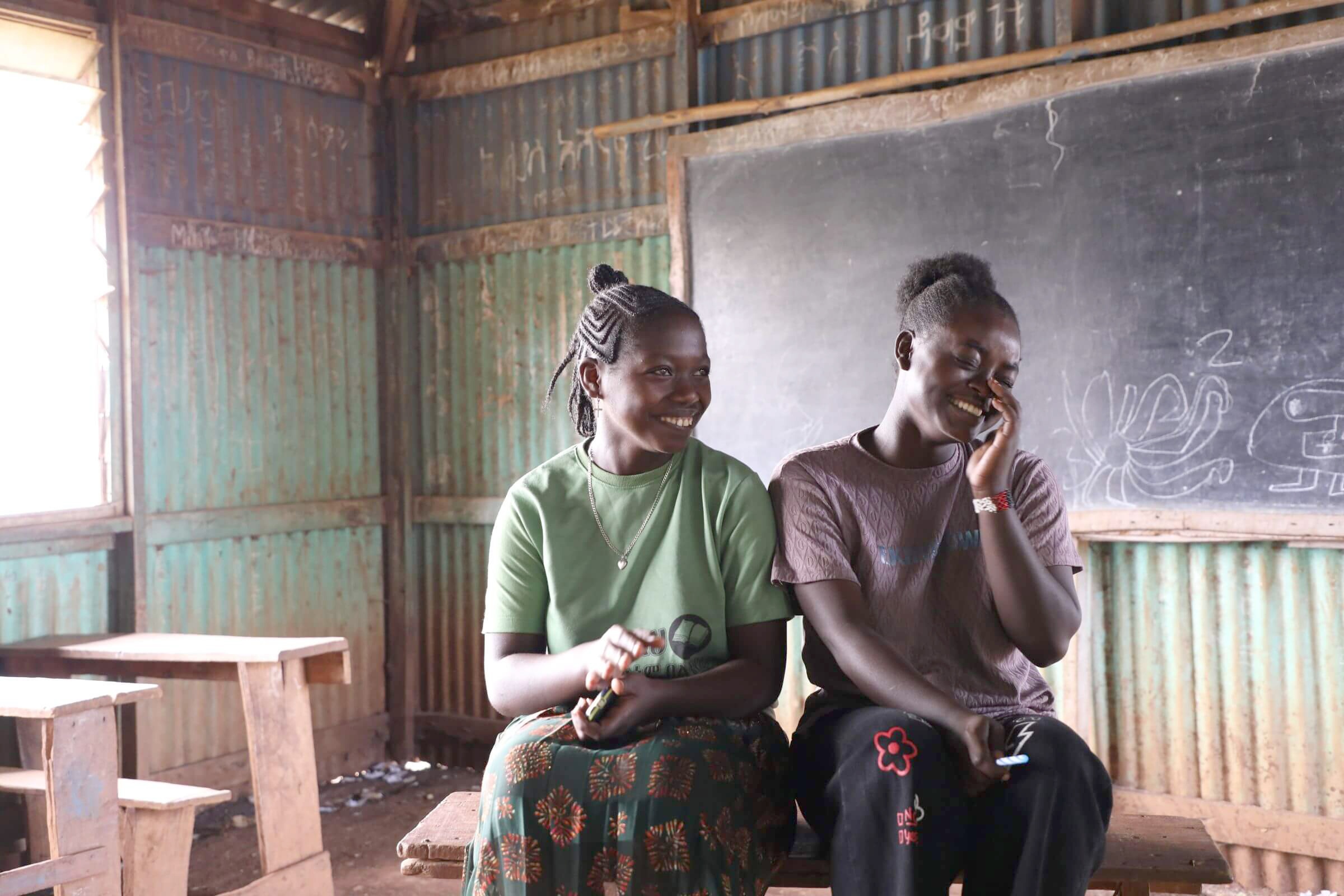
Transforming education in Ethiopia

Ethiopia has achieved remarkable progress in expanding access to education over the past twenty years, but challenges related to equity remain significant, and learning outcomes have declined in recent years.

Numerous crises, including the COVID-19 pandemic, conflict situations, drought and floods have forced millions of children out of school since 2021. As of 2022, around 90% of 10-year-old children lacked basic reading skills.

Ethiopia is working with GPE and other partners to improve learning outcomes with a focus on equity. As prioritized in the country’s Education Sector Development Plan 2020-2025, the government aims to enhance the quality of teaching and learning by better supporting school leaders and teachers with training, aligning teaching and learning materials to the new curriculum, and establishing more effective quality assurance mechanisms.

To improve access to education, Ethiopia and partners will reconstruct damaged schools, establish school feeding programs where needed, and implement accelerated learning programs for children who have dropped out of school.

Additional interventions to make the education in Ethiopia more equitable and inclusive include community awareness programs on the barriers to education for girls and children with disabilities, among others.

Result story

Ethiopia: Menstrual health support boosts girls’ confidence and school attendance

  • In Ethiopia, many girls miss class or drop out of school when they are menstruating.
  • The Ministry of Education, with support from GPE and UNICEF, is helping girls stay in school through menstrual health training, including how to make reusable sanitary pads.
  • Schools are establishing menstrual hygiene rooms that provide private spaces for girls, and gender clubs are equipping girls and boys with life skills and health knowledge that support Ethiopia’s gender equality goals.

Key data

30%

out-of-school rate for children of lower-secondary school age

41%

of children start learning one year before entering primary school

Grants

(data as of November 11, 2026)

 
  • Type: Multiplier

    Years: 2025 - 2029

    Allocation: US$47,300,000

    Utilization: US$14,965,570

    Grant agent: World Bank

  • Type: System capacity

    Years: 2025 - 2028

    Allocation: US$4,100,000

    Utilization: US$914,310

    Grant agent: World Bank

  • Type: System transformation and Girls' Education Accelerator

    Years: 2024 - 2028

    Allocation: US$132,590,000

    Utilization: US$49,589,790

    Grant agent: UNICEF

  • Type: Multiplier

    Years: 2024 - 2027

    Allocation: US$2,572,779

    Utilization: US$1,375,131

    Grant agent: UNICEF

Civil society engagement

As part of its investment in civil society advocacy and social accountability efforts, GPE’s Education Out Loud fund is supporting the Basic Education Network Ethiopia (BEN-E) for the 2024-2026 period. This builds on previous support from the Civil Society Education Fund (CSEF).

Learn more

Latest blogs and news

March 24, 2026
Why we still need a Girls’ Education Accelerator
The Girls’ Education Accelerator provides crucial, targeted funding to strengthen reforms that help girls facing the greatest barriers to schooling. As GPE’s dedicated window for girls’ education, it...