Equitable education financing: How countries are making resources reach children who need them most

GPE partner countries are making commitments for 2026–2030 to ensure education financing reaches the schools and children that need it most.

by Nisma Elias, GPE Secretariat, Stefania Sechi, GPE Secretariat, and David Bruns, GPE Secretariat
|
5 minutes read
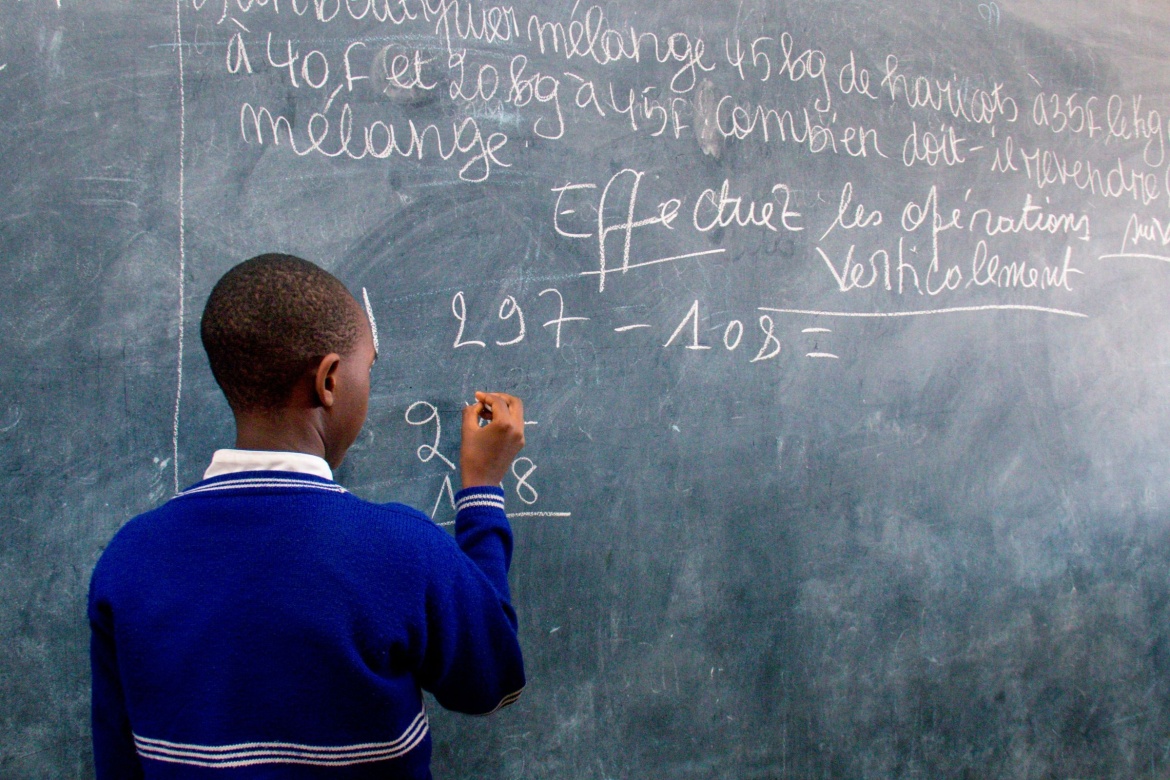
A student solving a math problem at Kigobe Reference Center for Inclusive Education in their classroom. Burundi. Credit: GPE/Ingomag

A student solving a math problem at Kigobe Reference Center for Inclusive Education in their classroom. Burundi.

Credit: GPE/Ingomag

Education is one of the most powerful tools governments have to break cycles of poverty, reduce inequality and strengthen social cohesion. But this can happen only when education systems reach all children, including the 273 million children and youth who are out of school.

In lower-income countries, fiscal pressures, competing priorities and growing needs make adequate education financing hard to secure. Yet, governments must not only find enough resources for education, but also use those resources well and distribute them fairly.

This is why equity is a key pillar of GPE 2030’s domestic financing agenda: to make sure that resources reach the children, schools and communities that need them most.

Equity is about systems, not just targeted interventions

Equitable financing means recognizing that children and schools do not all start from the same place. Some schools serve remote communities. Some children face poverty, disability, displacement, language barriers, conflict, climate shocks, or gender-based exclusion. They may need additional support to enter school, stay in school and learn.

But equity is not just about targeted programs. It is about financing systems that recognize different levels of need and direct resources accordingly – shaping how teachers are deployed, school grants allocated, budgets planned, learning materials distributed and resource flows tracked.

After highlighting commitments on volume of financing in May and efficiency in early July, we now turn to partner countries’ commitments to equity. The examples below are a sample of the 2026–2030 pledges received from 48 countries.

They show two ways partner countries are advancing equity: by making resource allocation fairer and by ensuring resources reach the children, schools and communities most at risk of exclusion.

Allocating resources more fairly

Burundi will expand school nutrition programs in areas with the highest levels of poverty. Spending on these programs is projected to increase by 67% over 10 years, based on the country’s simulation model.

Grenada is developing a gender-responsive curriculum and assessment framework that aims to narrow performance gaps, including by targeting the underachievement of boys.

Malawi will implement targeted recruitment and posting of teachers to rural and underserved districts. Recruitment quotas will prioritize high-need areas, using EMIS data on district-level staffing gaps. Teachers assigned to rural and hard-to-reach schools will continue to receive hardship allowances.

In Nepal, the Ministry of Education and Sports is supporting local governments to prepare local education plans that are responsive to gender and inclusion. As a result, 147 local governments have earmarked domestic resources for gender equality, social inclusion, inclusive education, climate resilience and green schools.

In Niger, the government is using prioritization and targeting tools to guide infrastructure investments, finance incentives that strengthen demand for education and provide subsidies to schools based on criteria of vulnerability within the education system.

In Tajikistan, the government is allocating funds to support inclusive education, including adapting school infrastructure and providing specialized equipment for children with disabilities. It is also supporting girls in remote areas through scholarships, boarding facilities and other targeted measures, while directing school feeding resources to rural and poverty-affected schools.

In Timor-Leste, the government is expanding pre-school services and rehabilitating schools in underserved areas, including through short-term preparation programs to support school readiness.

Zanzibar has developed allocation protocols to guide the equitable distribution of key education inputs, including teachers, classrooms, school operating budgets and teaching and learning materials, with priority given to schools with the highest needs.
Equitable education financing: How countries are making resources reach children who need them most

Pre-primary teacher Radika Khadka and her students during a lesson at Padmodaya Secondary School. Kathmandu. Nepal.

Credit:
GPE/Federico Scoppa

Tracking where resources go

Honduras is monitoring the equitable distribution of resources using a map of municipalities affected by poverty and extreme poverty. This helps direct interventions and projects in areas with the highest levels of vulnerability.

In Pakistan’s Sindh province, digital dashboards, integration with the Integrated Financial Management Information System and results-based budgeting are expected to strengthen transparency and accountability. These reforms will make it easier to track whether funds, teachers and other resources are distributed fairly and reach the schools where they are most needed.

In Papua New Guinea, tuition funds are distributed to schools based on the PNG Access Remote Index (PARI), with remote schools receiving more support than schools in urban areas.

Rwanda is using education and financial data systems to track allocations, school feeding coverage, capitation grants and teacher deployment by location and learner characteristics. District-level allocations are published by output and sub-program, helping track resources across districts, education levels and priority groups, including learners with disabilities and girls.

In São Tomé and Príncipe, the government is strengthening monitoring of street children and adopting financial and social support measures so that children with special educational needs, out-of-school children and children facing socio-economic difficulties are not left out of school.

In Sierra Leone, the government is introducing a Unique Learner Identification system to improve tracking of individual learners across the education system. This is expected to strengthen enrollment and participation data, improve resource targeting and support more equitable subsidies for schools and learners most in need.

Sri Lanka is strengthening data systems to track the distribution of financial, human and material resources across regions, school types and socio-economic groups. Disaggregated indicators, including location, poverty, gender, disability and school size, are being used to inform needs-based budgeting and targeted interventions.

Equity strengthens the whole system

These commitments show that partner countries are approaching equity not as a separate agenda, but as part of making domestic financing more effective. Reaching learners most at risk of exclusion helps ensure public resources are used where they can make the greatest difference.

When the three pillars of domestic financing work together — adequate resources, efficient use of resources and equitable allocation — domestic financing can help build strong education systems that deliver for all children, making education a real lever of inclusion, learning and opportunities.

References

  1. OECD. 2012. Equity and Quality in Education: Supporting Disadvantaged Students and Schools. Paris: OECD Publishing. https://doi.org/10.1787/9789264130852-en
  2. UNESCO. 2026. Global Education Monitoring Report 2026: Access and Equity: Countdown to 2030. Paris: UNESCO.
  3. UNESCO Global Education Monitoring Report Team and UNESCO Institute for Statistics. 2017. Reducing Global Poverty through Universal Primary and Secondary Education. Policy Paper 32 / Fact Sheet 44. Paris: UNESCO.

#####

Read other blogs in this series

Related blogs

Comments

Great post!

Leave a comment

Your email address will not be published. All fields are required.

The content of this field is kept private and will not be shown publicly.

Comments

  • No HTML tags allowed.
  • Lines and paragraphs break automatically.
  • Web page addresses and email addresses turn into links automatically.